Bridging the Generative Gap: How Autodesk Flow Studio Reclaims Creative Control

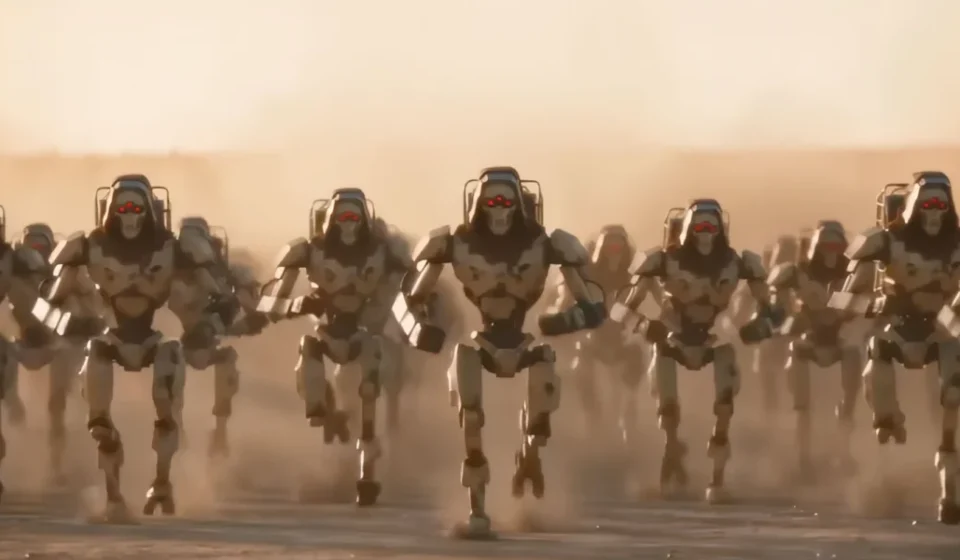
For the past two years, the filmmaking industry has been held in a state of fascinated suspense by the rapid evolution of generative AI. While text-to-video models have dazzled audiences with surreal, high-fidelity imagery, they have simultaneously frustrated directors, cinematographers, and visual effects artists. The primary critique remains consistent: prompt-driven generation is a "black box" that lacks the precision required for professional production.
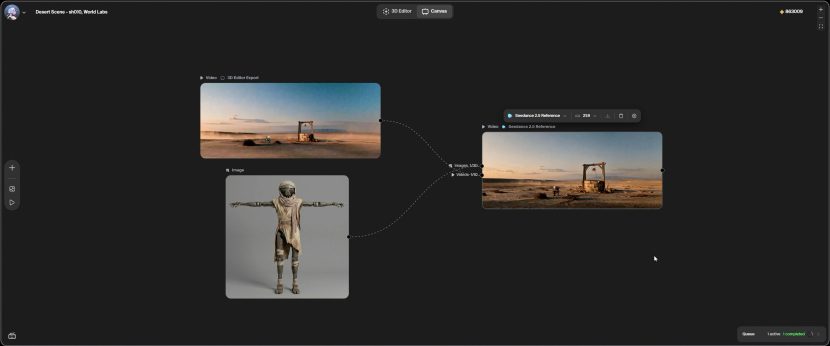
Autodesk is now seeking to bridge that gap. With the launch of Autodesk Flow Studio, the company is moving beyond the era of the single, unpredictable text prompt. By integrating a sophisticated 3D Editor with a node-based 2D Canvas, Autodesk is attempting to shift the paradigm from "AI generation" to "AI-assisted direction."
The Core Objective: Solving the 80/20 Problem
To understand the necessity of Flow Studio, one must look at what Nikola Todorovic, co-founder of Wonder Dynamics and now a key leader within Autodesk, calls the "80/20 rule" of generative AI.
In current workflows, generative models can produce the first 80 percent of a cinematic shot—lighting, texture, atmosphere, and complex simulation—with startling speed and visual beauty. However, the final 20 percent is where professional production happens. This involves the specific placement of a character’s hand, the exact arc of a camera movement, or the precise timing of a performance. When a director asks for a change in a prompt-only system, the AI often re-rolls the entire shot, causing the artist to lose the work that was already "right."

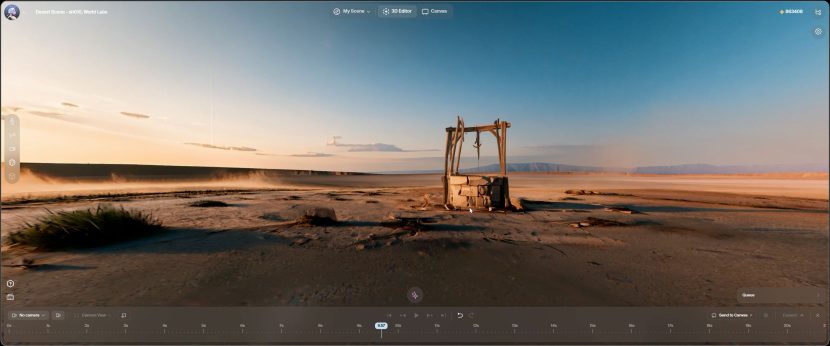
Flow Studio is designed to capture that final 20 percent. By allowing creators to build scenes in a 3D environment, the software ensures that the "intent" of the shot is baked into the foundation. If a director decides a character needs to step three inches to the left, they don’t re-prompt the AI; they move the 3D object within the Flow Studio Editor.
Chronology: From Wonder Dynamics to Autodesk Flow
The evolution of Flow Studio is rooted in the technological lineage of Wonder Dynamics, a company that famously automated the integration of CG characters into live-action plates using a suite of 25 machine-learning and computer-vision systems.
- Early Foundations: The original Wonder Dynamics platform proved that complex technical tasks—like rotoscoping, lighting estimation, and motion capture—could be abstracted into a user-friendly, cloud-based pipeline.
- Acquisition and Integration: Following its acquisition by Autodesk, the team began applying those principles of automation to the broader, more complex realm of full-scene generation.
- The Development of Flow Studio: Engineers focused on combining the "wild" creativity of 2D generative models with the rigid spatial logic of 3D software.
- The 3D Editor + Canvas Launch: The current iteration, featuring the integration of World Labs’ Marble for Gaussian splat-based environments, represents the first time these disparate technologies have been unified into a single, cohesive interface for professional filmmakers.
The Architecture of Control
Flow Studio operates on a dual-layered system that separates the staging of a scene from the final aesthetic rendering.
The 3D Editor: The Director’s Sandbox
The 3D Editor acts as the creative brain of the platform. Here, filmmakers function like traditional directors. They can import camera tracks, keyframe character animations, utilize motion-capture data, and place assets within spatially coherent 3D environments. By leveraging World Labs’ Marble, users can generate 3D-consistent, splat-based worlds that provide the spatial foundation for the shot. This ensures that when the camera moves, the environment reacts with mathematical, rather than hallucinatory, consistency.

The 2D Canvas: Node-Based Finishing
Once the 3D scene is blocked, artists move into "Canvas," a node-based environment. This is where the generative heavy lifting occurs. The 3D scene serves as a "control signal" for the 2D models. The AI interprets the 3D data—lighting, composition, and character placement—and renders the final cinematic output. This node-based approach allows for non-destructive editing; an artist can tweak the 3D geometry in one tab and see the 2D render update in the other, maintaining control throughout the entire pipeline.
Performance Before Prompting
A central tenet of the Flow Studio philosophy is the primacy of human performance. Todorovic has been vocal about the limitations of "audio-only" or "prompt-only" animation, which often results in uncanny, generalized, or "slop" imagery.
Flow Studio prioritizes recorded human performance. By allowing an actor’s raw video and audio to drive the character animation, the software preserves the nuances—the hesitation, the timing, the micro-expressions—that define professional acting. The generative models are then tasked not with "inventing" the performance, but with "styling" it. This keeps the human soul of the performance intact while allowing for high-end digital enhancements, such as changing the character’s appearance or the lighting of the environment, without degrading the acting itself.
Implications for the Industry
The introduction of Flow Studio suggests a significant shift in the adoption curve for AI in film.
The Democratization of Complexity
Historically, high-end filmmaking required mastery of complex mathematics and technical software. Flow Studio seeks to abstract this complexity. By handling the technical overhead—such as complex lighting calculations or character integration—in the background, the platform allows storytellers to focus on composition and narrative. It is not about replacing the filmmaker; it is about providing the tools to execute a vision without needing a team of 50 technical directors to solve every physics-based hurdle.
Moving Up the Value Chain
Todorovic observes that new technologies almost always follow a specific trajectory: they start with social media experimentation, move into music videos and commercials, and finally reach the major studio pipeline. Flow Studio is designed to accommodate this entire range. For an individual creator, the platform offers a streamlined, "all-in-one" solution. For a major studio, it offers a way to integrate AI-assisted workflows into existing Maya or Arnold pipelines, allowing for faster iterative cycles during pre-visualization and post-production.
Combatting "AI Slop"
The term "AI slop" has become a pejorative for content that looks polished but feels hollow or lacks creative intent. By giving artists the ability to make "deliberate choices," Flow Studio directly addresses this criticism. When a filmmaker can reach into a shot and adjust the lighting intensity or the camera’s lens focal length, the output ceases to be a random interpretation by a model and becomes a conscious creative decision.
Future Outlook: The Road Ahead
As the industry stands on the precipice of a new era of AI-assisted filmmaking, the distinction between "generative" and "directable" tools will define the next generation of software.
Autodesk’s approach with Flow Studio is pragmatic. It does not promise to make a movie from a single button click. Instead, it promises to make the process of making a movie more efficient, more controllable, and more accessible.
"We are not here to remove the filmmaker from the process," notes the team behind the project. "We are here to make sure that when a filmmaker looks at their screen, they see their own vision reflected back at them, rather than a generic guess made by a server."
For independent studios and individual creators, the availability of these tools—often previously locked behind the proprietary R&D of the world’s largest visual effects houses—marks a pivotal moment. The technology is no longer just about generating pixels; it is about providing the agency to direct them. As Flow Studio continues to evolve, incorporating more advanced audio-driven workflows and deeper integration with standard industry toolsets, it is likely to become a cornerstone of the modern digital backlot.