
In the high-stakes environment of modern film production, the distance between the camera lens and the final composited frame is often filled with guesswork. For decades, cinematographers have meticulously crafted images, making split-second decisions on focus, iris, and focal length that define the visual soul of a film. Yet, historically, much of that "optical DNA" was stripped away the moment the footage entered the post-production pipeline.
In a recent episode of the fxpodcast, Jordan Thistlewood, Chief Digital Officer at Cooke Optics, sat down to discuss the evolution of Cooke’s /i Technology. The conversation highlights a critical shift in the industry: lens metadata is no longer an optional "extra" for technical enthusiasts. It has become an essential, albeit underutilized, bridge between the creative intent of the cinematography department and the technical demands of visual effects.
The Evolution of /i Technology: A Chronology
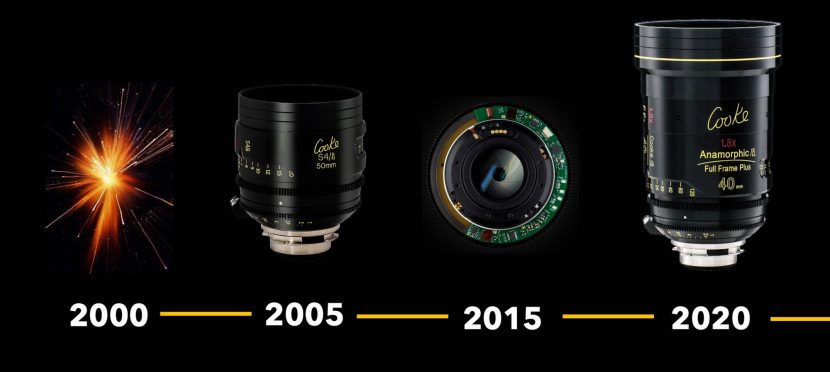
Cooke’s /i Technology did not appear overnight. Its journey spans over two decades, evolving from a niche innovation into a foundational standard for the modern camera ecosystem.
- The Early Days (The "Sidecar" Era): When /i was first introduced, the industry lacked the infrastructure to handle embedded data. Metadata existed, but it was often relegated to separate sidecar files. This created a fragile workflow: if the data wasn’t manually aligned and strictly managed, it would drift, get misplaced, or be discarded during the turnover process.
- The Integration Phase: As camera manufacturers like ARRI, RED, Sony, and Blackmagic recognized the value of lens-camera communication, the industry moved toward direct integration. By embedding /i data directly into the camera’s RAW files via the lens mount, the metadata became frame-accurate and "baked-in."
- The Current Standard: Today, we are in an era where the data is no longer a separate entity but a core component of the image file itself. While challenges remain during transcoding and editorial turnover, the industry is increasingly aware that preserving this "love letter" from set to post is a logistical necessity.
The Mechanics of Metadata: What Are We Actually Tracking?
To the uninitiated, lens metadata might sound like a simple log of settings. However, as Thistlewood explains, it is a comprehensive map of the lens’s physical behavior. /i Technology captures a wealth of information per frame:
- Basic Telemetry: Focus distance, iris (T-stop), and zoom position.
- Optical Characteristics: Focal length, depth of field, and hyperfocal distance.
- Advanced Nuance: Entrance pupil information and shading data.
Crucially, Thistlewood emphasizes that lenses are not static devices. They are "living, breathing" objects. A lens’s optical behavior shifts dynamically based on its focus distance. The focal length marked on a lens barrel is typically calibrated for infinity; however, when shooting a close-up, that optical behavior changes. By recording this data in real-time, Cooke provides VFX teams with a precise record of how the lens was behaving at the exact moment of exposure, rather than relying on an idealized mathematical model.
The "Love Letter": Why VFX Needs This Data
The term "love letter" is perhaps the most evocative way to describe the relationship between the cinematographer and the VFX artist. When a cinematographer pulls focus, they are not just adjusting a dial; they are choreographing the viewer’s attention.
Solving the Focus Dilemma
Without metadata, VFX artists are often forced to reverse-engineer focus transitions by eye. This process—involving witness cameras, script notes, and manual estimation—is not only labor-intensive but prone to error. When the metadata is preserved, the VFX team can inherit the original optical behavior.
Productions like Project Hail Mary have successfully utilized this data to drive defocus in compositing. By using actual focus distance data, the digital elements in a shot mirror the physical optics of the live-action plate, ensuring that the CG feels "at home" within the original photography.
Correcting Distortion
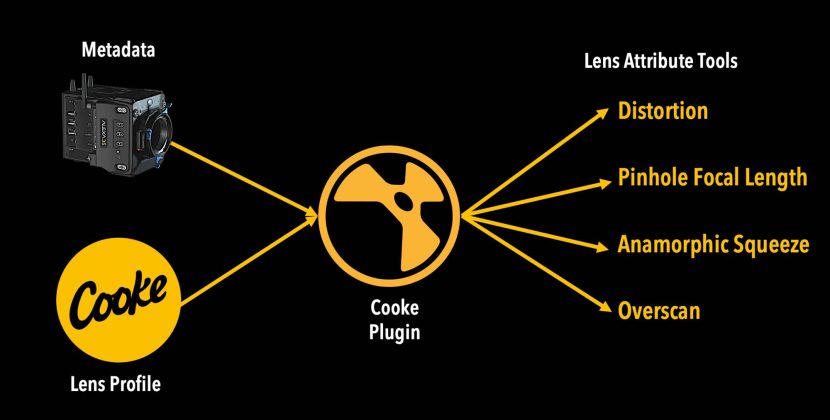
Distortion is rarely static. It changes with focus distance and, in the case of zooms, with the focal length. Cooke has invested heavily in lens characterization, providing data that allows for a more accurate understanding of the lens’s optical performance. This allows post-production to move beyond simple, global distortion grids to a more sophisticated, dynamic approach that adapts as the lens elements move.
Industry Implications: A Tipping Point
The adoption of metadata represents a significant cultural shift. The technical barriers have largely been dismantled; the cameras can record it, and the software tools (like those used at facilities like Company 3) are increasingly capable of reading and preserving it through the render pipeline.
Economic and Workflow Efficiency
The economic argument for metadata is compelling. Every hour an artist spends manually tracking a lens or reconstructing a focus pull is an hour of lost productivity. By automating these tasks through metadata, studios can realize significant cost savings. The cost of preserving the metadata is near zero, yet the downstream value in terms of speed and accuracy is exponential.
The Cultural Hurdle
Despite the benefits, there is still a procedural gap. Many productions still struggle with metadata loss during transcoding or EXR generation. The issue is rarely that the data cannot be kept; it is that the industry has not yet fully normalized the expectation that it must be kept.
Thistlewood argues that this is where the industry must mature. "The point is not that every tool has to use the metadata immediately," he notes. "The first principle for any production is really simple: Just do not throw it away."
A Call to Action for Production
For VFX supervisors, post-production leads, and cinematographers, the message is clear: demand the metadata. It should be a standard requirement in the turnover process and a focal point of Quality Control (QC).
The goal is to move beyond the "technical fetish" of data collection and focus on the result: a seamless marriage between the camera’s output and the visual effects work. By treating lens metadata as part of the standard language of filmmaking, we respect the craft of the cinematographer and empower the artist to focus on aesthetics rather than tedious technical reconstruction.
As we look toward the future of filmmaking, the integration of lens metadata is no longer a "nice to have"—it is the digital foundation upon which the next generation of visual storytelling will be built. The tools are ready; it is now up to the production culture to embrace the bridge that Cooke and its peers have spent two decades building.