The Long Road to Rebellion: Duncan Jones on the Eight-Year Battle for ‘Rogue Trooper’ and the Future of Independent Cinema

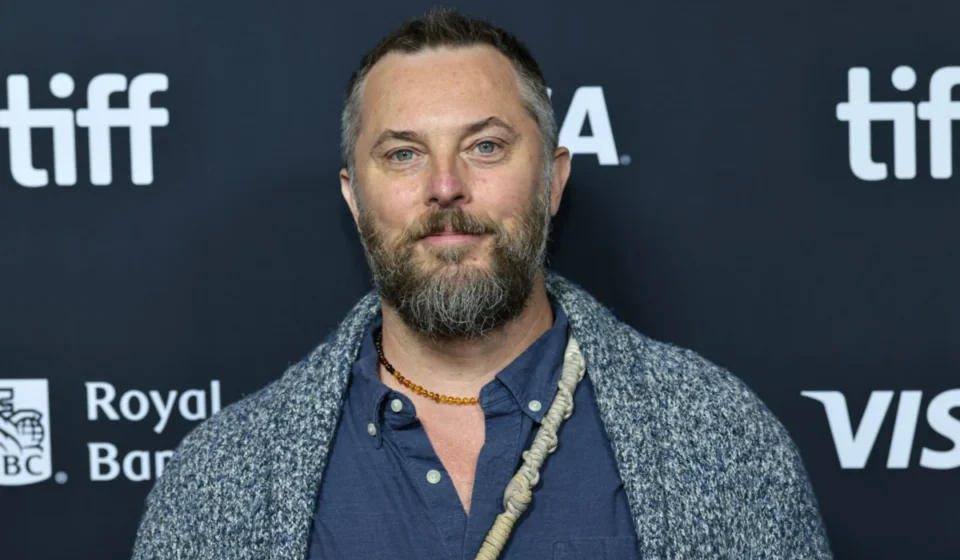
After an eight-year hiatus from the director’s chair, Duncan Jones has returned to the spotlight with Rogue Trooper, an ambitious animated adaptation of the legendary 2000 AD comic series. Premiering at the 2026 Toronto International Film Festival (TIFF), the film marks a significant milestone for the British filmmaker, whose last feature, Mute, was released in 2018.
For fans of Jones’s cerebral sci-fi—a filmography that includes the modern classics Moon, Source Code, and Warcraft—the silence has been deafening. However, as Jones explains, the gap between his projects was not a retreat from creativity, but a trench war against a shifting industry. At the heart of this return is a defiant stance against the modern reliance on artificial intelligence and a critique of the studio system’s narrowing creative aperture.
A Legacy of Sci-Fi Precision
Duncan Jones established himself as a master of high-concept, human-centric science fiction early in his career. His debut, Moon (2009), proved that profound storytelling could thrive on a modest budget, while Source Code (2011) showcased his ability to navigate high-stakes narrative mechanics.
Yet, the industry has changed dramatically since his rapid-fire output of the 2010s. The release of Mute in 2018, which Jones described as a "sweet spot" experience with Netflix—a time when the streamer prioritized director-driven vision over algorithmic optimization—now feels like a relic of a bygone era. For Jones, the transition from that creative freedom to the current landscape has been a sobering, if necessary, evolution.

The Eight-Year Odyssey: From Concept to Screen
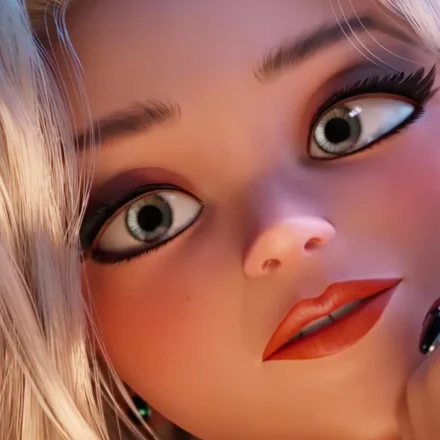
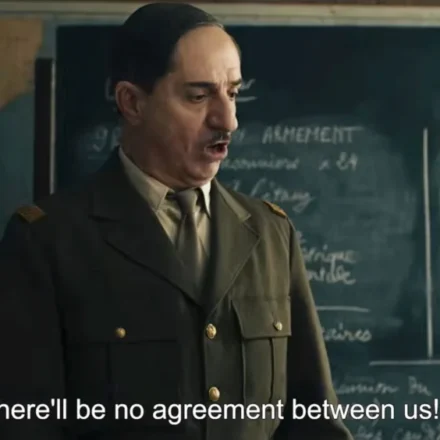
The journey of Rogue Trooper is as rugged as its protagonist. The film follows "19," a soldier (voiced by Aneurin Barnard) who finds himself accompanied by the consciousnesses of his fallen comrades, which have been downloaded into his equipment. It is a quintessentially "Duncan Jones" project: intimate, weird, and deeply invested in the human condition within a high-tech shell.
The project’s origins date back decades, with Jones meeting 2000 AD owners Jason and Chris Kingsley 25 years ago. However, the official development cycle hit a wall in 2018. According to Jones, the difficulty in financing Rogue Trooper was inextricably linked to the box office performance of the 2012 film Dredd.
"It hurt everything," Jones reflects. "2000 AD has so many amazing, fun characters. I know a lot of directors who really want to do 2000 AD movies, but there’s a track record just with those two films [the 1995 Stallone Judge Dredd and the 2012 Dredd]. It didn’t do well enough, and they’ve never been able to get the traction to get things going."
To bypass the gatekeepers of the traditional studio system, Jones and his team pursued an independent route. They leveraged a patriotic pitch: a British film, shot in Britain, featuring British talent, based on iconic British intellectual property. By avoiding the major studios, they maintained control but faced the grueling challenge of convincing private investors to back an independent animated feature—a notoriously difficult feat.

The Technical Rebellion: Why "No AI" is a Moral Choice
Perhaps the most vocal point of contention for Jones is the integration of generative AI in modern filmmaking. He is adamant that Rogue Trooper was produced without the assistance of AI, viewing the technology not as a tool of progress, but as a mechanism of theft.
"AI to me is a troubling one," Jones states. "It’s difficult to explain the use of AI in film as anything other than theft or being developed through the use of other people’s material, which was not paid for."
His refusal to use AI also reflects his commitment to the craft. During the production, which lasted four years, the team hit a wall. Initial attempts to render the film using the Unreal Engine resulted in a look that felt too much like a video game. It was only through the intervention of VFX supervisor Marty Waters—who collaborated with Jones on Mute—that they were able to pivot toward more traditional, hybrid techniques. This allowed them to retain the high-quality assets developed in the engine while infusing the visuals with the artistic soul that an algorithm simply cannot replicate.
Jones is sympathetic to those forced to use AI to survive in a gig-based creative economy, but he remains firmly on the other side of the divide. "If you’re a jobbing, working person in the arts, it’s already really hard to get work. If you have the opportunity to get work and you need to pay your bills, I understand. I’m not down with this, but I understand why people feel they have to do it."

The State of the Industry: Is the "Middle Ground" Extinct?
Throughout the interview, Jones touches on a grim reality for independent filmmakers: the collapse of the "middle-budget" theatrical film. He points to movies like Source Code as projects that likely wouldn’t be greenlit in today’s risk-averse environment.
"The whole independent and middle ground of theatrical releases is very hard these days," he notes. "International sales as a way to finance a movie doesn’t work the way it did when Source Code came out."
Jones expresses a deep concern for the future of cinema, particularly regarding the reliance on algorithms to predict audience behavior. He warns that this creates a self-fulfilling prophecy: "It’s just going to get smaller and smaller until you’re only making one kind of movie with two or three actors in it."
He draws comparisons to auteurs like David Lynch and Terry Gilliam—filmmakers who have carved out spaces for themselves by remaining uncompromising. However, he acknowledges that for the average filmmaker, the path is becoming increasingly narrow. The current studio obsession with massive intellectual property (IP) and the streaming platforms’ reliance on data-driven content have effectively squeezed out the idiosyncratic, mid-budget storytelling that defined the 2000s and 2010s.

Implications for the Future
Rogue Trooper is more than just a passion project; it is a proof-of-concept for a new way of working. By proving that a high-quality, visually distinct animated film can be produced independently through a combination of emerging tech and traditional artistry, Jones hopes to pave the way for other creators.
The film, which premiered to a positive reception at TIFF, is currently seeking U.S. distribution. Its success or failure at the box office will likely serve as a bellwether for the viability of independent animation. If it succeeds, it could provide the confidence investors need to back similar projects from 2000 AD’s vast library, such as Strontium Dog or Slaine.
For now, Duncan Jones stands as a curator of his own career, a "curmudgeon" (by his own admission) who would rather wait eight years to make a film that matters than rush into a compromised project. In an industry that is currently "collapsing in on itself," his insistence on human-led creativity serves as both a warning and a blueprint for a path forward.
Whether the industry is willing to follow that path remains to be seen. But as Jones suggests, audiences are starving for new things—and it is up to creators to ensure they don’t lose the ability to provide them.