Sanctuary on the Screen: Why Americans Are Choosing the Cinema Over the News Cycle This Election Night

By [Your Name/Journalistic Staff]
As the United States faces the high-stakes pressure of the 2026 midterm elections, a curious cultural phenomenon is unfolding in cities across the nation. While television sets remain tuned to cable news and smartphone refresh rates hit record highs, a growing segment of the electorate is opting for an alternative refuge: the local movie theater.

From the indie-steeped corridors of New York’s Harlem to the neon-lit avenues of Las Vegas, independent cinemas and micro-theaters are reporting a distinct shift in attendance patterns for November 3. For many, the decision to retreat into a dark auditorium is not a sign of civic disengagement, but rather a deliberate act of emotional preservation. As the nation weighs its political future and debates the fundamental strength of its democratic institutions, the theater has emerged as a rare, neutral ground where communities can seek either catharsis, sharp political allegory, or a total, blissful distraction.
The Pulse of the Multiplex: A Snapshot of 2026
The current election cycle has been defined by a palpable sense of exhaustion. Voters are grappling with the reality that the country is currently in a state of deep reflection—and, for many, apprehension—about its trajectory. This friction has created a unique opening for theater programmers.

IndieWire reached out to 14 theater operators, curators, and filmmakers across 12 states—including California, Illinois, Massachusetts, Minnesota, Missouri, Nevada, New York, North Carolina, Pennsylvania, Tennessee, Texas, and Wisconsin—to understand how they are navigating this volatile cultural moment. The responses suggest that while there is no singular way to "program" for an election night, there is a shared commitment to providing a space for people to exist together, even when the world outside feels fractured.
"Boarding yourself up in a movie palace like one of Joe Dante’s gremlins seems sort of reasonable under the circumstances," said one industry observer. With thick walls, the promise of emergency snacks, and the implicit social contract of turning off one’s phone, the movie theater has become the ultimate sanctuary from the digital onslaught of exit polls and political punditry.

A Chronology of Counter-Programming
Theater programmers have adopted a variety of strategies to address the weight of the day, ranging from the overtly thematic to the intentionally subversive.
At Las Vegas’ Beverly Theater, the programming is a direct nod to the absurdity of the political arena. The theater is screening the 1999 classic Election, alongside Ken Russell’s The Devils and The History of Concrete. "We program The Beverly as a reflection of what’s happening outside our doors," says Kip Kelly, the founding creative director and CXO. "Politics has become such an absurd spectacle that a dark comedy about a high school student council election might actually be one of the more sophisticated conversations you’ll have that day."

In Nashville, the Belcourt Theatre found its programming choice through a democratic process of its own. Every first Tuesday, the staff draws a name from a bag to determine who picks the monthly staff film. The draw landed on Under the Silver Lake, a sprawling L.A. conspiracy thriller. "It’s totally a coincidence," laughed programming director Toby Leonard. "We realized what we had done after the fact," noting that the film’s paranoid, deep-state-obsessed narrative is perhaps unintentionally perfect for an evening of election results.
Meanwhile, at the Trylon in Minneapolis, John Moret chose to lean into the intensity. Following the announcement of a new restoration of The Devils at the national Programmers’ Jam in Los Angeles, Moret decided to anchor his "Evil Incantations" series with the film on election night. The result? Every screening has sold out. Moret argues that great art shouldn’t just be an escape; it should provide perspective. "Great film should reverberate truth in a way that connects with you, but also allows you to be at a different time and place," he noted.

The Architecture of Community: Building Rooms, Not Just Screenings
Beyond the specific titles on the marquee, the operators emphasize that the value of the theater lies in the physical space itself. In a time of extreme digital polarization, the act of sitting in a dark room with strangers is, in itself, a political statement of cohesion.
Kazembe Balagun, executive director of the Maysles Documentary Center in Harlem, purposefully selected BLKNWS: Terms & Conditions for the evening. For Balagun, the focus is on re-imagining power. "I think that it’s not just what we put on the screen, but also the rooms that we create," he said. The theater is hosting a party following the screening, an intentional move to foster connection in a society that feels increasingly fragmented.

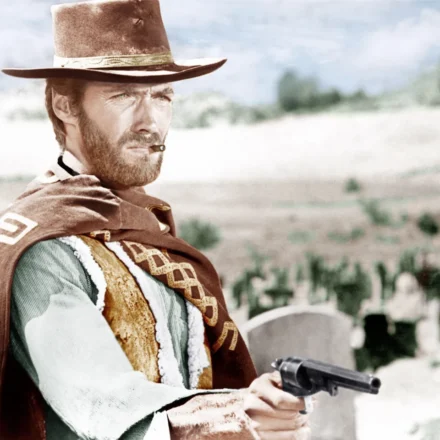
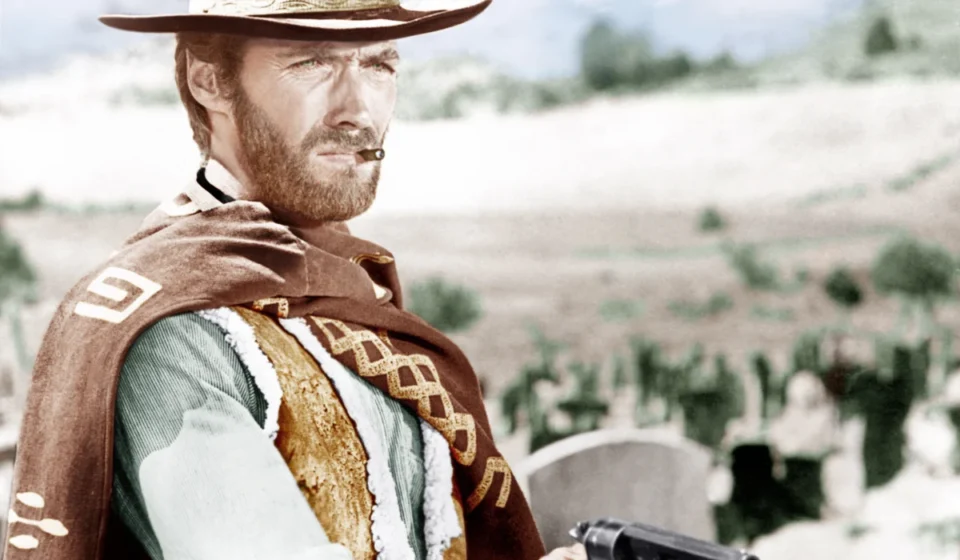
This sentiment is echoed in Austin, Texas, by Lars Nilsen of AFS Cinema. Despite the intense climate in Texas, Nilsen chose not to program "issue-based" films, opting instead for The Good, the Bad and the Ugly. He sees the theater as a bastion of the "repertory culture" that is slowly rebuilding community. "I think very intricately and carefully programmed cinemas are one of the places where community is being reborn," Nilsen said. "Thank goodness."
The Psychological Implications of "Distraction"
The psychological motivation for the "election night moviegoer" is complex. While some are looking for films that mirror their anxiety—like the Bresson film The Devil, Probably, showing at Pennsylvania’s Gap Theatre—others are looking for the exact opposite.

At the Oriental Theatre in Milwaukee, author Matthew J. Prigge is presenting a screening of Dog Day Afternoon. For Prigge, the film is a study in raw humanity, far removed from the cold, calculated nature of modern political campaigning. Similarly, in Austin, the Hyperreal Film Club is screening the sports movie Hardball. Programmer Blake Williams explained that after a month of Halloween horror, his audience—particularly those in the LGBTQ community who feel increasingly unsafe in the current political climate—needs a moment of "weepy comfort."
"You kind of want to see a change in these things happen and you hope that it’ll happen, but at least film can kind of make people forget about these things," Williams said. "I think it’s cool that we’re able to offer our comforts to the community to put them at ease, even if it’s just for a few hours."

Implications for the Future of Independent Film
The success of these screenings raises questions about the long-term role of independent cinema in American civic life. As the industry faces existential questions regarding streaming, the box office, and the potential acquisition of platforms like Letterboxd by major media conglomerates (such as the recent $330 million deal), the brick-and-mortar theater stands as a defiant constant.
In North Carolina, the Independent Picture House is using the election night to host its monthly filmmaker meetup. Creative director Jay Morong notes that the film community is uniquely tied to the results. "We are constantly battling against the state government… so the film community is very actively involved in who is winning these state and federal elections."

From the experimental one-person theater installations at WHAMMY in Los Angeles to the global-perspective lectures at the Gene Siskel Film Center in Chicago, the message is clear: the cinema is no longer just a place to see a movie. It is a vital, essential component of the American social fabric.
Whether audiences are there to escape the news, to confront the darkness through allegory, or simply to find a place where their phone doesn’t work, they are participating in a tradition that predates the 24-hour news cycle. As one Reddit user noted in a recent thread on the topic, the decision to vote early specifically to make time for a Godzilla screening on election night is a testament to the fact that while politics may define the era, it does not have to define the individual’s entire existence.

On this November 3, as the returns begin to trickle in, thousands of Americans will be in the dark, watching stories that have nothing to do with the ballot box. And for those few hours, that might be exactly what the country needs.