
By Editorial Desk
November 18, 2026
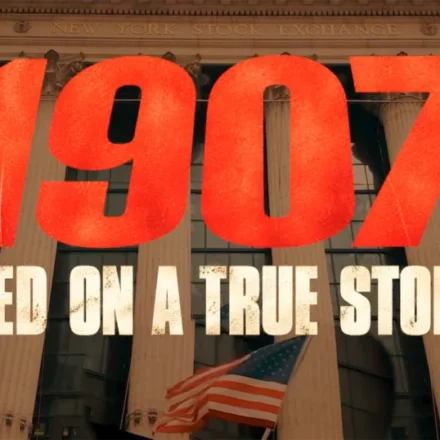
In the annals of American history, the names of the "Robber Barons" evoke a mixture of awe and resentment. While figures like Rockefeller and Vanderbilt are household names, the specific mechanisms that birthed the modern centralized financial system are often shrouded in the gray fog of the early 20th century. A new historical thriller, The Panic, directed by Daniel Adams, aims to pierce that fog, bringing to light the high-stakes, cutthroat maneuvering that defined the Panic of 1907. As The Avenue prepares to bring this tale of financial warfare to select theaters on January 22, 2027, audiences are being invited to look past the glitz of the Gilded Age and into the cold, calculated heart of American capitalism.
A Nation on the Brink: The Premise of ‘The Panic’
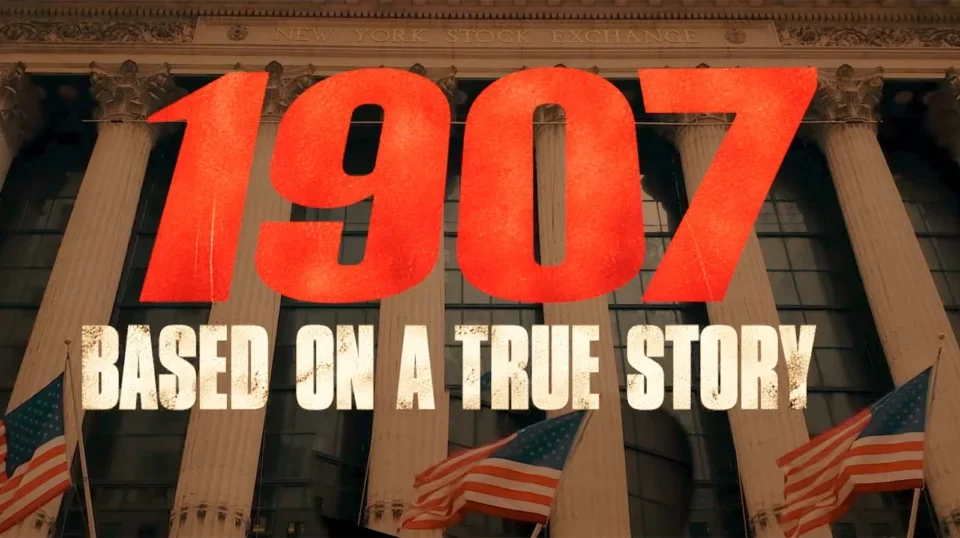
The Panic serves as a cinematic deep-dive into a pivotal moment in American history—the 1907 financial crisis, a period that predates the Federal Reserve System and the Great Depression. The film dramatizes the collision between two industry titans: J. Pierpont Morgan, portrayed by Colm Meaney, and Charles T. Barney, played by Cary Elwes.
The narrative is framed not merely as a period piece, but as a political thriller. As the market spirals into chaos, the film posits that the resulting economic catastrophe was not merely a natural disaster of the free market, but a weaponized opportunity. While the public panicked as banks shuttered and savings evaporated, the film suggests that Morgan saw the collapse as a clearinghouse—a way to eliminate rivals, consolidate banking power, and fundamentally rewrite the rules of American finance.
Chronology of a Crisis: The 1907 Landscape
To understand the stakes presented in The Panic, one must understand the volatility of 1907. The year began with a stock market crash that saw the New York Stock Exchange lose nearly 50% of its value from its peak the previous year.
The Prelude to Collapse
The crisis was ignited by a failed attempt to corner the stock of the United Copper Company. When the scheme unraveled, the institutions that had financed the attempt, including the Knickerbocker Trust Company—presided over by Charles T. Barney—found themselves in the crosshairs.

The Run on the Banks
By October 1907, the panic was in full swing. With the Knickerbocker Trust failing, depositors lined up around the block, desperate to withdraw their funds. This "run" threatened to turn a localized banking failure into a systemic national collapse. It was during this vacuum of leadership that J.P. Morgan, already the most powerful banker in America, stepped in.
The Resolution (or Consolidation)
Morgan famously locked the city’s leading bankers in his library at 36 East 36th Street, refusing to let them leave until they had agreed to a plan to stabilize the markets. While history often portrays Morgan as a savior who prevented total annihilation, The Panic explores the darker interpretation: that Morgan utilized this leverage to secure his own dominance, eventually leading to the creation of the Federal Reserve—an institution that would forever centralize control over the nation’s currency.
The Titans of Industry: Character Analysis
The film’s tension rests squarely on the shoulders of its lead actors, who embody the ideological divide of the era.
- J. Pierpont Morgan (Colm Meaney): Often cited as the architect of modern finance, Morgan was a man of immense influence and cold pragmatism. Meaney’s portrayal leans into the aura of the "banker-king," a man who viewed the American economy as a chessboard.
- Charles T. Barney (Cary Elwes): Representing the old guard of trust banking, Barney is depicted as the tragic foil. His demise serves as a cautionary tale of what happens when one dares to stand against the consolidated power of the Morgan machine.
The supporting cast—including Cristiana Dell’Anna, Justin Chatwin, and industry veteran Malcolm McDowell—fleshes out a world of lobbyists, desperate politicians, and ruthless financiers, creating a pressure-cooker environment that feels uncomfortably relevant to modern debates regarding "too big to fail" financial institutions.
Supporting Data: Why This History Matters Today
The relevance of The Panic extends beyond the screen. The historical context provided by the film is intrinsically linked to the current perception of the J.P. Morgan Chase entity. Critics of the film—and historians alike—often point to the irony that the same name continues to dominate the global financial landscape over a century later.
The Evolution of the "Too Big to Fail" Doctrine
The Panic of 1907 was the first true test of the "too big to fail" doctrine. Before 1907, the government rarely intervened in market fluctuations. After 1907, the precedent was set: private bankers could, and would, act as the de facto central bank of the United States. This eventually led to the Pujo Committee investigations, which sought to uncover the "Money Trust" that controlled the country.

Economic Instability and Regulation
The financial crisis of 1907 highlighted the inherent dangers of an unregulated banking system. Data from the period shows that the absence of a lender of last resort forced the hand of private financiers. The Panic highlights the transition from a decentralized, albeit volatile, banking system to the highly regulated, centralized system we know today, prompting viewers to ask: did we gain stability at the cost of democratic oversight?
Official Responses and Creative Direction
Director Daniel Adams, known for his diverse catalog including The Lightkeepers and The Golden Boys, has taken a bold approach to this historical narrative. By focusing on the personal vendetta between Morgan and Barney, Adams aims to humanize the dry subject of financial policy.
The Filmmaker’s Vision
In early statements regarding the production, Adams noted that the goal was to "pull back the curtain on the mechanics of power." The film, which premiered at the 2025 Buffalo Film Festival, has been praised for its attempt to bring intellectual rigor to the thriller genre. While some critics have commented on the film’s gritty, perhaps unpolished visual aesthetic, the consensus remains that the narrative depth provides a compelling reason to engage with the material.
The Role of The Avenue
Distributor The Avenue has positioned The Panic as an "event" film for the start of 2027. By releasing it in late January, they are targeting an audience interested in prestige dramas and historical inquiries, hoping to capitalize on the ongoing public interest in the history of American corporate power.
Implications: A Mirror to Modernity
The ultimate implication of The Panic is that financial crises are rarely just about money; they are about power. The film asks audiences to consider the nature of crises and who truly benefits when the "panic" settles.
The Lessons of 1907
If the 1907 crisis served as the blueprint for the Federal Reserve, then the film is essentially an origin story for the modern American economy. By showing the ruthless tactics used to consolidate power, the film forces the viewer to confront the reality that the financial structures governing our lives today were built on the ashes of those who lost everything in the panic.

A Call for Critical Engagement
In an era where headlines are dominated by bank failures, crypto-market volatility, and the ever-shifting nature of the global economy, The Panic serves as a timely reminder that the patterns of history are cyclical. The exploitation of fear, the consolidation of influence, and the orchestration of market sentiment are not new phenomena; they are the bedrock upon which the modern era was built.
Final Verdict: Why You Should Watch
While the visual style of The Panic may be polarizing, its narrative ambition is undeniable. In a cinema landscape often dominated by fantasy and spectacle, a film that dares to explore the dark, complex, and often ugly roots of American banking is a rare and necessary addition.
Whether you are a history buff, a fan of political thrillers, or someone simply curious about the names on the branches of the bank on your corner, The Panic promises to be an enlightening—if not unsettling—experience. It challenges the viewer to look beyond the "official" version of history and to consider the men in the library, the deals made in the dark, and the true cost of the stability we enjoy today.
As we look toward the release on January 22, 2027, the question remains: Are we prepared to look at the foundations of our financial world with clear eyes? The Panic demands that we do.