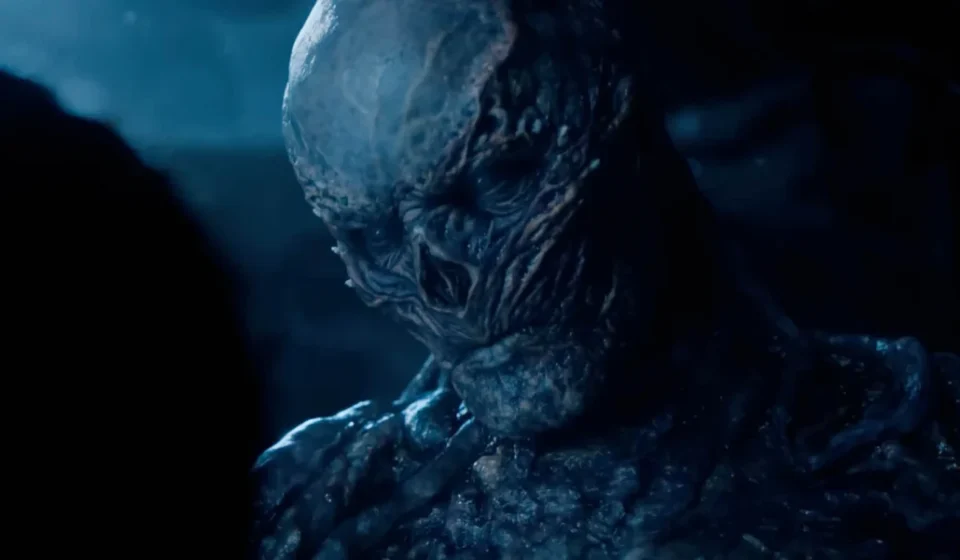
The Seamless Spectacle: How ‘Stranger Things’ Season 5 Redefined Hybrid Filmmaking

The conclusion of the Duffer Brothers’ Stranger Things was never going to be a simple production. As one of the most culturally significant television series of the streaming era, the final season bore the weight of audience expectation, narrative closure, and an ambitious scale that demanded a total departure from conventional VFX workflows. At the heart of this technical evolution was lead visual effects supervisor Betsy Paterson, who spent over three years orchestrating a massive, multi-disciplinary effort to bridge the gap between practical performance and digital artistry.
In a recent fxpodcast conversation, Paterson detailed the philosophy that guided the final season: the goal was not to choose between "practical" and "digital," but to engineer a production environment where every department—from stunts and makeup to lighting and VFX—contributed to a singular, cohesive reality.
The Philosophy of the "Invisible Handoff"
For decades, the film industry has been caught in a binary debate regarding the merits of in-camera effects versus computer-generated imagery (CGI). However, Stranger Things has never had the luxury of that fiction. With creatures like the Demogorgons and the world-altering horror of the Upside Down, the production required a sophisticated synthesis of both worlds.
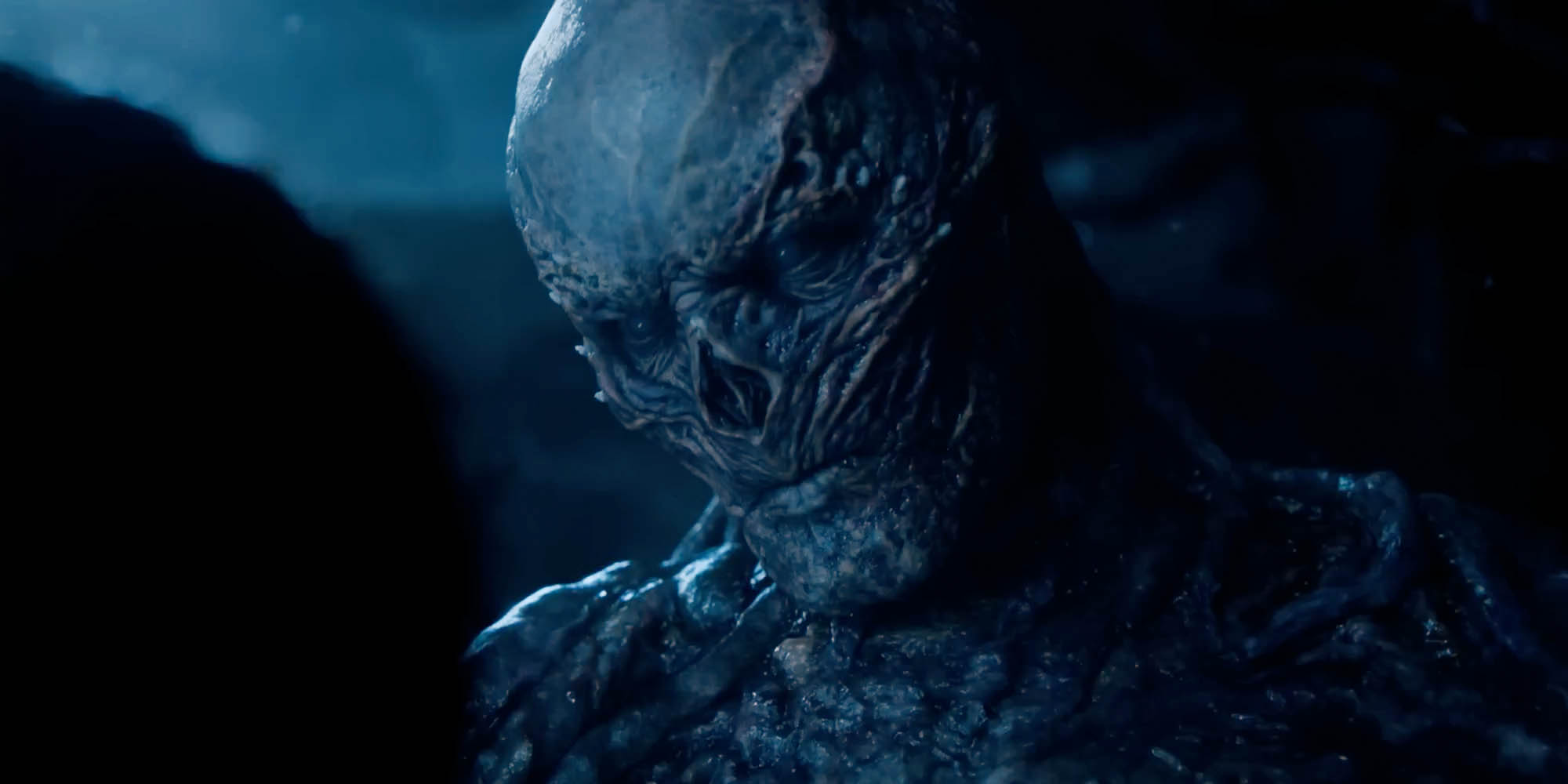
Paterson’s approach, initiated during a full year of rigorous pre-production, focused on the "invisible handoff." Her team worked to ensure that every digital asset was anchored by physical reality. If a Demogorgon was entirely computer-generated, the vase it knocked over was real, the table it struck was physically moved by a rig, and the actors were given tangible cues—such as wire pulls or air hits—to react to. These elements were not merely references for post-production; they were performance-drivers. By providing the cast with physical resistance and precise eyelines, the production ensured that the digital creatures occupied the same space as the human actors, creating a sensory continuity that is often missing in modern blockbusters.
A Chronology of Collaboration: From Previs to Final Grade
The production of Season 5 was a masterclass in integrated scheduling. The process began long before the cameras rolled, with "previs" (pre-visualization) serving as the common language for the entire crew.
Pre-Production and Planning
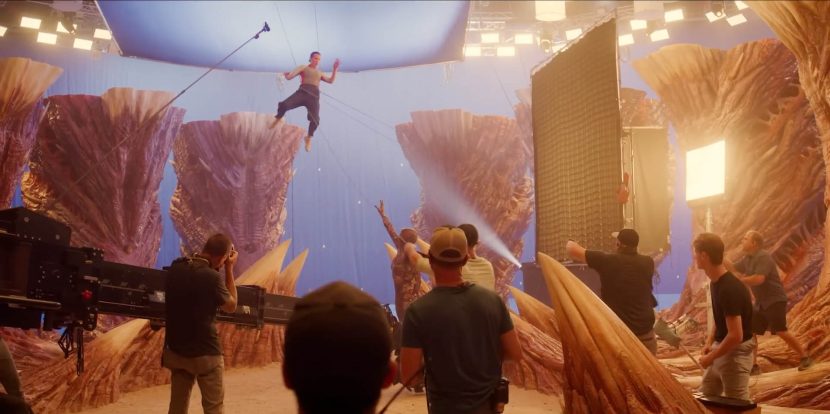
Previs established the "large geography" of the final battles, dictating the scale of the monsters and the blocking of the actors. By resolving the spatial requirements early, the production could adapt to the chaotic nature of on-set improvisation. When filming in a large quarry for the season’s final battle, the team utilized augmented reality (AR) to allow the crew to view the creature at scale through an iPad. This allowed the camera operators to frame shots based on the actual intended size of the beast, while practical sand bursts, triggered on cue, provided physical evidence of its weight and movement.
Production and Data Capture
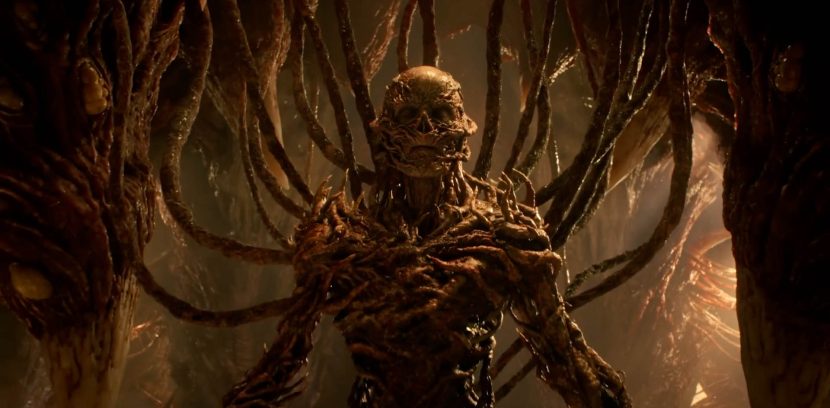
During the shoot, the focus shifted to data acquisition. For the character of Vecna, played by Jamie Campbell Bower, the production rejected the idea of a purely motion-capture-driven performance. Instead, Bower remained on set in a suit designed for digital replacement, maintaining his terrifying presence for the benefit of his co-stars. This decision added complexity to the post-production pipeline—requiring extensive paint and cleanup work—but it fundamentally preserved the emotional intensity of the performance.
Post-Production and Finalization
As the footage moved into the hands of powerhouse studios like Wētā FX and ILM, the collaboration continued. The final grade was not an afterthought; the colorist worked in the same building as the VFX team, allowing for a tight feedback loop. By testing "looks" early and sharing them with vendors, the team ensured that the lighting of the CG creatures perfectly matched the complex, flickering practical light sources captured on set.
Supporting Data and Technical Hurdles
The scale of the season’s technical requirements was staggering, involving hundreds of shots that required seamless integration across multiple vendors.
The Challenge of "Young Will"
Perhaps the most daunting task on Paterson’s "risk list" was the return to a young Will Byers. Because the audience has an intimate memory of the character from Season 1, there was nowhere to hide. The production cast a young actor, Luke, whose physical proportions mirrored those of a young Noah Schnapp.
Wētā FX led the facial replacement efforts, moving away from purely AI-driven solutions toward a traditional, highly controlled digital face. The process involved a rigorous "capture package":
- Witness Cameras: Two cameras were mounted to the primary production camera, with four additional units placed around the set to capture multiple angles.
- Reference Archive: The team compiled every available frame of footage from the show’s inception, including outtakes and interviews, to map the subtle micro-expressions of the original actor.
- Tactile Interaction: For scenes involving the "tendrils," the production utilized physical scuba-style mouthpieces so the child actors could feel the resistance of the object, ensuring their gag reflex and muscle tension were genuine.
Vendor Ecosystem
While Wētā FX handled the bulk of the creature work and the digital human sequences, ILM focused heavily on the environments of the Upside Down and the complex physics of vine movement. Other studios, including Eyeline, Rodeo FX, and BigHug FX, provided essential support. Managing this ecosystem required Paterson to review up to 300 shots a day, navigating a complex web of dependencies where one vendor’s output directly influenced the work of another.

Official Responses and Creative Directives
The Duffer Brothers maintained a strict directive throughout the process: the technology must serve the scare. In discussing the refinement of the Demogorgons, Paterson noted that the goal was not to "re-brand" the monsters, but to enhance their physical interaction with the world. Improvements in muscle simulation, subsurface scattering for the skin, and the physics of "slobber" were all designed to collapse the distance between the viewer and the monster.
"If it helps him feel like he is really in the room, that is worth it," Paterson remarked. This ethos extended to the set design itself. Glass panels in laboratory sequences were built to be modular—removable or tiltable—allowing the production to choose, on a shot-by-shot basis, whether to keep real-world reflections or replace them with digital elements. This level of foresight meant that the production was rarely "rescuing" a shot in post; it was completing a vision that had been carefully prepared.
Implications for the Future of VFX
The success of Stranger Things Season 5 sends a powerful message to the industry: the future of high-end visual effects lies in the breakdown of silos. By involving VFX supervisors in the earliest stages of script development and ensuring that the camera crew, art department, and digital artists are speaking the same language, productions can achieve a level of realism that was previously unattainable.
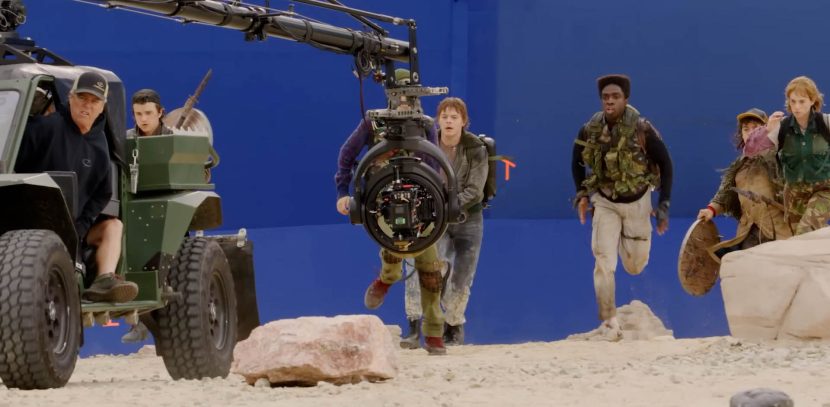
The "hybrid" approach—where the digital is built upon the foundation of the physical—proves that even as AI and procedural animation become more powerful, they cannot replace the necessity of a physical anchor. Whether it is the padding under an actor’s arms to improve a creature’s silhouette or a simple sandbag used to guide a performance, these "small loops" between departments are the building blocks of modern cinematic magic.
As the industry looks toward the next generation of tentpole storytelling, the Stranger Things model stands as the gold standard. It suggests that the most compelling visual effects are those we stop noticing, not because they are perfectly hidden, but because they feel, in every meaningful way, like they are truly there.