Into the Breach: ‘Black Doves’ Season 2 Reimagines Existential Espionage Through the Lens of Friendship

The second season of Joe Barton’s high-stakes thriller Black Doves arrives on Netflix with the same razor-sharp wit and existential melancholy that defined its breakout debut. Starring Keira Knightley as the beleaguered spy-wife Helen and Ben Whishaw as the weary, cynical assassin Sam, the series returns not merely as a procedural about state secrets, but as a poignant exploration of human connection in a world governed by opaque power structures and cold, transactional violence.
As the series premieres its eight-episode run, audiences are invited back into the shadow-drenched corridors of London, where the personal and the professional bleed into one another with lethal consequences.
The State of Play: Main Facts and Narrative Stakes
At the heart of Black Doves Season 2 lies a familiar, yet elevated, predicament. Helen, struggling to balance her double life as the spouse of the newly ascended British Prime Minister, Wallace (Andrew Buchan), finds her agency eroding. Her role as a conduit for information has left her feeling like a puppet, and when her longtime handler, Mrs. Reed (the indomitable Sarah Lancashire), suddenly vanishes, Helen is thrust into a new, hostile hierarchy of nameless, faceless bureaucratic controllers.
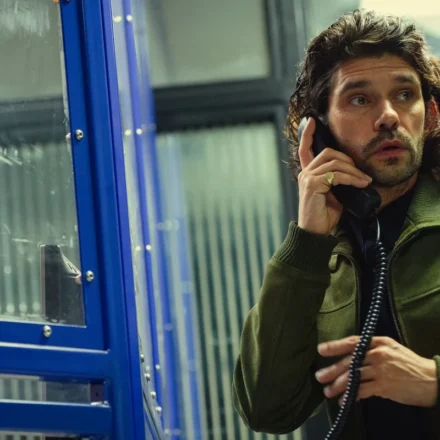
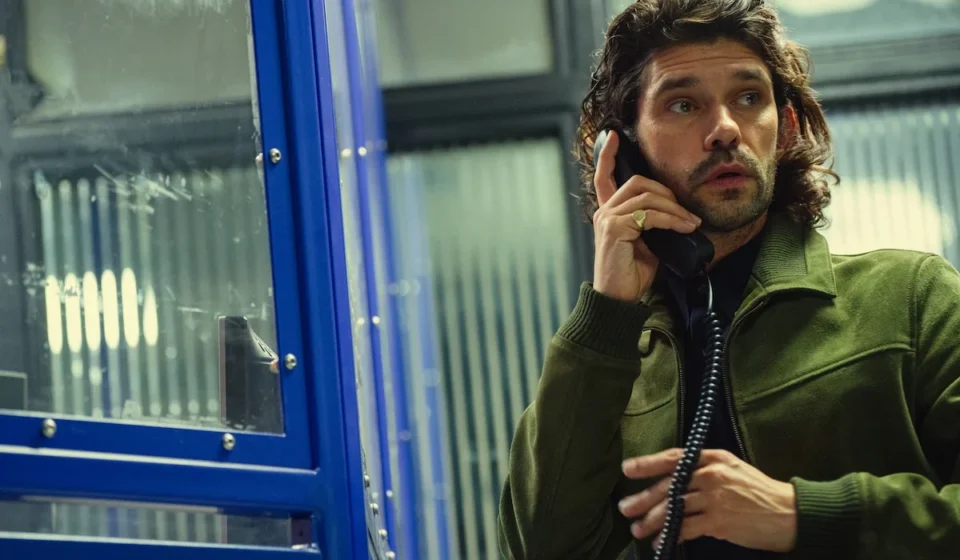
Simultaneously, Sam is grappling with his own precarious existence. Following a brush with the law, he is strong-armed by a mysterious “private entity” into a series of high-risk hits. The tension in Season 2 is driven by this dual narrative of disenfranchisement: Helen is fighting for a seat at the table of power, while Sam is fighting to retain his moral compass in a profession that demands he discard it.
The central thesis of the season—and arguably the series—is captured in a moment of cynical humor between the two leads. When Helen muses that she and Sam are “paddling together” through the same “shit creek,” Sam, ever the pragmatist, reminds her that the adage concludes with the lack of a paddle. It is a bleak observation that sets the tone for a season where the characters must constantly invent their own survival tools.

A Chronology of Chaos: The Evolution of Helen and Sam
To understand the trajectory of Season 2, one must look at the progression of our protagonists. In the first season, Helen nearly abandoned the espionage trade for a romantic prospect that proved to be a lie. This time around, she has doubled down. She is determined to stabilize her marriage through couples therapy while simultaneously demanding transparency from the shadowy cabal that dictates her life.
Helen’s journey is one of political awakening. Her husband’s rise to Prime Minister, while ostensibly a position of prestige, has rendered her a "spy wife" in the most restrictive sense. She is trapped in a cycle of performative dinners and high-level social events, trading secrets for status, only to find that the information she yields is used by superiors who refuse to identify themselves. Her demand to the new boss, Mr. Conteh (played by Babou Ceesay), that she knows who she is risking her “life, liberty, and freedom for,” serves as the season’s ideological anchor.
Sam, conversely, is in a state of profound psychological decline. His arc is marked by a cycle of substance abuse and sleep deprivation, portrayed with raw, shifting vulnerability by Whishaw. He is tasked with four assassinations, but the true burden is not the killing—it is the mystery of why these specific targets were chosen. As he is told by his handlers that “love is a weakness,” Sam is forced to confront the reality that his empathy is both his greatest liability and his only remaining link to his humanity.
Supporting Data: An Expanded Ensemble and Thematic Depth
The strength of Black Doves lies in its ability to integrate new characters without sacrificing the intimacy of its central duo. Ambika Mod joins the fray as Laila, a "muscle" character whose presence adds a fresh, unpredictable dynamic to Helen’s missions. Neve Campbell enters the world of the series as Cecile, a U.S. Defense Envoy who brings an international layer of geopolitical maneuvering to the domestic political drama.
Furthermore, the introduction of two young, hungry assassins—Williams (Ella Lily Hyland) and Eleanor (Gabrielle Creevy)—serves as a narrative mirror. They are the next generation of "Black Doves," and their naivety regarding the cost of their profession serves to heighten the cynicism of Helen and Sam. Their presence underscores the show’s darker observations: that the life of an operative is inherently solitary and ultimately, perhaps, futile.

The production value continues to impress, with sharp, rhythmic editing and a soundtrack that punctuates the action with intentionality. The show’s pacing is, as ever, compulsive, balancing moments of high-octane violence with quiet, devastating character studies.
Official Perspectives and Industry Context
The creative vision behind Black Doves remains firmly in the hands of Joe Barton. By situating the show in a world where the working class—or those effectively treated as such—are manipulated by the executive class, the series taps into a pervasive modern anxiety. The divide between those who issue the orders and those who carry them out at the risk of their own lives is a recurring motif.
Critics have noted that the show functions as a "spy series that winks at the genre." It acknowledges the tropes of the trade—the dead drops, the false identities, the betrayal—while refusing to succumb to the glamour of it. By focusing on the "existential espionage" of the characters, the series positions itself closer to the works of Le Carré than the stylized world of Bond.
Moreover, the show’s arrival in the current political climate—specifically following the societal shifts observed in the latter half of 2026—adds a layer of resonance. The dialogue regarding the necessity of compassion as a form of resistance against "misguided moralism" echoes broader cultural conversations about the value of empathy in an increasingly polarized society.
Implications: Friendship as the Ultimate Weapon
The pivotal epiphany of the season, delivered by Helen, is that “friendship is the paddle.” While it may sound like a sentiment borrowed from a Hallmark card, within the brutal, unforgiving universe of Black Doves, it is a revolutionary act.

The implication is that in a system designed to isolate and exploit, the only way to retain one’s soul is through the voluntary, unreciprocated act of showing up for someone else. Sam and Helen are not just surviving; they are building a lifeboat out of their mutual reliance. They save one another not by stopping the bullets, but by acknowledging the shared weight of the lives they lead.
The series suggests that we are all, at some point, up a creek. We are all subject to forces beyond our control—whether they be political mandates, societal expectations, or the consequences of our own past actions. But the show provides a rare, optimistic conclusion: that the only tool you truly need to navigate the darkest waters is a companion who refuses to let you drown.
Conclusion: A Masterclass in Character-Driven Suspense
Black Doves Season 2 is a triumph of narrative ambition. It manages to scale up the stakes of its espionage plot while diving deeper into the interior lives of its characters. With a B+ rating, it stands as one of the most compelling dramas on Netflix this year.
The series is not just about the "what" of spying, but the "why." Why do we persist? Why do we care? Why, in a world that demands we harden ourselves, do we choose to reach out? For Helen and Sam, the answer is simple, yet profound. They are searching for purpose and connection in a world that denies both. And in the final, shivering moments of the season, the audience is left with the distinct impression that they might just find it.
Black Doves Season 2 premieres on Thursday, November 5, exclusively on Netflix. All eight episodes will be available for streaming, offering a perfect, if harrowing, weekend of television.