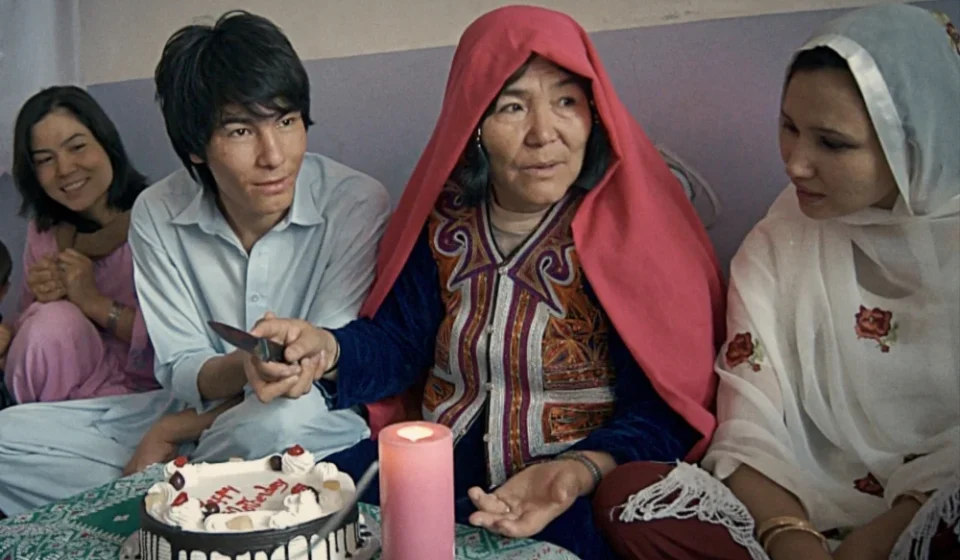

A gauze of dust covers everything in the Pakistani desert city of Quetta, rendering the landscape a uniform shade of bleached, parched beige. This is an "in-between" color for an in-between place—a transit point that has, for many, become a permanent residence of uncertainty. In the city quarter known as Hazara Town, home to over half a million members of the ethnic Hazara community, the air is thick with the scent of diesel, desert sand, and a pervasive sense of waiting.
For the thousands of displaced refugees from Afghanistan living here, life is a grueling exercise in indefinite limbo. They are caught in a geopolitical trap: violently imperiled in their current sanctuary in Pakistan, yet not yet granted the asylum they seek in the West. It is within this despairing holding pattern that Afghan-born, Los Angeles-based filmmaker Khadim Dai has captured his first feature-length documentary, Hazara Town. The film is a poignant, sharply observed chronicle of a community where everyday domestic challenges and occasional flashes of joy must coexist with the constant threat of extinction.
Main Facts: A Family Fragmented by Borders
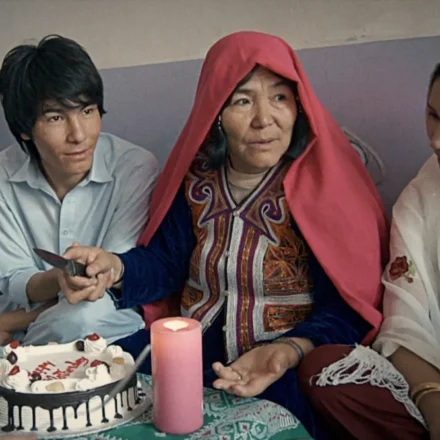
The documentary is not merely a journalistic observation; it is a deeply personal family affair. Khadim Dai, having already secured his own path to the United States, returned to Pakistan several years after his departure to document the lives of those he left behind. The film centers on his stranded relatives: his sister-in-law, Sedeqa; his two young nieces, Machid and Mitra; and their doting grandparents.
The family’s patriarch, Dai’s brother Hussain, has already managed to forge ahead, reaching Canada to lay the groundwork for a new life. However, the path for the rest of the family is blocked by a bureaucratic labyrinth. The asylum application process is notoriously slow and highly selective, meaning that entire chapters of childhood and family history pass by in a state of separation.
Mitra, the younger niece, barely remembers her father’s physical presence. For her, a father is a flickering image on a smartphone screen, a voice distorted by poor internet connections. While video calls partially bridge the geographical gap, they cannot replace the tactile reality of a shared home. Dai’s camera captures this "splintered" existence, focusing on how the two girls grow and mature around the void left by their father’s absence.
Chronology: From Flight to the "Rearview" Departure
The timeline of Hazara Town reflects the broader arc of the Afghan refugee crisis, particularly following the resurgence of the Taliban in 2021.
- The Initial Flight: The family fled Afghanistan to escape the systemic persecution of Hazaras—a Shia Muslim minority that has long been targeted by the Taliban and extremist groups like ISIS-K. They arrived in Quetta, a city that has historically served as a refuge but has increasingly become a site of sectarian violence.
- The Period of Stasis: Upon arrival, the family entered the "holding pattern" that defines the film. This period is marked by the mundane routines of domestic life—cooking, studying, and playing—conducted within the walls of a modest interior courtyard. This "inward-turning" architecture serves as a physical manifestation of their need for security in a hostile environment.
- The Educational Shift: As time progressed, the geopolitical situation worsened. The documentary notes a chilling shift in the girls’ education. As the Pakistani government began handing over more responsibility for refugee education to entities influenced by Taliban ideologies, classroom freedoms were curbed. The girls’ intellectual growth became an act of domestic rebellion, fueled by Machid’s love for Judy Blume novels and dreams of American universities.
- The Fragmented Departure: The film’s climax is not a grand reunion but a series of small, painful fractures. Good news eventually arrives from North America, but only for some members of the family. Dai captures the ritual of departure: a taxi pulling away, a bucket of water splashed on the pavement for good luck, and the distorted faces of those left behind reflected in the rearview mirror.
Supporting Data: The Peril of the Hazara Community
To understand the stakes of Dai’s documentary, one must look at the data surrounding the Hazara community in Pakistan. Quetta has become a "ghettoized" city for Hazaras. While Hazara Town and nearby Mari Abad provide a sense of community, they are effectively enclaves surrounded by checkpoints.
- Targeted Violence: According to human rights monitoring groups, hundreds of Hazaras have been killed in targeted bombings and shootings in Quetta over the last decade. Dai’s film reflects this by periodically flashing the rising death toll on the screen—a grim ticker that requires no commentary.
- The Cemetery as a Social Metric: The film spends significant time in the local cemetery. This is not just a place of mourning but a thriving industry. The "tap-tap-tapping" of stonemasons recorded in the film’s sound design highlights that death is one of the few reliable sectors of the local economy.
- Refugee Demographics: Pakistan hosts approximately 1.4 million registered Afghan refugees, with an estimated 1.7 million more undocumented. The Hazara community is particularly vulnerable because their distinct Asiatic features make them easily identifiable to sectarian militants.
The film’s sound design balances these harsh realities. The lonely reverberations of the desert wind are juxtaposed against the chatter of children playing among the grave markers. For the children of Hazara Town, the cemetery is one of the few open spaces where they are "granted social space," a poignant commentary on the limited horizons of their current existence.
Official Responses and Political Climate
The situation for the subjects of Hazara Town has been further complicated by recent shifts in Pakistani domestic policy. In late 2023, the Pakistani government announced a "Illegal Foreigners’ Repatriation Plan," ordering all undocumented immigrants—the vast majority being Afghans—to leave the country or face deportation.
- The Pakistani Government’s Stance: Officials have cited national security concerns and the economic burden of hosting millions of refugees as the primary drivers for the deportation drive. This policy has turned Quetta from a place of "limbo" into a place of active danger for those awaiting Western asylum.
- International Asylum Delays: The documentary highlights the agonizingly slow response from Western nations. While Canada and the United States have made public commitments to resettling Afghan allies and vulnerable minorities, the "selective" nature of these programs means that families are often torn apart, with some members deemed eligible while others are left in the "bleached beige" of Quetta.
- Human Rights Advocacy: Organizations like Amnesty International and Human Rights Watch have criticized the slow pace of third-country resettlement. They argue that for the Hazara, "repatriation" to Afghanistan is effectively a death sentence, yet "sanctuary" in Pakistan has become a prison of fear.
Implications: The Psychological and Cultural Toll of Statelessness
The implications of the lives depicted in Hazara Town extend far beyond the borders of Pakistan. Khadim Dai’s work serves as a "quietly emphatic statement of presence" for a population that is frequently reduced to statistics in global news cycles.
The Erosion of Identity
The film suggests that the greatest casualty of long-term refugee status is the sense of self. Machid and Mitra are maturing in a vacuum. They are too young to fully remember Afghanistan and too alienated to feel Pakistani. Their identity is forged in the "stateless existence" of the domestic courtyard. The documentary poses a silent question: What happens to a generation that grows up in a waiting room?
The Burden of the "Lucky"
The film also explores the psychological toll on those who do manage to escape. Hussain, sending cheerful videos from Canada, is clearly performing a role for his family. He marvels at the snow and the culture, but the film hints at the survivor’s guilt and the crushing pressure of being the family’s only hope for a "North American" future.
Documentary as Witness
As an accomplished cinematographer, Dai uses his lens to transform "unremarkable episodes of daily survival" into a grace-filled narrative. By focusing on the domestic—the reading of a book, the splashing of water, the shared meals—he restores the humanity that the asylum process strips away.
Hazara Town provides no tidy resolution because the crisis itself has no end in sight. For the refugee family, movement brings as much anguish as stillness. Every departure is a loss; every reunion is tempered by the knowledge of those still left behind in the dust. The film concludes not with a "happily ever after," but with a shred of hope—a fragile, necessary thing in a place where even the gravestones eventually vanish into the desert sand.
In the final analysis, Dai’s work is a testament to the resilience of the Hazara people. It suggests that while governments may see them as a problem to be "repatriated" or a file to be "processed," they remain a vibrant, dreaming community, asserting their right to exist in a world that seems determined to look the other way.