
Danny Boyle has never been a director known for restraint. From the kinetic, heroin-fueled highs of Trainspotting to the visceral, post-apocalyptic dread of 28 Days Later, Boyle has consistently utilized an aggressive visual language to interrogate the human condition. With his latest film, Ink—which premiered to significant buzz at the 2026 Venice Film Festival—Boyle turns his frenetic lens toward the birth of modern tabloid culture, tracing a direct, if somewhat overcooked, lineage from the smoke-filled newsrooms of 1969 to the digital chaos of the current political landscape.
Ink is a vividly directed, pulsating political parable that asks a question we have been grappling with for nearly a decade: How did we get here? By anchoring his narrative in the transformation of The Sun under the stewardship of Larry Lamb and Rupert Murdoch, Boyle creates a high-stakes, breathless account of the moment journalism traded its moral compass for circulation numbers.
The Genesis of the Tabloid Empire: A Chronology of Chaos
The narrative arc of Ink is as ambitious as the men it depicts. It begins in the dying embers of the 1960s, a time when London was swinging, dexedrine was flowing, and the media landscape was ripe for disruption. Screenwriter James Graham, adapting his own critically acclaimed play, focuses on the uneasy partnership between the Australian media mogul Rupert Murdoch (played with chilling, unrecognizable precision by Guy Pearce) and his ambitious, street-smart editor Larry Lamb (Jack O’Connell).
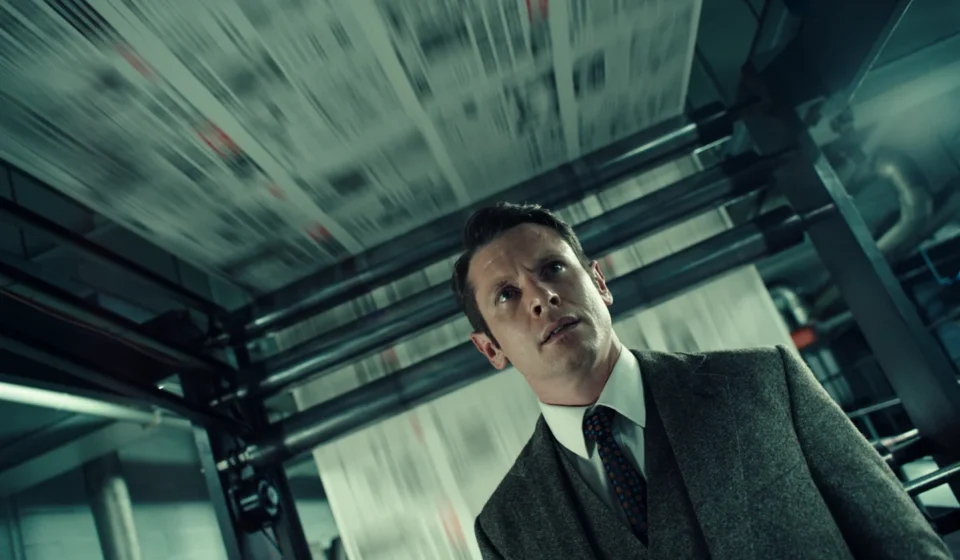
The film meticulously charts the rise of The Sun from a struggling broadsheet to a pugnacious, industry-disrupting force. The chronology follows the paper’s descent into the “if-it-bleeds-it-leads” mentality, a trope well-trodden by classics like Network or Nightcrawler, yet here revitalized by Boyle’s sheer force of personality. As the paper’s readership grows, so does its willingness to sacrifice journalistic integrity. The film captures the transition from hard news to “Knickers Week,” the sensationalizing of sex-position manuals, and the relentless pursuit of scoops that prioritized profit over people.
The film reaches its most electrifying and harrowing point during the mid-film exploration of the kidnapping of Muriel Freda McKay. When the wife of Murdoch’s right-hand man, Sir Alick McKay, was abducted by radicals who mistook her for the media tycoon’s wife, The Sun saw an opportunity. Lamb’s decision to publish daily, sensationalized dispatches—turning a genuine tragedy into a serialized drama—serves as the film’s moral nadir. It is here that Ink stops being a period piece about newspaper layout and becomes a horror story about the commodification of human suffering.
Supporting Data: The Anatomy of an Obsession
The strength of Ink lies not in its historical novelty, but in its performances. Jack O’Connell, fresh off his role in Boyle’s 28 Years Later, delivers a tour-de-force performance as Larry Lamb. He portrays the editor as a man addicted to the thrill of the win, a figure whose “raffish street-wiseness” masks a simmering sociopathy.

Claire Foy serves as the film’s moral anchor and most compelling presence. As a feminist journalist hired to bring a "woman-centric" perspective to the paper, she represents the internal conflict of the era. Her character’s descent from an idealistic, unflappable reporter to a deeply disturbed witness of her own publication’s corruption provides the audience with a necessary point of entry.
Boyle’s production team deserves significant credit for the film’s aesthetic. The hair, the wardrobe, and the meticulous recreation of the 1969 office environment are, as the saying goes, "to die for." Boyle utilizes every trick in his arsenal—Dutch angles, rapid-fire crash zooms, and stuttering step-printing—to create a sense of unrelenting velocity. Unlike his 2015 Steve Jobs biopic, which felt constrained by its stage-bound script, Ink feels like a director rediscovering the raw potential of cinema. He throws everything at the screen, literally splashing his lead character in pools of black ink to visualize the blood on his hands. It is a stylistic choice that borders on the cartoonish, but it fits the megalomaniacal tone of the subject matter perfectly.
The Ambiguity of the Mogul
While Guy Pearce’s Murdoch is a masterclass in subtlety—a weary, detached puppet master overseeing the carnage—the script leaves the character of Larry Lamb somewhat enigmatic. A late-breaking flashback attempting to explain Lamb’s behavior through the lens of childhood trauma feels like a perfunctory attempt to add depth to a character who is clearly defined by his own choices.
The film’s greatest tension, however, lies in its refusal to fully interrogate the relationship between Lamb and his staff. The affair between Lamb and his star reporter, Jules Davies (Foy), is left largely unplumbed, despite its clear implications for the paper’s editorial ethics. Perhaps this is intentional; by leaving these moments unexplored, Boyle suggests that for these characters, personal relationships were merely another variable to be exploited or ignored in the pursuit of the next front page.
Implications: The Long Shadow of the Tabloid Era
The most controversial element of Ink is its framing. By ending the film with a montage that includes Donald Trump and Elon Musk, Boyle is making a blunt, almost confrontational statement about the consequences of the 1969 editorial shift. The film posits that the sensationalism, the exploitation of the truth, and the abandonment of the public interest for the sake of clicks (or in this case, print sales) provided the bedrock for the post-truth era.
Some critics may find this messaging unsubtle. To some, the suggestion that one woman’s tragic death at the hands of kidnappers is less morally offensive to the film’s thesis than the printing of "nudie photos" feels like a strange moral hierarchy. However, in the context of the film’s argument, the point is clear: the tabloidization of news stripped away the barriers between the private and the public, eventually leading to a world where the distinction between information and entertainment—and between fact and fabrication—is permanently erased.

If the viewer does not already understand how the "rag" mentality paved the way for modern populist figures, Ink will not offer a nuanced history lesson. Instead, it offers a visceral, exhausting, and ultimately fascinating look at the people who believed that everything was copy.
Final Verdict and Distribution
Despite its heavy-handed final act, Ink is a triumph of kinetic filmmaking. It is a movie about people who are rarely likable but are, without exception, endlessly watchable. It captures the frantic energy of a newsroom on the brink of a revolution—a revolution that would change the world, though not in the way the men behind the desks intended.
Grade: B
Ink is a sobering reminder that the media we consume shapes the reality we inhabit. As we look at the headlines of 2026, it is impossible not to see the fingerprints of 1969. The film stands as a testament to Boyle’s enduring ability to shake his audience out of their complacency, even if he leaves a few ink stains on the walls in the process.
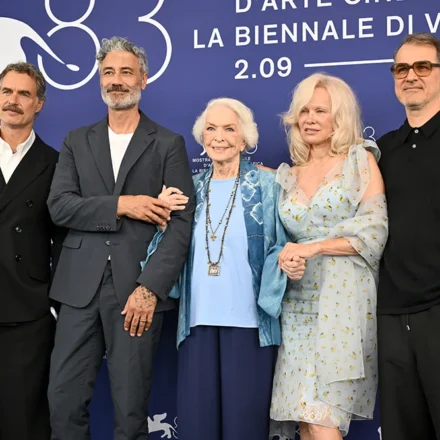
Ink premiered at the 2026 Venice Film Festival to a standing ovation. Netflix is scheduled to open the film in select theaters starting December 11, 2026, with a global streaming release following on January 8, 2027.