Venice 2026: Robert Greene’s Too Much Sugar and the Transcendent Power of Participatory Cinema

By [Your Name/Editorial Desk]
September 18, 2026
In an era where the cinematic landscape is increasingly dominated by franchise fatigue and digital spectacle, the arrival of Robert Greene’s Too Much Sugar at the 2026 Venice Film Festival serves as a sobering, essential counter-narrative. Premiering in the festival’s prestigious Orizzonti section, the film is a masterclass in the "documentary hybrid" form—a genre Greene has spent his career perfecting through works like Kate Plays Christine and Procession.
At its core, Too Much Sugar poses a provocative question: Does the act of watching—or, more importantly, making—cinema actually facilitate human growth? While the film may not possess the immediate, polished impact of a traditional blockbuster, its resonance is profound, lingering in the consciousness long after the credits roll. It is a work that argues for the transformative potential of storytelling, not as a passive experience, but as a rigorous, messy, and necessary act of self-reflection.
Main Facts: A Meta-Cinematic Journey into Americana
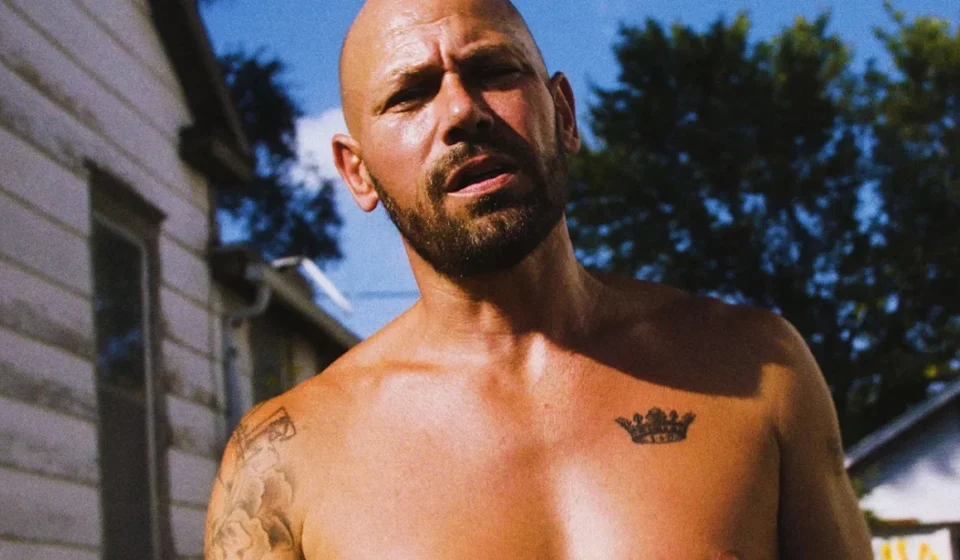
Too Much Sugar is an ambitious project that blurs the lines between reality and artifice. The film documents the lives of two men in a small Missouri town: Ryan Holliger, a carpenter and fighter, and his best friend, known as AccRite. Ryan, a father of six children by five different women, carries the weight of a complicated past. Driven by a desire to break the cycles of "generational hurt" left behind by his own father, Ryan sets out on a seemingly quixotic quest: to write, direct, and star in a wacky comedy with his family.
Greene’s camera captures this endeavor with a patient, fly-on-the-wall intimacy. The "film within the film" is the mechanism through which the protagonists confront their own toxic masculinity, their inadequacies as fathers, and their hopes for the future. As they navigate the technical and emotional hurdles of production, the facade of the "tough guy" begins to crack, revealing the vulnerable, often hilarious, and deeply human individuals underneath.
Chronology: From Concept to the Venice Screen
The development of Too Much Sugar followed a trajectory typical of Greene’s collaborative, therapeutic approach to filmmaking.
- The Development Phase (2024–2025): Robert Greene and his production team identified the rural Missouri community as the ideal setting for a project exploring the intersection of blue-collar life and creative expression. The collaboration with Ryan Holliger began with a series of candid conversations regarding Ryan’s desire for personal redemption.
- The Production Phase (2025): Over several months, the cameras followed Ryan and AccRite as they drafted their comedy screenplay. This phase was defined by a dual-narrative structure: the professional documentary crew filming the men, and the men attempting to film their own DIY production.
- The Post-Production Phase (Early 2026): Greene spent months editing the sprawling footage, emphasizing the "meta" elements of the project—the moments where the process of filming itself forced the subjects to reconcile with their own biases and parenting styles.
- The Festival Premiere (September 2026): The film made its international debut at the Venice Film Festival. While some critics noted its structural similarities to the raw, grassroots energy of Sundance-style indie cinema, its presence in Venice underscored its importance as a serious piece of contemporary social observation.
Supporting Data: The "Hybrid" Documentary Aesthetic
Robert Greene’s filmography is anchored in the belief that the presence of a camera alters the behavior of the subject, and that this alteration is not a flaw, but a gateway to a deeper truth.
- The Collaborative Model: Unlike traditional documentaries that rely on an "objective" observer, Too Much Sugar is a co-creation. The subjects are active participants in the narrative construction.
- The Cast Dynamics: The true heart of the film lies in the children of the Holliger family. Despite the chaotic nature of the production, the youth are depicted as "smart, healthy, and wily." Their presence serves as a foil to the fathers’ existential angst, grounding the film in a reality that is as charming as it is poignant.
- Structural Nuance: Critics have noted the "rough around the edges" aesthetic of the film. This clunkiness is intentional; it reflects the difficulty of the task at hand. By failing to achieve a "perfect" movie, the subjects ultimately achieve something more meaningful: a clearer understanding of their own limitations.
Official Responses and Critical Reception
The reaction to Too Much Sugar has been largely positive, though nuanced. Critics have praised the film’s audacity and its refusal to offer a "neat" Hollywood ending.

- The "Sing Sing" Comparison: Many reviewers have drawn parallels between Too Much Sugar and the critically acclaimed Sing Sing. Both films highlight the power of art-making as a form of social and personal rehabilitation. Just as Sing Sing uses theater to allow inmates to explore their humanity, Greene uses the film-within-a-film to force his protagonists to confront their own emotional baggage.
- The "Optimism" Factor: Critics noted that while the film is "brutally honest" about the difficulties of small-town life, it remains deeply optimistic. It rejects the cynicism often found in modern social documentaries, choosing instead to showcase the effort required to be a "good person" in a world that often makes it difficult to do so.
- Rating: Following its premiere, the film holds a solid critical standing, with many outlets, including FirstShowing, awarding it a 7/10 for its ambitious, if occasionally uneven, execution.
Implications: The Future of Participatory Storytelling
The implications of Too Much Sugar extend far beyond the theater. The film serves as a blueprint for how filmmaking can be utilized as a tool for community development and personal growth.
1. Breaking the Cycle of Generational Hurt
The film’s central thesis—that we must consciously work to avoid repeating the mistakes of our parents—is a universal struggle. By documenting the specific, raw experience of Ryan and his family, Greene invites the audience to perform their own internal inventory. The film suggests that the "real power of storytelling" lies in its ability to externalize internal conflicts, making them tangible enough to address.
2. A Guide for Local Cinema
Perhaps the most significant takeaway from the Venice premiere is the suggestion that filmmaking does not have to be a high-budget, elite endeavor. Too Much Sugar demonstrates that when local communities are empowered to tell their own stories, the process itself becomes a therapeutic intervention. It is a call for a democratization of the medium, encouraging people in all walks of life to pick up a camera and engage in the reflective process of documenting their own existence.
3. The Ongoing Pursuit of Growth
The film is refreshingly devoid of "all is well" conclusions. It captures the reality that growth is not a destination, but an "ongoing pursuit, with new challenges every day." By refusing to provide a tidy resolution, Greene respects the audience’s intelligence and the complexity of the subjects’ lives. It acknowledges that while storytelling can be a powerful catalyst for change, the hard work of living well happens in the quiet, unfilmed moments that follow.
Conclusion
Too Much Sugar is not just a documentary; it is a testament to the idea that cinema can, and should, be an instrument for personal and communal evolution. In the high-stakes environment of the Venice Film Festival, Robert Greene’s latest work stands out not because of its scale, but because of its radical empathy.
By centering the narrative on the lives of men often ignored or caricatured by mainstream media, Greene has crafted a mirror for the audience. Whether or not the subjects of the film have fundamentally "changed" is perhaps the wrong question. As the film suggests, the act of attempting to change—of putting your life on screen, of confronting your past, and of trying to create something better for your children—is in itself a victory.
As we look toward the future of cinema, Too Much Sugar provides a vital reminder: the most powerful stories are not those that show us how the world is, but those that show us how it might be if we only dared to tell our own truth.