Bridging the Digital and the Physical: The VFX Mastery Behind Disney’s Live-Action Moana

With the highly anticipated release of Disney’s live-action Moana on Disney+, audiences are witnessing a cinematic landmark that pushes the definition of "live-action" into new, elastic territory. By marrying the grounded, tactile performances of Catherine Laga’aia and Dwayne Johnson with a digital world that possesses its own internal logic and "character," the production team has achieved a rare feat: a seamless fusion of the impossible and the photorealistic.

In a deep-dive episode of the fxpodcast, we sat down with the artisans at Wētā FX—specifically Animation Supervisor Anneka Fris and Visual Effects Supervisor Stephen Unterfranz—to dissect the gargantuan technical effort required to bring 441 VFX shots to life. From the art-directable storm clouds that loom over the protagonists to the volcanic, shifting anatomy of the goddess Te Kā and the lush, restorative rebirth of Te Fiti, the film represents a masterclass in modern digital artistry.

Main Facts: A New Frontier of Hybrid Filmmaking
At its core, the visual effects team at Wētā FX faced an unprecedented design challenge: they were not merely extending a photographic plate into a digital environment, nor were they creating a fully animated feature that could bend physics at will. Instead, they were required to place real-world actors inside a "heightened reality."

"The goal was to create this really heightened reality," says Animation Supervisor Anneka Fris. "We wanted to nod to the original 2016 animated feature, where everything was based in reality but retained a sense of magic."

This meant that every element—from the restless, sentient ocean to the crumbling, molten surface of Te Kā—had to feel physically plausible while simultaneously delivering a performance that supported the film’s emotional arc. The studio was responsible for the film’s stylized prologue, the intense storm sequences, and the entirety of the climactic third act, necessitating a workflow where animation and simulation were in constant, fluid conversation.

Chronology: From Previs to Final Render
The journey to the screen began in early 2023. Fris and the Wētā FX team dove immediately into the trenches of "previs" (pre-visualization) and "techvis" (technical visualization). This phase was critical to solving the logistical nightmare of filming actors on a gimbal—a motion-base rig designed to simulate the pitching and rolling of a canoe on the open sea.

The Gimbal and the Digital Sea
To ensure the camera felt "tied" to the ocean’s dynamics, Wētā FX generated comprehensive libraries of canoe movement. By syncing the physical gimbal’s performance with simulated water movement, the actors experienced authentic physical feedback. This ensured that when the digital sea was later composited, the interaction between boat and water felt weightless and natural, rather than like a digital object floating in a vacuum.

The Third Act: Designing Darkness and Light
As the story progresses toward the confrontation with Te Kā, the visual palette shifts dramatically. The landscape becomes a desolate, ash-covered void. Visual Effects Supervisor Bill Westenhofer, overseeing the broader production, pushed for a flexible boundary between the encroaching darkness and the light of Te Fiti’s island. Wētā FX responded by constructing a volumetric cloud ceiling—a digital canopy that could be "art-directed." Filmmakers could decide exactly when a beam of sunlight would pierce the gloom, ensuring the lighting matched the emotional stakes of the scene without sacrificing photographic consistency.

Supporting Data: The Anatomy of a Digital God
The character of Te Kā stands as the most ambitious aspect of the production, representing a place where the lines between character animation, fluid simulation, and lighting completely dissolve.

Performance Through Simulation
Te Kā’s performance was not a simple matter of rigging a mesh. Her surface is in a constant state of flux—crusting, breaking, and reforming. The animation team used a "simplified puppet" to establish her emotional temperature, providing the simulation artists with a roadmap of her mass and limb positioning.

Some simulations took days to process, yet the artists maintained granular control. They had to balance the red, flickering glow of her molten skin so that it illuminated the environment and Moana without overwhelming the scene in an "unreadable wash." The team utilized subtle heat-haze distortion, carefully localized to the edges of the frame, to suggest that the air around her was searing, without making it appear as though the actors were standing in an unsurvivable environment.

Maui and the Avian Shift
Dwayne Johnson’s portrayal of Maui offered a different challenge. The production utilized a practical muscle suit to achieve the demigod’s iconic silhouette and showcase his shifting tattoos. However, beneath the suit, the human anatomy of Johnson remained. Wētā FX’s digital doubles had to deform in a way that felt like a natural extension of his live-action movements. This became particularly complex during sequences where Maui leaps, morphing into a giant hawk mid-air. To bridge the gap, the studio conducted custom motion-capture sessions, pulling and suspending performers to capture the physics of a "superhuman" leap, which was then layered into the transition to the digital hawk.

Official Perspectives: The "Flour Sack" Philosophy
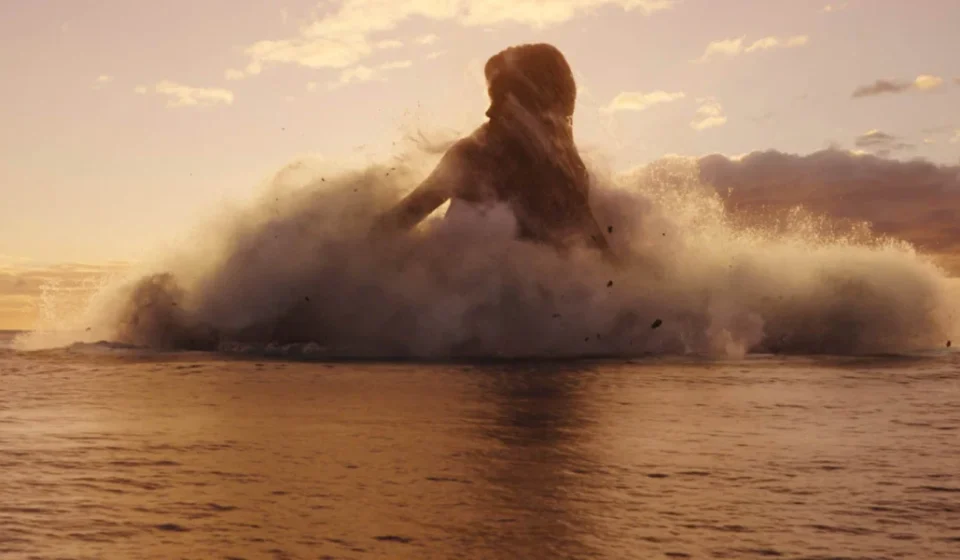
The most significant challenge for Wētā FX was the ocean itself. In traditional VFX, water is a background element; in Moana, it is a lead actor.

"The Ocean has no face, hands, or dialogue, yet it expresses curiosity, concern, and playfulness," notes Stephen Unterfranz. "It recalls the classic Disney ‘flour-sack’ animation exercise. We had to establish the base shape and timing to sell the character before we even started adding foam, mist, or ripples."

This highlights the studio’s philosophy: technology is merely a tool, but "human input" remains the engine of the process. Even with fluid equations handling the complex physics of breaking waves, it was the artists who decided when a ripple should "look" concerned or when a splash should feel "playful."

Implications: The Future of Hybrid Cinema
The work on Moana signifies a shift in how major studios approach the "live-action adaptation" genre. By treating digital environments not as a backdrop but as a collaborative performance space, Wētā FX has set a new benchmark for believability.

The implications for the industry are clear: the future of visual effects lies in the total integration of departments. In the past, animation and effects might have operated in silos. On this project, they traded information in a "continuing loop." The animators anticipated what the simulations would do to a pose, while the simulation artists worked to preserve the emotional intent of the animation.

As we look toward the future of filmmaking, the success of Moana proves that the audience’s willingness to suspend disbelief does not depend on the complexity of the rendering, but on the consistency of the physics. Whether it is the subtle flicker of lava light on a character’s face or the way vegetation moves as a goddess submerges, the goal remains the oldest challenge in the history of the medium: persuading the viewer that what they are seeing is not just real, but meaningful.

For those interested in the granular technical details, the full conversation with Anneka Fris and Stephen Unterfranz is available on the fxpodcast, offering a rare, behind-the-curtain look at one of the most complex visual undertakings in recent Disney history.