The Infinite Lens: Luca Guadagnino’s Monumental Portrait of Bernardo Bertolucci

Luca Guadagnino, the visionary auteur behind Call Me by Your Name and Challengers, has long operated in the slipstream of Italy’s cinematic titans. However, with his latest project, the staggering 435-minute documentary Joie de Vivre, Guadagnino has traded his usual fictional artifice for a sprawling, seven-hour excavation of the life and work of Bernardo Bertolucci. Premiering to a captivated audience at the 2026 Venice Film Festival, the film is a monumental, if occasionally polarizing, love letter to the late Oscar-winning director—and, unexpectedly, the most personal work in Guadagnino’s own celebrated filmography.
A Legacy Reimagined: The Scope of Joie de Vivre
Joie de Vivre is not a standard biographical documentary; it is a philosophical odyssey. It tracks the trajectory of Bertolucci from his early, groundbreaking sophomore feature Before the Revolution to his final 2012 film, Me and You. Guadagnino positions the documentary as both an elegy for a lost, analog era of high-minded cinephilia and a tactical plea to bridge the generational divide, inviting Gen Z and millennial audiences to re-engage with the provocative, visually opulent work of a master who died of lung cancer in 2018.
The sheer scale of the film—seven hours of runtime—is justified by the gravity of its subject. Bertolucci was a filmmaker who refused to make concessions to the audience, preferring instead to construct subversive, haunting images that linger in the cultural consciousness. Through archival footage and candid, sprawling interviews, Guadagnino builds a shrine to a man who, like his own work, is often defined by his contradictions.
A Chronological Deep Dive: From Revolution to Reflection
The documentary moves with a rhythmic, if sometimes meditative, pace. It begins with the early, radical experimentation of the 1960s, a period where Bertolucci was at the forefront of the European avant-garde. Guadagnino’s camera—often visible, as he highlights the physical presence of the film crew through mirrors and boom mics—guides the viewer through Bertolucci’s private flat, creating an intimate, almost voyeuristic atmosphere.
As the film progresses through the 1970s and 1980s, the narrative deepens. Guadagnino does not shy away from the darker, more "problematic" chapters of Bertolucci’s career. A significant portion of the film is dedicated to the cultural and ethical firestorm surrounding Last Tango in Paris. The documentary revisits the infamous, non-consensual nature of the butter scene, featuring film scholar Mark Cousins, who provides a stinging indictment of the then-31-year-old director. "He was 31, and his judgment was fucking shit," Cousins declares, capturing the tension between admiring the art and condemning the artist’s methods.

Supporting Perspectives: An All-Star Cast of Critics
Guadagnino populates Joie de Vivre with a veritable "who’s who" of world cinema. The talking heads include Martin Scorsese, Alfonso Cuarón, David Cronenberg, and Catherine Breillat. Each contributor offers a unique prism through which to view Bertolucci’s legacy. James Gray, in particular, provides some of the film’s most sharp-witted commentary, discussing not only the grandeur of The Conformist but also the current state of film criticism in the age of platforms like Letterboxd.
Gray argues that the democratization of criticism has diluted the discourse, asserting that "not all opinions are created equal." He draws a parallel to scientific expertise, questioning why, if we defer to experts on complex matters like particle accelerators, we have become so quick to treat every casual viewer’s take on film aesthetics as an authoritative voice.
Other contributors add distinct layers: Margot Robbie provides a vibrant, infectious analysis of the decadent, cocaine-fueled sequences in 1900, while Debra Winger shares behind-the-scenes anecdotes about the intense, often chaotic, atmosphere that followed her and John Malkovich during the filming of The Sheltering Sky.
The Omission of The Dreamers and the Challenge to the Viewer
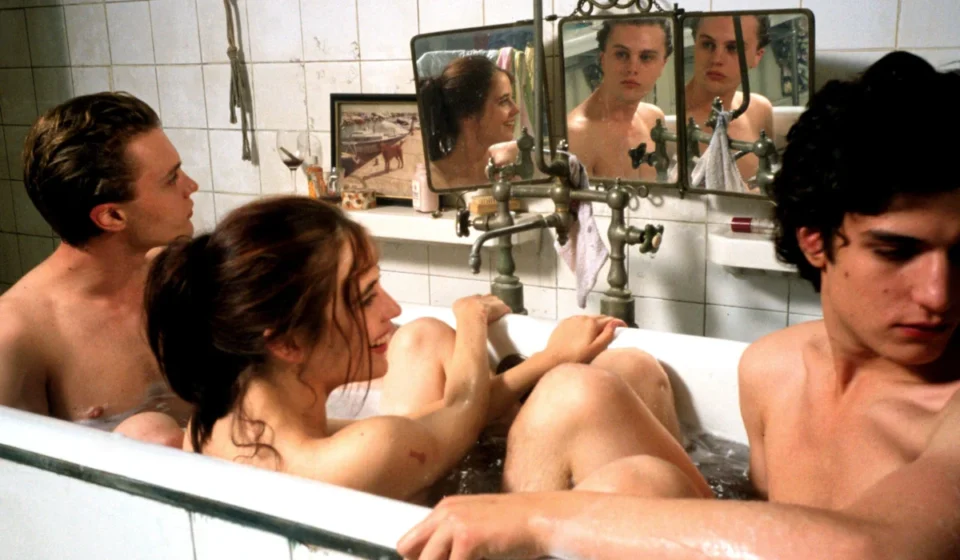
Perhaps the most deliberate choice in Joie de Vivre is the conspicuous absence of The Dreamers (2003). Despite its status as a seminal film for a specific generation—a movie that functioned as a "pornography with an arthouse imprimatur"—Guadagnino cuts the film almost entirely from his seven-hour cut.
This omission is telling. By excluding a film that defined an era of eroticized rebellion, Guadagnino appears to be sidestepping the current "Letterboxd-era" discourse, which often focuses on modern audiences’ discomfort with onscreen carnality. Whether this is a rejection of the film’s artistic merit or a desire to avoid the predictable digital-age debates surrounding it remains open to interpretation. Ultimately, it serves as a "call to action": by not showing it, Guadagnino is daring the viewer to find it themselves, to engage with the film on their own terms, and to return to the conversation with a critical counter-argument.

The Director’s Presence: A Personal Confession
While Joie de Vivre is about Bertolucci, it is also a mirror for Guadagnino. The director makes no secret of his past, admitting to a youthful, infatuated attraction to Bertolucci. This layer of intimacy explains why the documentary feels so unsparing in its focus on the "misfires"—spending nearly an hour on films like La Luna and Tragedy of a Ridiculous Man.
For the average, "unsavvy" viewer, these films may be difficult to locate or emotionally inaccessible. Yet, Guadagnino’s commitment to showing these lesser-known, often messy works is what makes his portrait of Bertolucci feel so honest. He is not presenting a sanitised "Greatest Hits" reel; he is presenting the raw, often flawed, output of a human being.
Implications for Modern Cinema
The film concludes with a poignant exchange between Guadagnino and Mark Cousins, who remarks, "If you fall in love with cinema, you’ll never be alone again." This sentiment acts as the heartbeat of Joie de Vivre.
The implications for the industry are significant. In an era where streaming algorithms dictate taste and shorter attention spans threaten the survival of slow-burn, intellectual cinema, a 435-minute documentary about a deceased Italian master is a radical act of defiance. It is a plea for the survival of "elevated discourse" and a reminder that cinema is a dialogue between generations.
By weaving together the technical brilliance of The Conformist, the controversy of Last Tango in Paris, and the epic scale of The Last Emperor, Guadagnino has created more than just a documentary. He has built a bridge. He is inviting the audience to step into a space where they can argue, disagree, and ultimately fall in love with the medium all over again.

Final Verdict: A B+ Achievement
Joie de Vivre is, by its very nature, an overwhelming experience. It is occasionally bogged down by its own intellectual weight, and some of the European scholars featured in the film seem to get lost in their own academic jargon. However, its ambition is undeniable. It is a flawed, sprawling, and deeply felt piece of work that succeeds because it refuses to be anything other than what it is: an uncompromising look at a life lived through a lens.
As the film currently seeks U.S. distribution, it remains a must-see for anyone interested in the intersection of personal obsession and historical legacy. It doesn’t just want to teach you about Bernardo Bertolucci; it wants you to participate in the messy, wonderful, and sometimes painful act of loving film.
Grade: B+
Joie de Vivre premiered at the 2026 Venice Film Festival and is currently seeking U.S. distribution.