Cinematic Resistance: The 15th Taiwan International Documentary Festival and the Politics of Memory

Since its inception in 1998—a mere decade after the lifting of martial law in Taiwan—the Taiwan International Documentary Festival (TIDF) has served as more than just a screening venue. It has acted as a vital barometer for the island’s evolving political consciousness, a crucible for independent video activism, and a sanctuary for regional nonfiction cinema. In its 15th edition this past May, the festival reaffirmed its status as a premier platform for exploring the intersection of historical trauma, state-imposed narratives, and the persistent, quiet resilience of the individual against the monolith of the state.
The Archive as Battlefield: Reclaiming History
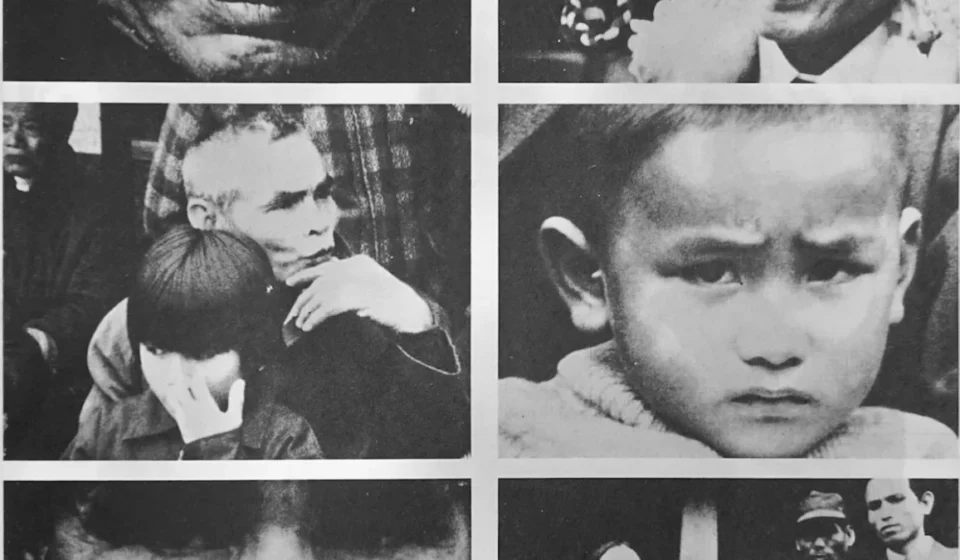
At the heart of this year’s TIDF program was a rigorous interrogation of the past, particularly through the lens of archival restoration and recontextualization. The most revelatory entry was undoubtedly Archive: Li Guang-hui (1979/2024), a 30-minute masterwork compiled from television newsreel outtakes by the late, renowned photographer Chang Chao-tang.
The Myth of the Soldier
The film documents the return of Suniuo (known by his Japanese name, Teruo Nakamura, and later his assigned Mandarin name, Li Guang-hui), an Indigenous Amis Taiwanese soldier who had been drafted into the Japanese Imperial Army during World War II. Dispatched to the Indonesian island of Morotai, Suniuo remained in the jungle for 30 years, blissfully—and tragically—unaware that the war had concluded.
When he was discovered in 1974, his return was immediately seized by the Kuomintang (KMT) government. The state repurposed his existence to bolster a nationalist narrative of Republic of China (ROC) triumph over the Japanese Empire. He was rebranded as a national hero, a symbol of anti-colonial resistance, despite historical accounts suggesting his prolonged stay was a result of desertion rather than ideological fervor.
Chang’s film is a chilling study in mediation. By restricting the footage to public appearances and newsreel narration, Chang denies Suniuo his own voice, mirroring the state’s own erasure of his agency. The most devastating sequence occurs when a folk singer serenades Suniuo with a Mandarin song, framing his life as an epic of national return. Chang’s camera lingers on Suniuo’s face, capturing not the expected gratitude of a hero, but a profound, hollow incomprehension—a man confronted by a language and a cultural tradition that had effectively colonized his identity.
A Chronology of Dispossession and Resilience
The TIDF program structure was deliberately curated to trace the arc of Asian political identity from the colonial period to the present. The festival’s archival programs, specifically "Reel Taiwan" and "War Memories, Shifting Identities," provided a comprehensive look at the hybridity produced by colonial subjugation.
Postwar Trajectories
The 1970s and 80s marked a pivotal shift in Taiwanese documentary practice. The festival highlighted films like the leftist collective NDU’s Asia Is One (1973), which moved across the Pacific to capture the disparate voices of Taiwanese fishermen in Okinawa and Tayal villagers. By mapping these connections, the festival illuminated the heterogeneous nature of East Asia—a region perpetually pulled between competing imperial interests.
Moving into the 21st century, the focus shifted toward the individual’s confrontation with urban development. Hu Sanshou’s Xiangzidian Village: The Stage (2026) serves as a poignant example of this transition. Filmed over six years, the documentary avoids the common "poverty porn" tropes often found in Western-curated Asian cinema. Instead, it offers a patient, meditative look at a village being systematically dismantled for highway construction. By focusing on the familial bonds of his subjects, Hu elevates them from statistics to protagonists in their own fading universe.
Supporting Data: The Anatomy of Trauma and Testimony
The festival’s thematic depth was bolstered by a critical examination of how political trauma is documented and, subsequently, distorted by the state and the media.
The Problem of Narrative
Anocha Suwichakornpong’s Narrative (2026) stands as a landmark work in the subversion of documentary ethics. By staging a workshop with families of Red Shirt activists killed in the 2010 Bangkok massacre, Suwichakornpong forces a dialogue on the impossibility of "healing" through conventional storytelling.
The film operates on three levels:
- Memory as Emotion: Participants are asked to recall primal emotions without naming them.
- Legal Fragmentation: A discussion with a lawyer reveals how the Thai legal system purposefully treats individual deaths as isolated incidents, thereby preventing a broader, collective reckoning with state violence.
- Gratitude as Coercion: In the final act, the film’s score overrides the participants’ voices as they are asked to express gratitude, effectively silencing the victims’ families at the very moment they are meant to be heard.
By juxtaposing these sterile, clinical workshop environments with the intimate, messy rituals of the participants’ daily lives—such as a mother recording her dreams of her deceased son—Suwichakornpong exposes the "falsehoods of testimony" inherent in both legal and filmic frameworks.
Official Responses and Theoretical Implications
The TIDF 2026 was not merely a collection of films; it was a theoretical inquiry into the role of the filmmaker in an age of surveillance and historical revisionism.
The festival organizers, through their selection, argued that the traditional divide between "activist" cinema and "experimental" cinema is increasingly obsolete. This was most evident in the work of Luo Li, whose film Air Base (2025) offers a surreal, Beckettian look at post-pandemic Wuhan. Through staged, repetitive interactions—men trying to fix the asymmetry of the city, women collecting sighs—Luo captures a sense of "exhausted reality."
In an era where Taiwan’s self-governance is framed by the competing interests of the United States and China, the festival’s commitment to "prismatic" history is a political act in itself. By highlighting the archipelagic relations across the Pacific, the TIDF asserts that the island’s identity is not a static point on a map but a fluid, constantly evolving constellation of histories.
Conclusion: The Persistence of the Image
The significance of the 15th TIDF lies in its refusal to offer easy answers or the catharsis of "happy endings." Whether it is the Sisyphean struggle of villagers against bulldozers in Hu Sanshou’s work or the bureaucratic violence of the Thai legal system in Suwichakornpong’s, the films presented this year share a common thread: the acknowledgement of exhaustion as a starting point for resistance.
The festival successfully challenged the long-standing, colonial-era myth that Taiwanese documentary only "emerged" after the end of martial law. Instead, it presented a lineage of filmmakers who have long been working in the shadows, documenting the ruptures in the official record. As the world watches Taiwan navigate an increasingly precarious geopolitical landscape, the TIDF serves as a reminder that history is not something that happens to people, but something that is constantly being reclaimed through the stubborn, patient act of looking.
The films screened at the 15th TIDF do not promise to change the world, yet they perform a vital, underlying function: they ensure that the individual stories—the sighs, the memories, and the resistance—are not lost to the silence of the state archive. In the end, the festival proves that even when the narrative is written by others, there remains a space in the margins to write one’s own.