Culinary Nostalgia in Motion: Pixar Unveils ‘Love on a Plate,’ a Masterclass in Experimental Animation

By Alex Billington
November 19, 2026
"Gathered around the table, love was the language spoken on the plate." This evocative sentiment serves as the heartbeat of Pixar Animation Studios’ latest experimental offering, Love on a Plate. In an era where feature-length blockbusters often dominate the cultural conversation, Pixar’s "Artist Short Film" program continues to provide a vital, intimate counter-narrative—one that prioritizes personal storytelling and stylistic experimentation over franchise expansion.
Directed by long-time Pixar veteran Ana G. Lacaze, Love on a Plate is a tender, visually arresting exploration of food, generational inheritance, and the invisible threads that bind families together. By stepping outside the studio’s traditional digital aesthetic to embrace historical animation techniques, the film serves as both a culinary love letter and a technical homage to the very roots of the medium.
Main Facts: A Portrait of Heritage
Love on a Plate is not merely a short about food; it is a meditation on the alchemy of cooking as a form of communication. The film chronicles the intimate relationship between a grandmother and her kin, illustrating how recipes function as vessels for history.
For Pixar, this project represents a significant departure from their standard "SparkShorts" or feature-length narrative structures. It was developed under the banner of the "Pixar Artist Short Film" initiative—an internal incubator designed to give established studio talent the autonomy to explore original concepts, distinct visual palettes, and unconventional storytelling rhythms.
Key details of the project include:

- Director: Ana G. Lacaze, a staple of Pixar’s creative team since 2000.
- Producer: Jessica Heidt.
- Production House: Pixar Animation Studios, Emeryville, California.
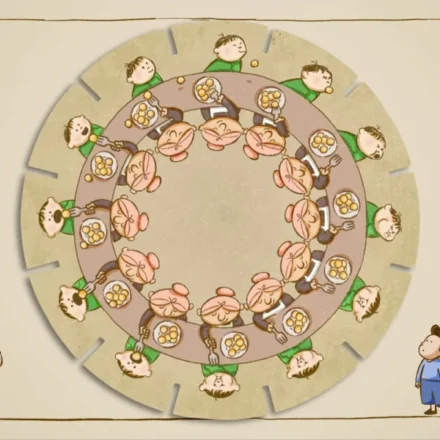
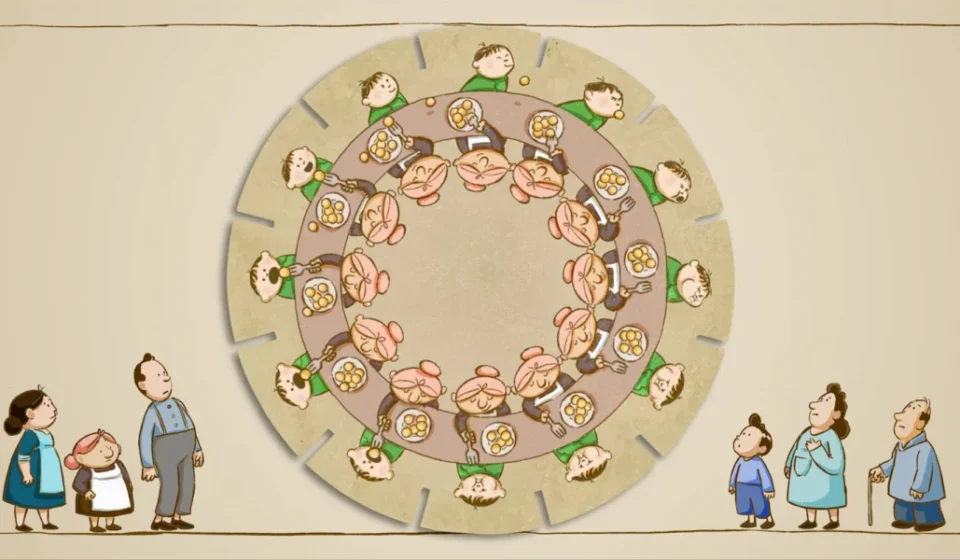
- Artistic Inspiration: The phenakistoscope, a 19th-century animation device that creates the illusion of motion through a series of sequential drawings on a rotating disc.
- Core Theme: The intersection of food, community, and the "love language" of shared meals.
Chronology: From Concept to Kitchen
The journey of Love on a Plate reflects the deep institutional knowledge of its creator. Ana G. Lacaze has been an integral part of Pixar’s technical and creative evolution for over two decades. Having joined the studio at the turn of the millennium, her filmography spans from the early, groundbreaking days of Monsters, Inc. to the complex, emotionally resonant world of Inside Out 2.
The development of this short can be traced through the following phases:
- The Incubation Phase: Under the umbrella of "Pixar’s Lab"—the studio’s in-house experimental research and development wing—Lacaze began exploring how to translate the sensory experience of cooking into a visual medium.
- The Conceptual Pivot: Eschewing the hyper-realistic, high-fidelity rendering that has become a Pixar trademark, Lacaze pivoted toward the phenakistoscope. This choice was deliberate, aiming to mimic the cyclical, rhythmic nature of preparing food and the repetitive nature of tradition.
- The Production Sprint: Utilizing a lean team of collaborators, the film was animated at Pixar’s Emeryville headquarters, focusing on hand-drawn aesthetics that contrast sharply with the studio’s standard 3D workflows.
- The Public Debut: On November 19, 2026, Pixar released the film to their global audience via their official YouTube channel, marking it as a highlight of their end-of-year experimental showcase.
Supporting Data: The Art of the Phenakistoscope
The technical foundation of Love on a Plate is perhaps its most compelling feature. The phenakistoscope, first popularized in 1833 by Joseph Plateau and Simon Stampfer, relies on the "persistence of vision." By drawing frames on a circular disc and viewing them through slots while the disc rotates, the viewer sees a seamless, looping animation.
Lacaze’s decision to adopt this aesthetic serves a narrative purpose. Cooking is a ritual; it is a process of repeating motions—chopping, stirring, kneading—that eventually result in a cohesive whole. By utilizing the looping nature of the phenakistoscope, the film mirrors the cyclical nature of family traditions. Each frame is not just a picture, but a slice of time, reflecting the continuity of a grandmother’s influence through her recipes.
This is not the first time Pixar artists have ventured into these experimental waters. As seen with recent projects like Fruit & Nut, the "Pixar Artist Short Film" program is proving to be a fertile ground for testing visual boundaries. These projects often forgo the standard three-act structure, favoring instead a "vignette" approach that allows the audience to sit with a specific emotion or memory rather than following a traditional plot arc.
Official Perspectives and Creative Intent
In the official introductory material released by Pixar, the film is described as "a short film about food, love, community and finding ourselves." For Ana G. Lacaze, the project is intensely personal. Her career at Pixar has been defined by her work as a visual effects supervisor, character supervisor, and lighting artist. In those roles, she has spent years mastering the art of the "Pixar Look."

However, Love on a Plate allows her to strip away the technical layers that define a blockbuster feature. By focusing on the texture of a knife blade hitting a wooden cutting board or the steam rising from a simmered broth, Lacaze highlights the "human" element of animation.
"The idea was to capture the feeling of the kitchen," notes a studio representative. "Not just the food, but the sound, the rhythm, and the warmth. When you see the grandmother’s hands moving, you aren’t just seeing animation; you are seeing the result of decades of dedication to a craft—both the craft of cooking and the craft of storytelling."
Implications: The Future of Experimental Animation
The release of Love on a Plate raises significant questions about the future of creative output at major animation houses. As AI and automated animation tools become more prevalent, the value of "human-centric" storytelling—projects that feel intentionally crafted by hand—has increased.
1. Diversification of Style
By encouraging senior artists like Lacaze to experiment, Pixar is diversifying its visual portfolio. This prevents the studio from becoming stagnant, ensuring that its talent pool remains engaged and innovative. The success of these shorts suggests that audiences are hungry for "bite-sized" stories that offer emotional depth without requiring a two-hour time commitment.
2. The Role of the "Lab"
The "Pixar Lab" initiative serves as a vital R&D department. It allows the studio to test new techniques—like the phenakistoscope-inspired visual style—on a small scale. If successful, these techniques can eventually be integrated into larger features, influencing the visual language of future tentpole films.
3. Food as a Cultural Bridge
Love on a Plate reinforces the trend of using culinary arts as a universal narrative device. Much like the success of Ratatouille or the more recent Turning Red, which utilized food to ground its cultural exploration, this short underscores that food is an accessible entry point for complex discussions about identity and belonging.

Final Reflections: Why It Matters
In a world increasingly distracted by the noise of constant content, Love on a Plate is a quiet, deliberate breath of fresh air. It does not attempt to change the world; it simply asks the viewer to stop, look at the screen, and remember the last time they felt the warmth of a home-cooked meal prepared with love.
For those who follow Pixar solely for their cinematic spectacles, these shorts offer a glimpse into the studio’s soul. They remind us that behind the multi-million dollar budgets and complex rendering pipelines, there are individual artists—people with grandmothers, memories, and distinct ways of seeing the world.
As we look toward the future of animation, it is clear that the most impactful stories will continue to be those that bridge the gap between the technical and the tactile. By turning to the past—to the simple, spinning magic of the phenakistoscope—Pixar has found a way to make us look at the future with fresh eyes.
What do you think of this experimental direction for Pixar? Does the tactile, hand-drawn aesthetic resonate more with you than their traditional 3D polish? Join the conversation in the comments below, and explore our full archive of animated short films to see how the medium continues to evolve.