The Collision of Two Titans: Analyzing ‘The Further Mis-Adventures of Cliff Booth’

The opening frame of The Further Mis-Adventures of Cliff Booth features the familiar, scratchy “vintage” Netflix logo—a choice that functions as a meta-commentary on the state of modern cinema. It is a subtle nod to the ongoing tension between the historical prestige of the theatrical experience and the omnipresent, digitized reality of the streaming era. Directed by David Fincher from a script by Quentin Tarantino, the film serves as a spiritual successor to 2019’s Once Upon a Time in Hollywood. It is a project defined by a fundamental friction: the collision of Tarantino’s fetishistic, nostalgic world-building and Fincher’s clinical, unyielding precision.
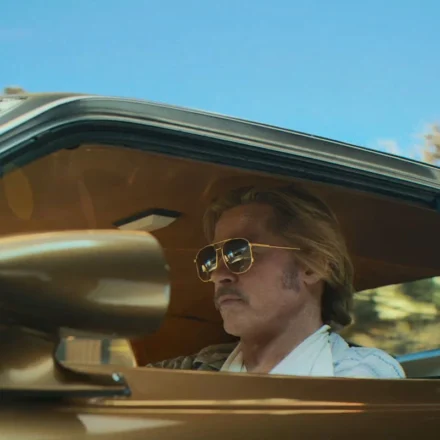
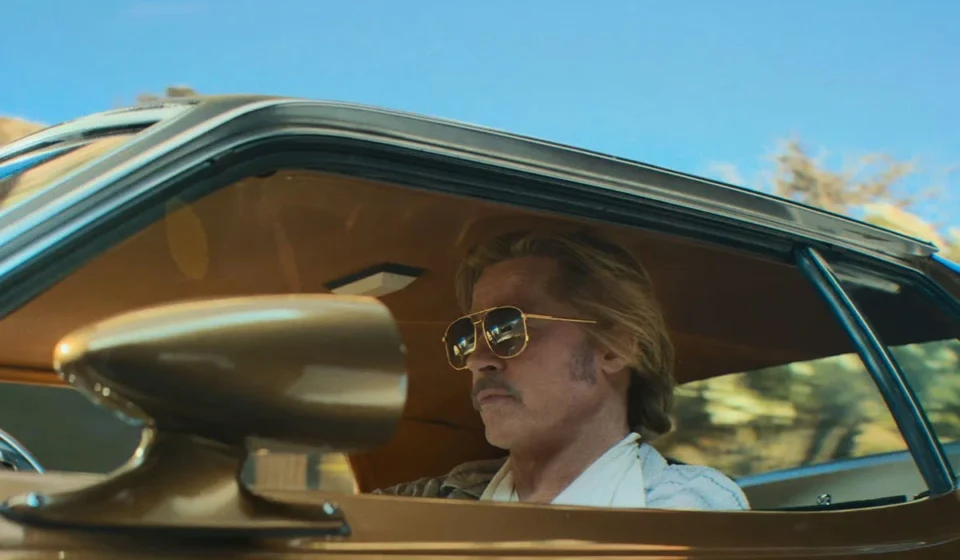
At its core, the film is a study of a man existing in an “ugly compromise” called the present. Set in the sweltering, transitional summer of 1977, the story tracks the legendary stuntman Cliff Booth (Brad Pitt) as he navigates a Hollywood that is rapidly shedding its skin. As the industry moves from the celluloid dreams of the golden age toward the grit of the “New Hollywood” movement, Booth remains an anomaly: a man of the past, unfazed by the future, simply trying to survive the right now.
The Chronology of a Hollywood Myth
The narrative trajectory of The Further Mis-Adventures of Cliff Booth is deceptively linear, belying the chaotic, discursive nature of its protagonist’s life. Following the events of Once Upon a Time in Hollywood—where Booth and his friend Rick Dalton famously rewrote history by thwarting the Manson family—the film finds Booth in 1977.
The timeline is anchored by the October premiere of the film Looking for Mr. Goodbar, a marker of the era’s changing cultural tides. While the original Once Upon a Time was a vibrant, saturated memory palace, this installment is colder. Booth is now working as a projectionist at the New Beverly Cinema, a job that serves as a quiet sanctuary for a man who has lived through war and extreme violence.
The plot kicks into gear when Charlie Peters (Scott Caan), a high-strung TV actor, finds himself in a bind. After a drunken night in Manila leads to a botched hit on his wife, Toni (Carla Gugino), Peters is pursued by two relentless Filipino assassins, the brothers Mr. Verdusco and Mr. Verdusco (Matt Groove and JB Tadena). Booth, functioning as a de facto Hollywood fixer, finds himself entangled in this web, not out of malice, but out of a perverse sense of duty and a budding attraction to Peters’ agent, Karen Crosby (Elizabeth Debicki).
Supporting Data and Creative Dissonance
The production of this film is as much a story as the script itself. Originally conceived as a directorial effort for Tarantino, the project ultimately landed in the lap of David Fincher. The result is a “tug-of-war” between two distinct creative philosophies.
The Tarantino Influence
Tarantino’s fingerprints are all over the dialogue and the characterization. He provides the film with its soul—the long, discursive conversations about the minutiae of 1960s television, the obsession with Ralph Meeker’s physique, and the deep-seated love for the grindhouse aesthetic. For Tarantino, the movie is a séance, an attempt to summon the ghosts of a Hollywood that no longer exists.

The Fincher Aesthetic
Conversely, Fincher approaches the film as a mathematical equation. His direction is efficient, clinical, and at times, arguably too sterile for the pulpy material he has been given. While the cinematography reflects the "computational muddiness" that has come to define Fincher’s modern work, it often clashes with the warmth of the character studies that Tarantino envisioned.
The inclusion of actors like Peter Weller, who plays Booth’s father, Gus, adds a layer of intergenerational weight. Weller’s performance is winsome, providing a grounding force for a character who is otherwise drifting through a world that increasingly views him as a relic.
Official Responses and Industry Context
The industry buzz surrounding The Further Mis-Adventures of Cliff Booth has been polarized, reflecting the film’s own internal identity crisis. Netflix, in an aggressive bid to secure prestige, has granted the film a rare IMAX release, signaling their continued desire to win the “war on movie theaters” by effectively colonizing the theatrical space.
In promotional interviews, both auteurs have remained largely tight-lipped about the production friction, focusing instead on the character of Cliff Booth. Brad Pitt, who continues to inhabit the role with a breezy, effortless charisma, has described the character as “a man who has seen too much and says too little.”
Critics, however, have noted the film’s uneven pacing. There is a prevailing sense among industry insiders that the material might have been better served as a serialized television project. By cramming a multi-layered, episodic premise into a feature-length format, the film often feels like it is rushing through character arcs that deserve more space to breathe.
Implications for the Future of Auteur Cinema
The release of this film marks a significant turning point for prestige cinema. When two of the most significant directors of the last thirty years collaborate on a single piece of “content,” the result is rarely a simple sum of its parts.
The Death of the "Event" Movie?
The primary implication of The Further Mis-Adventures is the commodification of the auteur. When Tarantino’s narrative sprawl is filtered through Fincher’s technological lens, the result is a product that feels “equally ill-suited to both small and big screens.” It highlights a growing trend in Hollywood: the dilution of individual voices in favor of brand-heavy, cross-pollinated collaborations designed to drive subscription numbers.

The Protagonist as a Metaphor
Cliff Booth is, in every sense, a metaphor for the state of the industry. He is a man who understands his own shelf life but refuses to change his nature to suit the market. Whether he is beating up assassins or sharing a beer with his father, he remains, fundamentally, an outsider. The irony of the film is that it is a story about resisting the “forward march of time,” while being produced by a company (Netflix) that is the very engine driving that change.
Final Verdict: A Mixed Legacy
The Further Mis-Adventures of Cliff Booth is a fascinating, if flawed, exercise. It succeeds in its moments of quiet, character-driven tension—specifically the interplay between Pitt and Debicki—but struggles to reconcile its dual creative identities. It is a film that offers flashes of brilliance, particularly in the climactic showdown with the Verdusco brothers, yet it is ultimately kneecapped by its own lack of focus.
For those who view Tarantino as a master of the past and Fincher as a master of the present, the film serves as a sobering reminder that sometimes, two great minds do not necessarily produce a greater result. It is a film that demands to be seen, if only to witness the friction of two titans attempting to share the same booth.
Grade: B-
Netflix will release "The Further Mis-Adventures of Cliff Booth" in IMAX theaters on Wednesday, November 25. It will be available to stream on Netflix starting Wednesday, December 23.