"Aakasamlo Oka Tara" Soars High: A Poignant Tale of Dreams, Love, and Defiance Against Patriarchy

Hyderabad, India – November 20, 2026 – In a cinematic landscape often dominated by high-octane action and grand spectacles, a quieter, yet profoundly impactful narrative has emerged to capture the hearts of audiences and critics alike. "Aakasamlo Oka Tara" (A Star in the Sky), the latest Telugu film directed by Pavan Sadineni and starring the charismatic Dulquer Salmaan alongside debutant Satvika Veeravalli, premiered today to significant acclaim, earning a commendable 3.5/5 rating from 123telugu.com. More than just a film, it is being hailed as a much-needed ode to aspirations, the power of unconditional love, and a powerful statement against ingrained patriarchal norms in society.
The film, which also features stellar performances from Shruti Haasan, Ruhani Sharma, and other talented actors, has resonated deeply for its emotional honesty and its refreshing portrayal of a supportive partnership. Produced by Sandeep Gunnam and Ramya Gunnam, with a captivating musical score by G V Prakash Kumar, "Aakasamlo Oka Tara" is poised to be a significant milestone in contemporary Telugu cinema, particularly for its progressive themes and its courageous character development.
A Cinematic Journey to the Stars: The Genesis and Release of ‘Aakasamlo Oka Tara’
The journey of "Aakasamlo Oka Tara" from concept to screen has been a meticulous one, rooted in director Pavan Sadineni’s vision to craft a story that speaks to the aspirations of modern Indian women while subtly challenging societal expectations. Sadineni, known for his nuanced storytelling, embarked on this project with a clear objective: to present a narrative where a woman’s dreams are not merely supported, but actively championed by her partner, dismantling the conventional hero-centric trope.
Sources close to the production indicate that the screenplay, penned by Gunnam Gangaraju, underwent several drafts to ensure the delicate balance between emotional depth and inspirational messaging. The core idea – a young woman’s dream of becoming an astronaut stifled by societal pressures, only to be rekindled by an unexpectedly supportive husband – was deemed potent and timely. The film’s development was a testament to the producers’ commitment to content-driven cinema, prioritizing a compelling story over formulaic commercial success.
The casting process was crucial. Securing Dulquer Salmaan, a pan-Indian star celebrated for his discerning choice of roles, was a significant coup. Salmaan’s willingness to embrace a character that, while pivotal, allows the female lead to take centre stage, underscored the project’s unique appeal. His presence immediately elevated the film’s profile, bringing a wider audience into its orbit.
However, the real revelation came with the casting of Satvika Veeravalli. The search for Kalpana, a character requiring both vulnerability and resolute strength, was exhaustive. Veeravalli, a debutant, reportedly impressed the filmmakers with her innate ability to embody the character’s internal conflict and burgeoning resolve. Her selection was a bold move, signaling a trust in fresh talent to carry a significant emotional arc.
The production phase itself was a blend of technical ambition and emotional precision. While the film grappled with the complexities of depicting space and rocketry within the constraints of regional cinema budgets, the primary focus remained on capturing the authentic emotional journey of Kalpana and Krishna. Cinematographer Sujith Sarang meticulously crafted the visual language, balancing the intimate moments with the grandeur of Kalpana’s aspirations. G V Prakash Kumar’s musical contributions were integral, designed not just to accompany the visuals but to amplify the characters’ inner worlds.
Anticipation for "Aakasamlo Oka Tara" began building months prior to its November 20, 2026 release, fueled by a compelling trailer that hinted at the film’s emotional core and the undeniable chemistry between its lead pair. The film’s release marks a moment for Telugu cinema to reflect on its narrative choices and embrace stories that resonate with contemporary societal values. Early screenings and social media buzz confirmed that the film had struck a chord, setting the stage for a strong opening at the box office and a lasting impression on its viewers.
Unpacking the Narrative: A Deep Dive into ‘Aakasamlo Oka Tara’s’ Core
"Aakasamlo Oka Tara" distinguishes itself through a multi-layered narrative that deftly combines personal struggle with broader societal commentary. The film’s strengths lie in its profound emotional depth, its progressive characterizations, and its thoughtful technical execution, though not without certain limitations.
A Beacon of Emotional Resonance
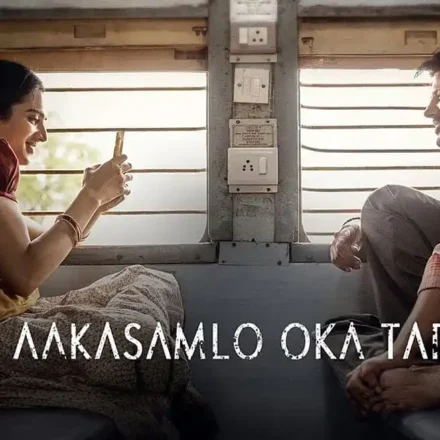
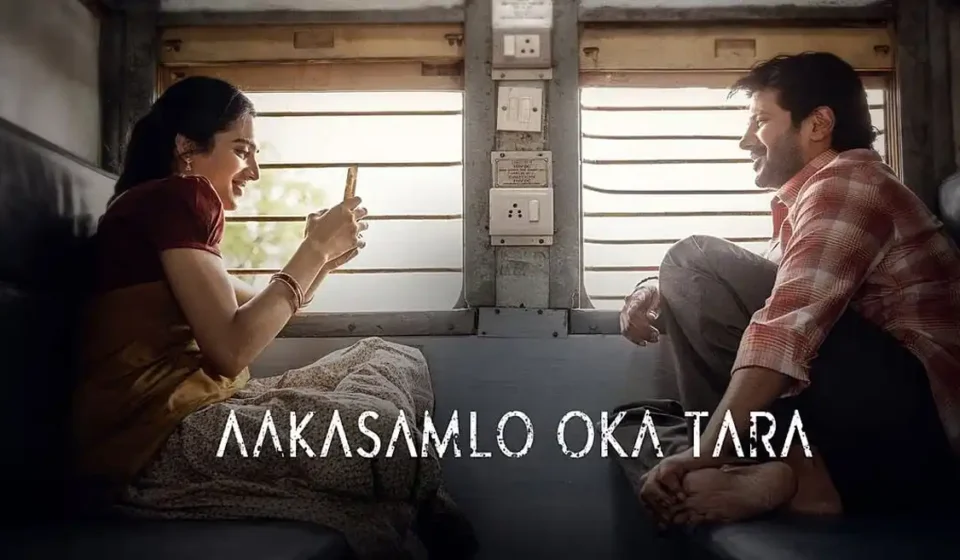
At the heart of "Aakasamlo Oka Tara" is the exquisitely crafted relationship between Kalpana and Krishna. Their bond is presented not as a conventional romance, but as a journey of mutual understanding, unwavering support, and profound sacrifice. The narrative beautifully illustrates how Krishna, initially seen as an obstacle to Kalpana’s dreams due to their arranged marriage, transforms into her most ardent champion. This evolution is depicted with a tenderness and authenticity that avoids melodrama, making their connection deeply relatable and inspiring. The film’s ability to showcase their evolving dynamic, from initial apprehension to steadfast companionship, is arguably its greatest asset. It’s a powerful reminder that true partnership lies in fostering each other’s growth and standing by dreams, however ambitious.
Challenging Patriarchal Norms through Kalpana’s Journey
The film tackles the pervasive issue of patriarchy with remarkable sensitivity and strength. Kalpana, raised in a household where her aspirations are secondary to traditional marital duties, embodies the struggles faced by countless women. Her dream of becoming an astronaut, a field often perceived as male-dominated and unconventional for women in many societies, becomes a powerful symbol of her desire for self-actualization.
Director Pavan Sadineni and writer Gunnam Gangaraju deserve immense credit for crafting Kalpana’s character with such depth and nuance. She is not merely a victim of circumstances but a woman with inner strength, whose initial sadness over her shattered dreams gives way to renewed hope and determination thanks to Krishna’s support. This portrayal is a significant step forward for Telugu cinema, which has often faced criticism for its one-dimensional or overtly romanticized female characters. Satvika Veeravalli’s debut performance as Kalpana is nothing short of brilliant. Her ability to convey complex emotions – from quiet despair to burgeoning hope – without resorting to histrionics, is a testament to her talent and the director’s guidance. She breathes life into Kalpana, making her struggles and triumphs feel incredibly real.
Dulquer Salmaan: The Epitome of Secure Stardom
Dulquer Salmaan’s portrayal of Krishna is a masterclass in understated power and secure masculinity. In an industry where male leads often demand the spotlight, Salmaan consciously steps into a role that champions his partner, allowing her narrative to shine brightest. His character is a refreshing antidote to the often-toxic masculinity prevalent in mainstream cinema. Krishna is strong not because he dominates, but because he empowers.
His performance is infused with a quiet charisma that makes his commitment to Kalpana’s dream utterly believable. Critics have drawn parallels between Krishna and characters like Venky from "Raja" (1999), noting how Salmaan embodies a similar spirit of selfless devotion and unwavering support. Through Krishna, the film effectively addresses the themes of women’s empowerment, demonstrating that true strength lies in partnership and mutual respect. It takes a star of Salmaan’s calibre and conviction to choose such a role, further solidifying his reputation as an actor who prioritizes meaningful storytelling over conventional heroism.
The Ensemble’s Stellar Contributions
The impact of "Aakasamlo Oka Tara" is further amplified by its robust supporting cast. Shruti Haasan, in a very effective extended cameo, plays a pivotal role that significantly elevates the film’s emotional stakes. Her scenes, particularly her first interaction with Satvika Veeravalli, are cited as moments of high impact, adding crucial layers to Kalpana’s journey. Ruhani Sharma, as Bijili, provides much-needed comedic relief. Her interactions with Dulquer Salmaan, characterized by language barriers and cultural misunderstandings, are genuinely humorous, preventing the film from becoming overly solemn. Swasika, as Dulquer’s sister, delivers a fine performance, contributing to the familial dynamics, while Chaitu Jonnalagadda makes his presence felt in his respective role. The collective strength of the ensemble ensures that every character, no matter how brief their appearance, contributes meaningfully to the overarching narrative.
The Artistry Behind the Scenes
The technical craftsmanship of "Aakasamlo Oka Tara" largely contributes to its captivating nature. G V Prakash Kumar’s music stands out as a significant asset. His compositions, both songs and background score, are elegant and evocative, adding immense weight to the film’s emotional proceedings. The music often speaks when words cannot, underscoring moments of joy, sorrow, and triumph, making it an almost inseparable character in the narrative.
Sujith Sarang’s cinematography is lauded for its aesthetic appeal and ability to capture the intimate moments with warmth and the aspirational sequences with a sense of wonder. Praveen KL’s editing is deemed satisfactory, maintaining a generally engaging pace. Gunnam Gangaraju’s screenplay, with its well-structured phases and smooth transitions, ensures that the inspirational tale unfolds coherently, even if some developments feel slightly rushed. Director Pavan Sadineni’s vision is evident in his impressive direction, particularly in how he leverages dialogues and moments of silence to convey profound emotions and narrative depth. His ability to extract first-rate performances from both seasoned actors and a debutant is commendable, solidifying his reputation as a director with a keen eye for human stories.
Navigating the Technical Cosmos: Areas for Improvement
While "Aakasamlo Oka Tara" excels emotionally, it faces some technical hurdles, particularly concerning its depiction of space and rocketry. The visual effects (VFX) work during the space sequences and related to rocketry has been noted as falling short of contemporary standards. This limitation, often a challenge for regional cinema productions with budget constraints, detracts slightly from the immersive experience during these crucial aspirational moments. A more detailed and visually sophisticated exploration of the space portions could have further amplified Kalpana’s dream.
Additionally, the film’s use of AI in television news clips has been criticized as feeling somewhat out of place and unnecessary, occasionally breaking the suspension of disbelief. A couple of moments in the narrative also tend towards being "over the top," which slightly disrupts the film’s otherwise grounded emotional tone. Furthermore, the pacing experiences minor dips in the second half, which, while not critically damaging, could have been tightened to maintain consistent engagement. These technical and pacing issues, though minor, are points of contention in an otherwise emotionally robust and well-directed film.
Voices from the Set: Director and Cast Reflect
Following the widespread positive reception for "Aakasamlo Oka Tara," members of the cast and crew have shared their insights into the film’s creation and its profound message. These reflections underscore the collaborative spirit and the deeply personal connection many felt to the project.
Director Pavan Sadineni expressed immense satisfaction with the film’s ability to connect with audiences on an emotional level. "We wanted to tell a story that truly resonated, a story about dreams and the silent strength required to pursue them, especially for women," Sadineni stated. "Kalpana’s journey is universal, and Krishna’s unwavering support is what modern partnerships should aspire to. The overwhelming response confirms that these themes are vital and deeply felt by our viewers. I’m incredibly proud of the entire team’s dedication to bringing this vision to life."
Dulquer Salmaan, whose portrayal of Krishna has been widely praised, reflected on his choice to be part of the project. "Krishna’s character was a refreshing departure from many roles I’ve played. It’s not about grand gestures but about the quiet power of empathy and belief in your partner’s potential," Salmaan explained. "I believe cinema has a responsibility to reflect and shape societal values, and a story like ‘Aakasamlo Oka Tara,’ which champions women’s dreams and challenges patriarchal mindsets, is incredibly important. Working with Satvika, a debutant, was also a wonderful experience; her commitment to Kalpana was inspiring."
For Satvika Veeravalli, "Aakasamlo Oka Tara" marks a dream debut, and she shared her profound connection to Kalpana. "It was an immense responsibility to portray Kalpana, a character who embodies the hopes and struggles of so many women," Veeravalli remarked. "Her journey, from feeling her dreams shattered to finding the strength to reach for the stars, was deeply personal to me. I’m so grateful to Pavan sir and Dulquer for their guidance and for believing in me to bring Kalpana to life. This film is a testament to the fact that with the right support, any dream is achievable."
Producers Sandeep and Ramya Gunnam highlighted their commitment to backing meaningful cinema. "Our aim was always to produce cinema with a heart, stories that entertain but also provoke thought and inspire," said Sandeep Gunnam. Ramya Gunnam added, "When Pavan narrated the script, we knew we had something special. ‘Aakasamlo Oka Tara’ is more than just a movie; it’s a conversation starter about empowerment, partnership, and breaking free from outdated norms. The positive reviews reinforce our belief in content-driven films."
These collective voices emphasize the film’s core message and the passionate efforts that went into creating a cinematic experience that is both entertaining and socially relevant.
Beyond the Screen: ‘Aakasamlo Oka Tara’s’ Enduring Impact
"Aakasamlo Oka Tara" is poised to leave a significant and lasting impact on Telugu cinema and beyond, extending its influence across several crucial dimensions. Its thematic depth, character portrayals, and the performances of its lead actors are likely to reverberate for years to come.
A Paradigm Shift in Telugu Storytelling
The film sets a new benchmark for how female characters are written and portrayed in Telugu cinema. By presenting Kalpana not as a love interest or a damsel in distress, but as an ambitious individual whose dreams are central to the narrative, "Aakasamlo Oka Tara" offers a refreshing alternative to conventional storytelling. It challenges the industry to move beyond superficial portrayals and invest in complex, aspirational female protagonists. This film could catalyze a broader trend, encouraging more filmmakers to explore narratives that genuinely champion women’s empowerment and depict equitable relationships. Its success demonstrates that audiences are receptive to such progressive narratives, potentially opening doors for a wider range of stories to be told.
Dulquer Salmaan’s Growing Pan-Indian Influence
Dulquer Salmaan’s strategic choice to star in "Aakasamlo Oka Tara" further solidifies his unique position as a pan-Indian star who prioritizes strong, character-driven narratives over commercial clichés. His willingness to take on a supportive role, allowing the female lead to shine, reinforces his image as an actor committed to artistic integrity. This move is likely to enhance his appeal across different linguistic industries, showcasing his versatility and his commitment to meaningful cinema. His performance in "Aakasamlo Oka Tara" will undoubtedly be seen as another feather in his cap, proving that star power can be effectively wielded to uplift content-rich films.
The Dawn of a New Star: Satvika Veeravalli’s Trajectory
Satvika Veeravalli’s phenomenal debut performance as Kalpana marks the arrival of a promising new talent in Indian cinema. Her ability to deliver a first-rate, nuanced performance in her very first outing suggests a bright future. The film’s success is likely to position her as a sought-after actress for roles that demand both emotional depth and strong characterization, potentially breaking the mould of conventional heroine roles. Her journey, much like Kalpana’s, could inspire other aspiring actors to believe in the power of talent and perseverance.
Addressing Industry-Wide Technical Hurdles
While the film’s emotional core is its strength, the acknowledged shortcomings in its VFX work for the space sequences highlight a broader challenge faced by Indian regional cinema. To compete with global standards, particularly in genres requiring extensive visual effects, there is a need for increased investment and expertise in post-production. "Aakasamlo Oka Tara" serves as a reminder that while storytelling can transcend technical limitations, continuous improvement in these areas is crucial for expanding the scope and ambition of Indian films. This could spark discussions within the industry about allocating more resources to advanced technical execution.
A Lasting Legacy of Inspiration
Ultimately, "Aakasamlo Oka Tara" is more than just a critical success; it is an inspirational tale with a lasting legacy. It will undoubtedly resonate with countless individuals, particularly young women, who harbor ambitious dreams but face societal or familial resistance. The film’s message — that true love and partnership involve unwavering support for each other’s aspirations — is a powerful one that transcends cultural boundaries. It encourages conversations about gender roles, individual agency, and the evolving dynamics of modern relationships, making it a significant cultural artifact that will inspire hope and provoke positive change. The enduring image of Kalpana, supported by Krishna, reaching for the stars, will remain a potent symbol of dreams realized against all odds.