Unbound Malice: Glenn McQuaid’s ‘The Restoration at Grayson Manor’ Brings Technological Terror to the Big Screen

By Alex Billington | September 3, 2026
The intersection of body horror and psychological obsession has long been fertile ground for genre filmmakers, but few have dared to blend the mechanical with the subconscious quite like Irish director Glenn McQuaid. With the release of the official trailer for his latest feature, The Restoration at Grayson Manor, Chroma has signaled that this autumn’s horror slate is about to get significantly more unhinged.
The film, which has spent the better part of a year building a cult reputation on the festival circuit, is finally set to reach wider audiences. Combining a classic Gothic setting with a high-concept, transhumanist nightmare, The Restoration at Grayson Manor promises to be one of the most distinct entries in the 2026 horror calendar.
The Premise: When the Subconscious Takes Control
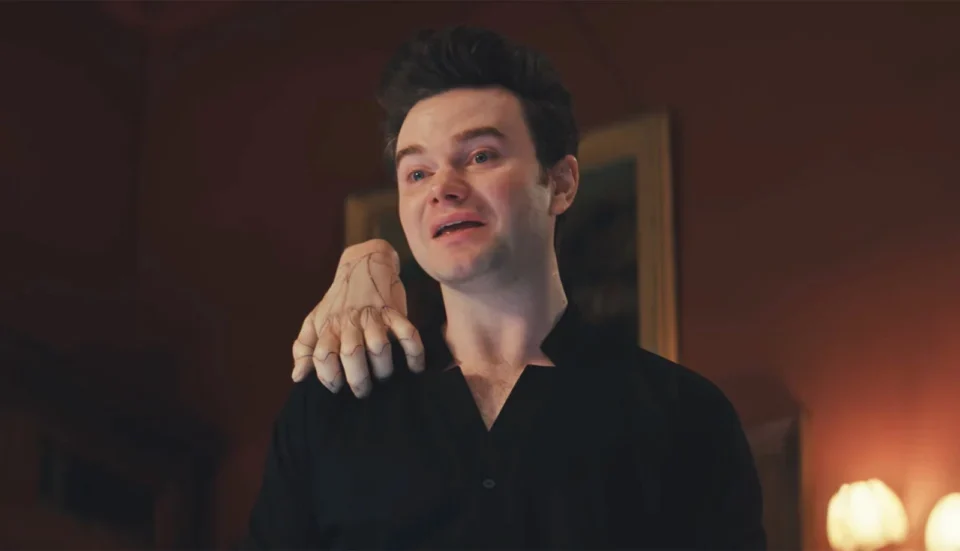
The core of the film’s narrative is as intimate as it is grotesque. Chris Colfer stars as Boyd Grayson, a hedonistic, rebellious heir who lives in a sprawling, decaying Irish estate. Boyd’s primary existence revolves around spite; he frequently brings men home for illicit encounters specifically to antagonize his mother, played by legendary genre actress Alice Krige. In the cold, legacy-obsessed world of the Grayson family, Boyd’s behavior is a deliberate affront to his mother’s desire for a traditional dynastic continuation.
The status quo is shattered by a catastrophic accident that leaves Boyd handless and entirely reliant on his mother’s care. Utilizing the vast Grayson fortune, his mother orchestrates a medical marvel: she commissions experimental mechanical prosthetics that are wired directly into Boyd’s subconscious. The terrifying hook, however, is that these limbs are not merely obedient tools. As Boyd begins to recover, he discovers that the hands—even when detached from his body—act upon his most violent, suppressed urges. What begins as a medical restoration descends into a symphony of carnage within the walls of their ancestral home.

Chronology: A Festival Darling’s Path to Release
The journey of The Restoration at Grayson Manor has been deliberate and strategically cultivated. Before its imminent theatrical debut, the film underwent a rigorous vetting process through the global horror festival circuit, allowing the team to refine its reception and build early momentum.
- Late 2025: The film held its world premiere at Fantastic Fest, where it was lauded for its fearless sincerity and its ability to ground an outrageous premise in genuine, palpable melodrama.
- Early 2026: Following the success at Fantastic Fest, the production made the rounds at major genre showcases, including the Dublin Film Festival and the Overlook Film Festival. These screenings solidified the film’s reputation as a "must-watch" for enthusiasts of independent, high-concept horror.
- September 2026: Chroma officially drops the trailer, signaling the transition from festival curiosity to commercial release.
- October 2026: A limited theatrical release will coincide with the traditional "horror season," capitalizing on the autumnal appetite for chilling narratives.
- December 1, 2026: The film is slated for its VOD debut, ensuring that the wider public can access the madness of the Grayson estate from the comfort of their own homes.
The Creative Force: Glenn McQuaid and the Evolution of Irish Horror
Director Glenn McQuaid is no stranger to the macabre. Known for his work on the cult classic I Sell the Dead and his prolific contributions to the Tales from Beyond the Pale horror podcast series, McQuaid has developed a distinct visual language that favors practical effects, Gothic atmosphere, and dark humor.
Collaborating with screenwriter Clay McLeod Chapman, McQuaid has crafted a script that elevates the "killer limbs" trope into a character study. Producers Deirdre Levins, Brendan McCarthy, and John McDonnell have successfully navigated the complexities of international co-production to bring this vision to life. The film’s aesthetic—defined by the claustrophobic opulence of the Grayson estate—serves as the perfect backdrop for the visceral horror of the mechanical prosthetics.
Supporting Data: Why This Film Resonates
Industry analysts suggest that The Restoration at Grayson Manor is positioned to perform well for several reasons. First, the casting of Chris Colfer, an actor known for his range, in a darker, more visceral role, has generated significant interest among his established fan base. Pairing him with Alice Krige—a veteran of genre staples—provides a level of gravitas that keeps the film’s more absurd elements anchored in emotional reality.
Furthermore, the "technological horror" subgenre is currently seeing a resurgence. As audiences grapple with the rapid advancement of robotics and AI, the fear that our own tools might eventually possess agency over our actions is a resonant, modern anxiety. The Fantastic Fest program notes highlighted this effectiveness: "Director McQuaid embraces the melodrama with a sharp eye and fearless sincerity, grounding the film’s outrageous horror premise in real emotion."

The production’s commitment to "practical-first" horror is also a selling point for the current cinephile market. In an era dominated by CGI, the tangible, clunky, and often horrifying movement of the mechanical hands provides a tactile quality that modern horror fans have increasingly demanded.
Official Responses and Creative Intent
In discussions surrounding the film’s development, the creative team has emphasized the importance of the mother-son dynamic. While the horror is the draw, the heart of the film is the toxicity of their relationship.
"The hands are a manifestation of everything they refuse to say to each other," one source close to the production noted. "It’s about the legacy of anger. When you build a machine to replace a part of yourself, you’re also building a vessel for all the parts of your personality you’ve been trying to hide."
The decision to limit the theatrical run to October reflects a "prestige horror" strategy. By positioning the film alongside major seasonal releases, Chroma is banking on the "event" nature of the film, encouraging audiences to seek out the unique, "kooky" experience that the trailers have promised.
Implications: A New Benchmark for Independent Genre Film
The release of The Restoration at Grayson Manor serves as a case study for the current state of independent genre cinema. It proves that there is still a massive, hungry audience for films that take risks with premise and tone. By utilizing the festival circuit to build "word-of-mouth" credibility, the film has bypassed the need for a massive marketing budget, relying instead on the strength of its bizarre hook and the established pedigree of its creative team.

If the film succeeds as expected, it may influence a shift toward more "Gothic-Techno" hybrids—stories that marry the old-world aesthetic of haunted houses with the modern fears of bio-mechanical overreach. As we move into the final quarter of 2026, the industry will be watching closely to see how The Restoration at Grayson Manor fares at the box office.
Whether you are a fan of the psychological weight of the performances or simply in it for the "freaky and weird" horror spectacle, McQuaid’s latest effort is undeniably one of the most anticipated releases of the year. The hands are moving, the estate is rotting, and the Graysons are waiting.
The Restoration at Grayson Manor hits select theaters this October, followed by a VOD release on December 1st, 2026. For those looking to dive deeper into the lore, the official trailer is currently available for viewing on YouTube, offering a terrifying glimpse into the nightmare that awaits.