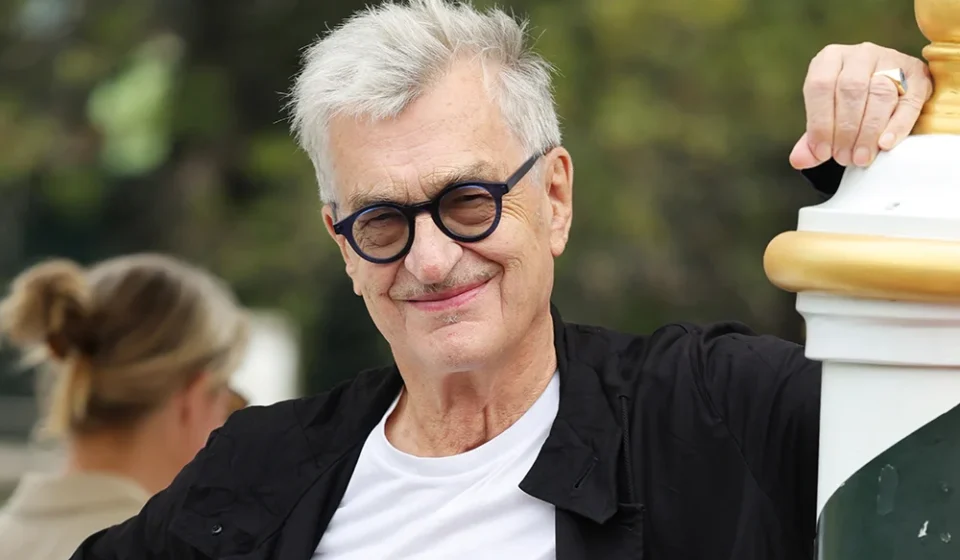

Months after a single comment sparked a firestorm at the Berlin International Film Festival, legendary German filmmaker Wim Wenders has returned to the spotlight to clarify his stance on the intersection of art and politics. Speaking at the Venice Film Festival, where he is currently showcasing his latest documentary, From Inside Out — The Architecture of Peter Zumthor, the director sought to bridge the gap between his earlier controversial remarks and his artistic philosophy.
The exchange highlights a deep-seated philosophical divide within the global film community: Is cinema an act of political engagement, or is it a sanctuary for something more fundamental?
The Spark: A Controversial Opening in Berlin
The controversy originated in February at the 2024 Berlinale. As the jury president for the festival, Wenders was tasked with setting the tone for the event during the opening press conference. In a moment that quickly rippled through the international media, Wenders stated, "We have to stay out of politics because if we make movies that are dedicatedly political, we enter the field of politics. But we are the counterweight of politics; we are the opposite of politics. We have to do the work of people, not the work of politicians."
The impact was immediate. For a festival that prides itself on being a platform for global discourse—often highlighting urgent issues like the ongoing conflict in Gaza or human rights crises—Wenders’ words felt like a dismissal of the medium’s power to effect social change. The statement dominated the festival’s narrative, turning every subsequent press junket into a referendum on the filmmaker’s responsibility. The backlash was severe enough that festival director Tricia Tuttle was forced to issue a formal statement to stabilize the discourse, while high-profile figures, including author Arundhati Roy, withdrew from the festival in protest.
Chronology of the Debate: From Berlin to Venice
The tension surrounding the role of artists in society has been building for years, but the Berlinale served as a flashpoint.
- February 2024: During the Berlinale opening, Wenders delivers his "stay out of politics" remarks, leading to widespread confusion and criticism regarding his perceived apathy toward global crises.
- Post-Berlin: The festival circuit becomes increasingly politicized, with actors and directors across the globe feeling pressured to declare their stance on current events, often using press conferences as de facto platforms for political activism.
- August/September 2024: As the Venice Film Festival commences, the topic remains a central theme. Jury president Maggie Gyllenhaal opens the festival by directly contradicting the sentiment expressed by Wenders months prior, asserting that film is "fundamentally, undeniably political."
- The Venice Clarification: Wenders, dressed in an "Imagine Peace" t-shirt, addresses the press once more, seeking to reconcile his previous comments with his lifelong commitment to humanistic filmmaking.
The Philosophical Core: Empathy vs. Policy
At the heart of Wenders’ clarification in Venice is a distinction between "mindsets." Sporting his "Imagine Peace" attire, Wenders argued that he was misquoted and misunderstood.
"What I said then was, as filmmakers, we are the opposite of politicians. We have empathy. Politics works without empathy; that’s all I said," Wenders explained. "I’m not working with a mindset of politicians; we are working with a mindset of empathetic people. And we are into changing things, whereas politics is into confirming what is."
Wenders maintains that his original quote—"We have to stay out of politics"—was a reductive distillation of a much more nuanced point about the nature of creative labor. According to Wenders, the filmmaker’s role is not to function as a legislator or a policymaker, but as an "antidote" to the cold, often dehumanizing machinery of political governance. By focusing on the individual human experience, filmmakers preserve the empathy that is often sacrificed in the pursuit of political expediency.
The Counter-Perspective: Maggie Gyllenhaal and the Political Screen
The debate took a fascinating turn at the Venice Film Festival when jury president Maggie Gyllenhaal offered a rebuttal to the "apolitical" stance. Gyllenhaal, a seasoned actor and director, argued that the very act of choosing what to show an audience is an inherently political decision.
"Look, we could say, how are we possibly here talking about movies right now when the world is in a state of emergency?" Gyllenhaal mused during her opening press conference. "To me, the answer has something to do with empathy. I think that film allows an opening into an opportunity to find empathy inside of ourselves."
While Gyllenhaal and Wenders both arrive at the same destination—the importance of empathy—they travel different routes. For Gyllenhaal, empathy is the mechanism by which film becomes political. For Wenders, empathy is the barrier that separates the artist from the politician.
Supporting Data: The Pressure of the Festival Circuit
The discourse surrounding Wenders highlights a growing trend in the film industry: the expectation that creators must function as political commentators. Data from the last three years of major festivals suggests that filmmakers are being asked about world politics in roughly 65% of press conferences, a significant increase from the previous decade.
This shift has created a dual pressure. On one side, audiences and critics demand that art reflect the "state of emergency" of the modern world. On the other side, many directors argue that the commodification of their political stances—often reduced to soundbites—detracts from the art itself.
The withdrawal of figures like Arundhati Roy from the Berlinale serves as a data point for the volatility of this environment. It signifies that for many, there is no "neutral" ground. To attend a festival is to make a statement, and to speak at one is to enter a political arena, whether the artist intends to or not.
Implications: The Future of Film Discourse
The implications of this debate are profound. If the industry moves toward a model where every film is judged primarily by its explicit political stance, does it risk losing the nuance that makes cinema a unique artistic medium?
Conversely, if filmmakers hide behind a "non-political" label, do they risk irrelevance in an era defined by global instability?
Wenders’ plea—that filmmakers should be seen as an "antidote" rather than a participant—suggests that he believes the power of cinema lies in its ability to transcend the immediate, temporal conflicts of politics to touch upon universal truths. However, as Gyllenhaal’s perspective indicates, the modern audience may no longer allow for that distinction. The "state of emergency" cited by Gyllenhaal means that for many viewers, the screen is not a place to escape from politics, but a place to process them.
Conclusion: A Nuanced Path Forward
Wim Wenders’ clarification at Venice does not end the debate, but it certainly reframes it. By emphasizing the "mindset" of the artist as one defined by empathy rather than policy, he has invited the industry to reconsider what it means to be "political."
Is it political to march in the streets, or is it political to create a piece of art that forces a viewer to empathize with a person they would otherwise ignore? Wenders would argue the latter is the truer form of the filmmaker’s duty.
As the festival circuit continues to evolve, the tension between the artist’s desire for autonomy and the public’s demand for engagement will likely remain a central theme. For now, the takeaway is clear: the conversation is no longer just about the films themselves, but about the responsibility of those who make them. Whether they view themselves as politicians, activists, or simply empathetic storytellers, the filmmakers of the 21st century are operating in a world that refuses to let them stay on the sidelines.