The Anatomy of Unease: Georgia Bernstein’s Night Nurse Reinvents the Psychological Thriller

The Sundance Film Festival is often criticized for its tendency to favor “safe,” crowd-pleasing narratives that fit neatly into the industry’s established molds. Yet, every so often, a film emerges from the NEXT competition that feels like a jagged piece of glass—sharp, dangerous, and impossible to ignore. This year, that film is Night Nurse (2026), the debut feature from writer-director Georgia Bernstein.
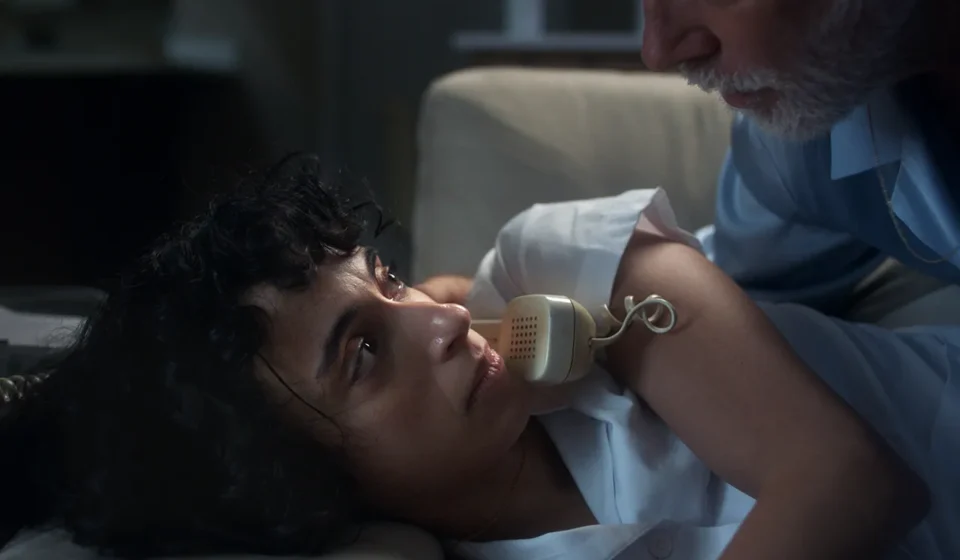
From its opening title sequence—a slow, hypnotic glide of the camera along the contours of a body, tracing the serpentine path of a telephone cord—it is clear that Night Nurse is not interested in the comforts of conventional cinema. It is a work of cold, calculated precision, one that dares to explore the intersection of dementia, criminal exploitation, and the intoxicating, often toxic, nature of human connection.
The Premise: A Dangerous Symbiosis
Set against the backdrop of a sterile, languid memory-care facility, the film introduces us to Eleni (Cemre Paksoy), a young nurse beginning her tenure in the overnight shift. Her world revolves around the care of Douglas (Bruce McKenzie), an elderly patient currently under evaluation for early-onset Alzheimer’s.
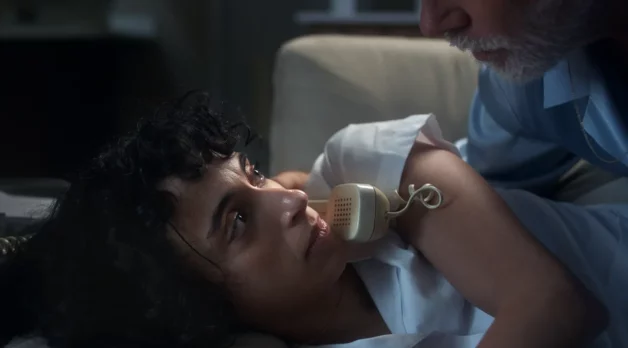
What begins as a standard patient-caregiver dynamic quickly descends into something far more transgressive. Eleni finds herself drawn into Douglas’s illicit world: a sophisticated phone scam targeting the elderly, where the pair pose as distressed granddaughters to siphon cash from unsuspecting seniors. The film posits that for both characters, the scam is not merely a financial endeavor, but a psychosexual release. The thrill of the confidence game—the manipulation, the performance, the power—becomes a shared, illicit addiction.
Chronology and Genesis: From Classroom to Screen
The story of Night Nurse is as unconventional as the film itself. The project was born out of a unique pedagogical experiment at Northwestern University. After producing Alex Phillips’s Anything That Moves (2025), Bernstein found herself in the orbit of producer Eddie Linker. When Linker was tasked with teaching a course on independent filmmaking, he invited Bernstein to use her screenplay for Night Nurse as the primary case study for the semester.
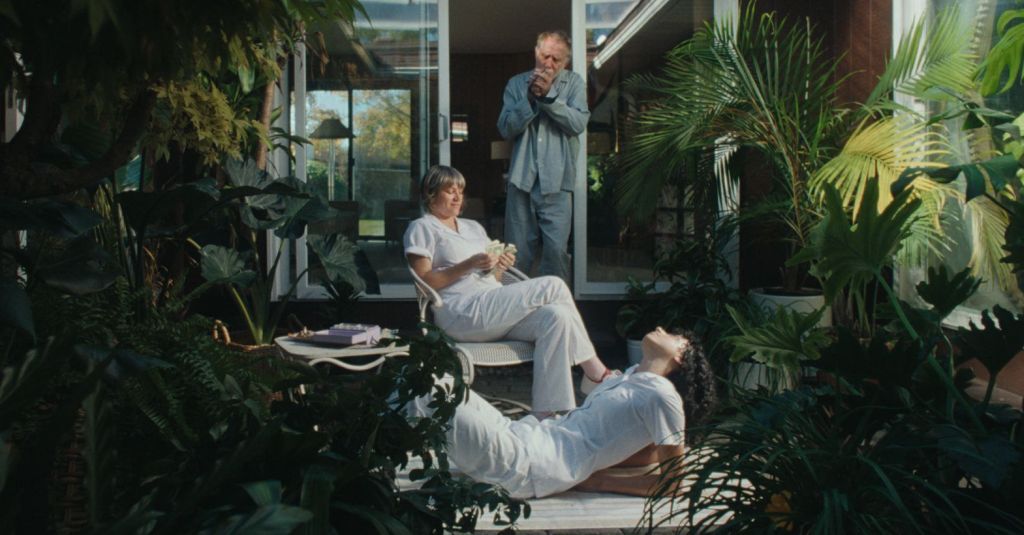
The class functioned as a massive, high-stakes preproduction laboratory. Students were tasked with the practical realities of independent film: forming an LLC, drafting budgets, navigating the intricacies of tax credits, and finalizing the script. By the time the quarter concluded, the project was fully prepared for production. This collaborative, community-led approach allowed Bernstein to leverage the Chicago filmmaking scene, utilizing her own grandmother’s house as the primary set.
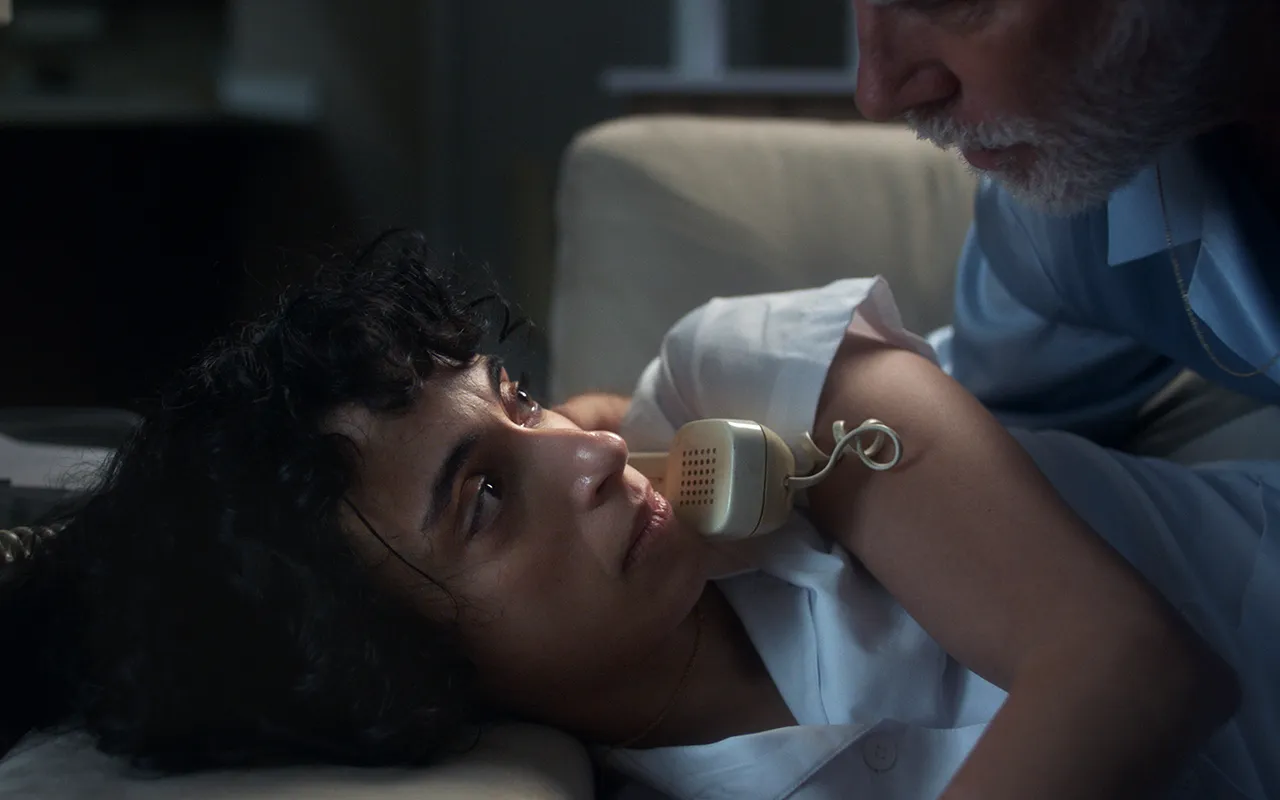
“I wrote it for every specific room,” Bernstein explains, noting that the house’s “out-of-time” quality—a blend of 1970s wallpaper and outdated landline technology—served to heighten the film’s sense of temporal displacement.
Cinematic Influences and the Ballardian Gaze
Critics have been quick to draw parallels between Night Nurse and the works of David Cronenberg, particularly his 1996 masterpiece Crash. Bernstein acknowledges the influence, noting that she, her DP Lidia Nikonova, and editor Alex Jacobs watched Crash repeatedly to capture its unique approach to cold, clinical spaces. However, the film possesses a distinct, arguably more literary, quality.
There is a palpable "Ballardian" dread embedded in the film’s DNA. Much like J.G. Ballard’s Cocaine Nights, the film examines the rot hidden beneath the veneer of quiet, suburban, or institutional life. Bernstein admits to a shared aesthetic with filmmakers like Atom Egoyan and Lucrecia Martel, citing a commitment to “pacing and lighting” over traditional suspense. The result is a film that feels less like a conventional thriller and more like a fever dream, where the camera—almost exclusively mounted on a dolly to provide a specific, weighted, “non-Steadicam” movement—creeps through the environment with a deliberate, suffocating slowness.
Supporting Data: The Craft of the "Uncomfortable"
The success of Night Nurse rests on its commitment to its own discomfort. In an era dominated by handheld, frenetic camerawork, Bernstein’s decision to use a heavy-duty dolly provides the film with a physical, mechanical authority. The ga-dunk of the dolly tracks, the slow, rhythmic pans, and the refusal to cut away during moments of moral ambiguity create a viewing experience that is intentionally taxing.
The score, composed by Steven B. Jackson and Samm Clapp, serves as the film’s heartbeat. Inspired by the paranoid, circular motifs of Francis Ford Coppola’s The Conversation, the music relies on flute and piano to underscore the sense of entrapment. Bernstein insisted that the musicians play live to the picture, an “old-fashioned” technique that reinforces the film’s commitment to texture and atmosphere over digital artifice.
Official Responses and Creative Intent
When asked about the controversial power dynamics at play—specifically the relationship between a young, vibrant nurse and an aging, potentially mentally compromised patient—Bernstein points to the work of Catherine Breillat.
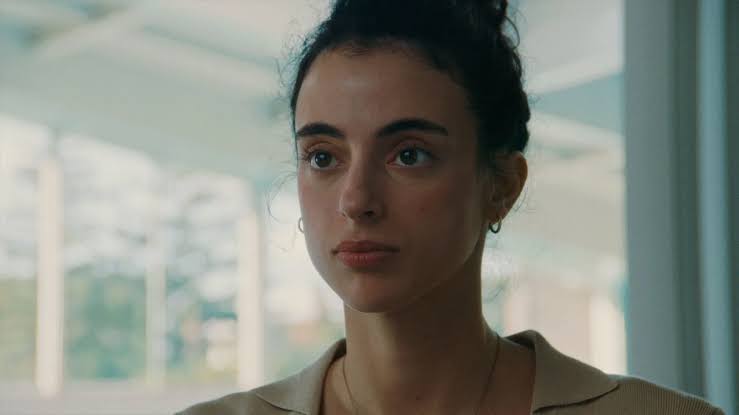
“A lot of [Breillat’s] films are about the power that a young woman has,” Bernstein notes. “I wanted to push that to the extreme.” By placing the narrative in a memory-care unit, the film blurs the lines of agency. Who is the victim? Who is the predator? The ambiguity is not a failure of the script, but its primary engine. As the character Mona (Eléonore Hendricks) chillingly remarks during a moment of moral crisis, “He was numb to life before today. You gave him purpose. You helped him.”
This cynical justification for exploitation is where the film finds its most biting, and most uncomfortable, social critique. It forces the audience to confront the human need to be "needed," even when that need is facilitated through cruelty.
Implications: The Future of Independent "Nurseploitation"
The release of Night Nurse on July 10 via IFC marks a significant moment for the "nurseploitation" genre, a subgenre that Bernstein has sought to reclaim and recontextualize. By nodding to Roger Corman’s 1970s trilogy—specifically Stephanie Rothman’s The Student Nurses—Bernstein isn’t merely paying homage to B-movie history; she is elevating it into the realm of high-concept psychological horror.
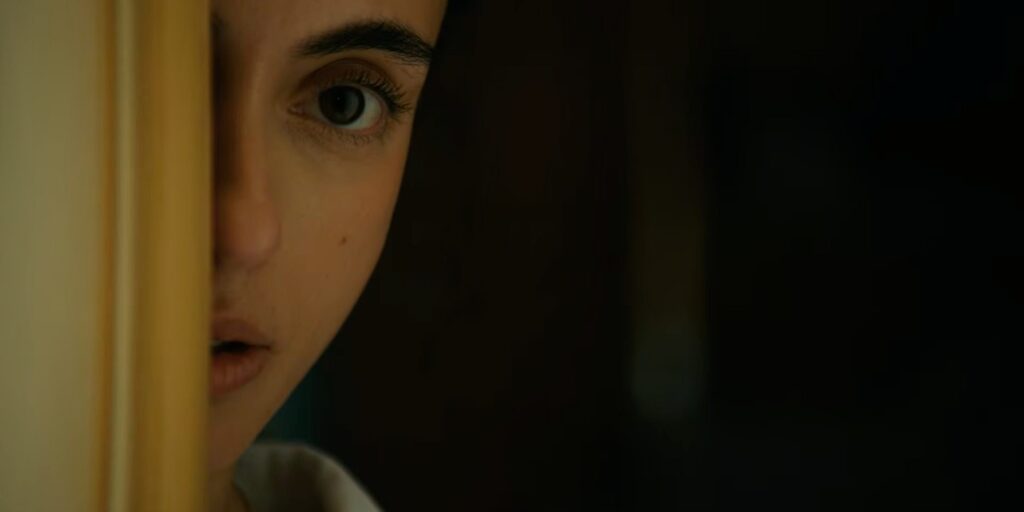
The film serves as a testament to the power of the "sister gaze." The collaboration between Bernstein and cinematographer Lidia Nikonova brings a feminine, observational perspective to a genre historically defined by the male gaze. By prioritizing the internal landscape of its characters over the external shocks of a standard thriller, Night Nurse creates a template for how modern filmmakers can utilize traditional genre structures to explore deeply complex,, and often dark, psychological territory.
Conclusion
Night Nurse is a rare debut that knows exactly what it wants to be. It is not interested in being "liked" by the audience; it is interested in being felt. Through its meticulous staging, its defiance of modern digital trends, and its refusal to offer moral clarity, the film cements Georgia Bernstein as a filmmaker to watch.
As the film prepares for its wide release, the discourse surrounding it will likely center on its disturbing central premise. Yet, beneath the scamming and the sexual tension lies a profound, almost tragic question about the modern condition: in a world that feels increasingly detached, how far will we go to feel the warmth of another’s presence, even if that presence is built on a foundation of lies? Night Nurse doesn’t provide an answer, but it forces us to sit with the question until it becomes unbearable.