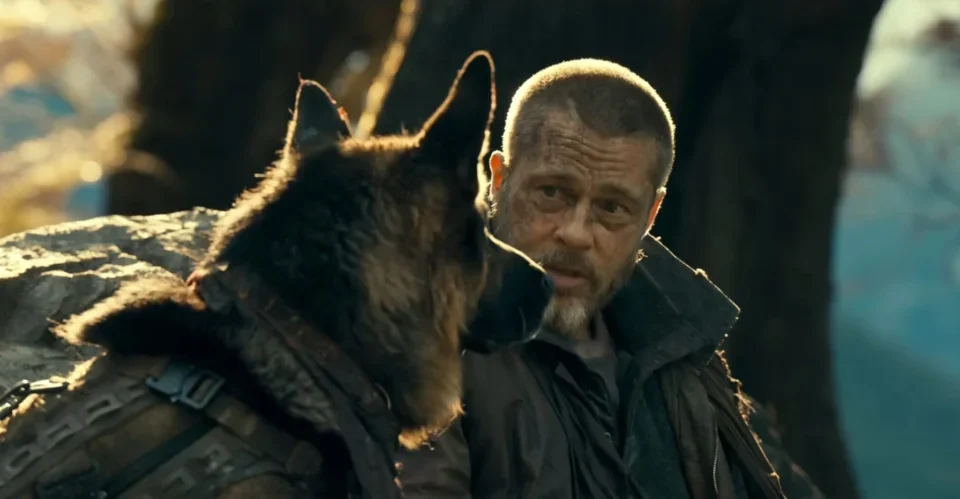
Survival of the Soul: David Ayer and Brad Pitt’s ‘Heart of the Beast’ Explores the Intersection of PTSD and the Wild

In an era where blockbuster cinema is increasingly defined by CGI-heavy spectacles and sprawling cinematic universes, filmmaker David Ayer—the director behind the visceral, grounded intensity of End of Watch and the harrowing trenches of Fury—has returned to a more intimate, albeit rugged, form of storytelling. His latest project, Heart of the Beast, arrives as an unexpectedly tender yet fiercely masculine two-hander that strips away the noise of modern action cinema to focus on the primal, silent bond between a man and his dog.
Starring Brad Pitt as James Belmont, a Special Forces veteran struggling to navigate the civilian world, the film serves as a meditation on the enduring psychological shrapnel left behind by modern warfare. Set against the breathtaking, unforgiving canvas of the Alaskan wilderness, Heart of the Beast is part survivalist manual, part psychological character study, and part unabashedly patriotic tribute to those who serve.
The Anatomy of a Crash: A Chronology of Survival
The film’s narrative is deceptively simple, unfolding with a methodical, almost real-time pacing that demands patience from its audience. The story begins not with the roar of a jet, but with the quiet, soulful gaze of Odin, a German Shepherd with a prosthetic leg—a literal casualty of war, much like his owner.
The chronology of the film follows a tight, claustrophobic timeline:
- The Departure: James Belmont, having isolated himself in the Alaskan interior, takes to the skies in his Cessna. We are given little context as to why he is there, save for scattered, jarring flashbacks of a Middle Eastern conflict that suggest he is attempting to outrun his own trauma.
- The Warning: Before take-off, a chance encounter with a gruff local traveler (played with characteristic grit by J.K. Simmons) provides the classic genre trope of the impending storm. The warning goes unheeded.
- The Catastrophe: A harrowing medical emergency forces James out of the sky. The plane plunges into the dense, frozen forest, separating James from his canine companion, Odin.
- The Reconnection: The bulk of the film documents the arduous, fifty-mile trek through perilous terrain. James must leverage the very survival skills taught to him by the military to navigate raging rivers, scale cliffs, and avoid wildlife—all while battling his own deteriorating health and the mental ghosts of his past.
- The Climax: A final, high-stakes convergence where man and dog must overcome their physical limitations to return to civilization.
Cinematic Craft: The Language of the Lone Survivor
Director David Ayer has always possessed a penchant for the "ground-level" view of life. Whether he is filming LAPD cruisers or WWII tanks, he prefers the dirt, the grime, and the sweat of his subjects. In Heart of the Beast, this aesthetic serves the story well.
Cinematographer Mauro Fiore captures the Alaskan vastness with a clinical, respectful distance. The film is essentially a solo performance by Pitt; he is in every frame, often acting against nothing but the wind, the trees, and the impressive screen presence of Uber, the dog who portrays Odin. The lack of traditional dialogue forces the audience to rely on Pitt’s physical acting—a performance that is stripped of his usual movie-star sheen, replaced by the bruised, weary intensity of a man who has forgotten how to be at peace.
However, the film is not without its ideological leanings. As the story progresses, the visual language shifts from the raw grit of survival to a more polished, sepia-toned aesthetic reminiscent of military recruitment media. The film’s voiceover, which occasionally dips into the territory of Jack London-esque romanticism, reinforces a pro-military stance that feels both deeply held by the filmmaker and, at times, tonally jarring.
Supporting Data and Production Context
Heart of the Beast is produced by a team clearly committed to the "prestige survival" genre. The production utilized real-world locations in Alaska, opting for practical effects over digital landscapes to enhance the sense of peril. The film’s commitment to showing the "banal particulars" of survival—the slow, grueling process of cutting through wreckage or nursing a festering wound—sets it apart from typical Hollywood action films.
The decision to feature a "bionic" dog as a secondary protagonist is a narrative masterstroke. It bridges the gap between the man and the animal; both are veterans of a war that has left them physically and mentally scarred. The dog, Odin, is treated with a level of agency that elevates him beyond a simple "pet" character. The training of Uber, the canine actor, was noted by the production team as being essential to the film’s success, as the dog needed to perform complex maneuvers, including surviving a confrontation with a bear, with a level of realism that could not be faked via CGI.

Official and Critical Responses
The critical consensus surrounding Heart of the Beast is largely positive, though it acknowledges the film’s ideological complexity. Critics have praised the film for its "intimate scale," noting that it is in the quiet moments between James and Odin that the film truly succeeds.
"The film’s late-act didacticism and overall earnest intentions don’t undercut what’s often exhilarating filmmaking around a strong lead performance," writes one early review, highlighting that while the "military agitprop" may alienate some viewers, it is balanced by the genuine emotional stakes of the man-animal bond.
Paramount Pictures has positioned the film as a late-September prestige release, hoping to capture the "middle American" demographic that values themes of resilience, patriotism, and the classic, red-blooded spirit of the survivalist.
The Implications of ‘Heart of the Beast’
Beyond its merits as a piece of entertainment, Heart of the Beast raises questions about how contemporary cinema handles the subject of military veterans. In an era where the public discourse on war is increasingly polarized, the film makes a clear argument: it champions the idea that the bond between soldier and comrade—even if that comrade is a canine—is the only path to salvation.
For Brad Pitt, this project serves as a compelling return to a specific type of character: the stoic, capable, and deeply troubled man of action. By choosing to play a role that relies on silence rather than monologues, Pitt reaffirms his status as a movie star who can still anchor a film through sheer presence.
However, the "tricky" nature of the film’s message remains its most debated aspect. By framing survival skills through the lens of military training, Ayer is making a broader statement about the utility of the soldier in civil society. It is an argument that suggests that while the military may break a man, it also provides the only set of tools capable of putting him back together.
Conclusion
Ultimately, Heart of the Beast is a film that functions on two levels. On the surface, it is a well-crafted, tense survival story set in one of the most beautiful and terrifying places on Earth. Beneath that, it is a complex, at times uneven, meditation on patriotism and trauma.
While it may not escape the shadow of its own earnest, sometimes didactic, point of view, it succeeds where it matters most: in the bond between its two leads. Whether or not one agrees with the film’s ideological subtext, the palpable chemistry between James and Odin ensures that the film leaves a lasting impression. It is a testament to the idea that, even in the coldest, most desolate corners of the world, there is a pulse of humanity—and a heartbeat of a beast—worth saving.
Paramount Pictures will release "Heart of the Beast" in theaters nationwide on Friday, September 25.