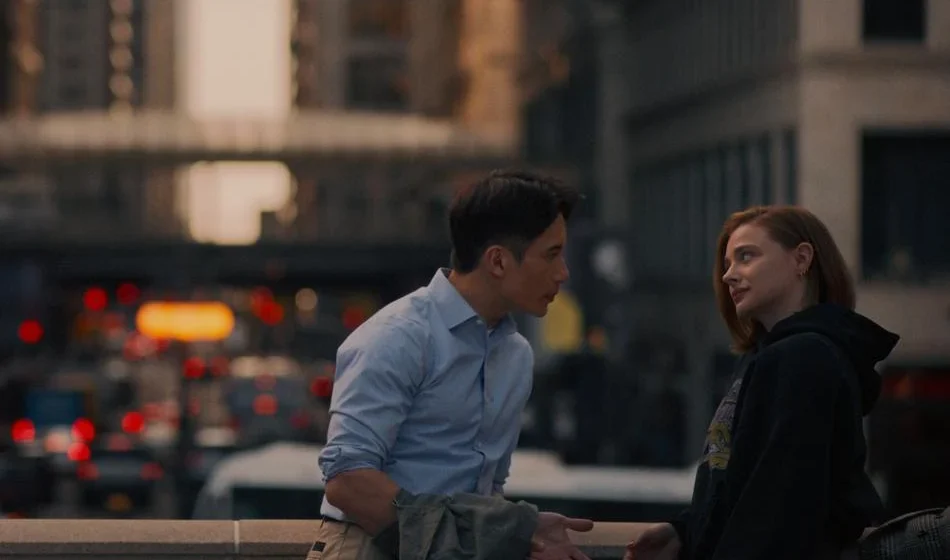

The landscape of modern romance is undergoing a seismic shift, at least according to the sociological "hot takes" frequently aimed at Generation Z. Observers often describe this demographic as a walking paradox: socially progressive and politically radical, yet curiously conservative in their sexual habits and traditional in their craving for emotional security. However, while the real-world dating politics of Zoomers continue to evolve, the cinematic portrayal of their lives often remains anchored in the past.
Joey Power’s latest feature, Love Language, serves as a fascinating case study in this generational friction. It is a film that attempts to speak the dialect of the 2020s while using the grammar of the 1990s. Starring Chloë Grace Moretz, Anthony Ramos, and Manny Jacinto, the film is a handsomely mounted, "comfort watch" romantic comedy that highlights a growing trend in Hollywood: the desire to repackage the safety of vintage tropes for a generation navigating an increasingly precarious romantic world.
I. Main Facts: The Premise and Production of ‘Love Language’
Directed by Joey Power—who previously explored the intersection of illness and intimacy in the 2018 drama After Everything—Love Language is a contemporary romantic comedy set against the picturesque, autumnal backdrop of Chicago. The film centers on Louisa (Moretz), a talented but professionally stagnant writer whose life is defined by a series of "almosts."
The core narrative engine is a unique professional pivot: Louisa becomes a ghostwriter for wedding vows. After a failed engagement of her own, she finds that her cynical yet poetic perspective on love is exactly what others are willing to pay for. This "vow-for-hire" business model serves as the catalyst for a complex romantic quadrangle involving her best friend’s cousin, Dash (Anthony Ramos), and a former college flame, Warren (Manny Jacinto), who happens to be the fiancé of Louisa’s newest high-profile client, Olivia (Isabel May).
The film is produced with a clear eye toward the "aesthetic" appeal that dominates social media discovery. With its warm color palettes and cozy knitwear, Love Language leans into the "soft-girl" and "dark academia light" aesthetics that have become staples of Gen-Z visual culture. Despite its modern trappings—including casual references to queer marriage and the occasional drug-related quip—the film’s DNA is undeniably rooted in the classic studio rom-coms of the late 20th century.
II. Chronology: From Heartbreak to the ‘Vow-for-Hire’ Empire
The narrative arc of Love Language follows a traditional three-act structure that prioritizes emotional resolution over slapstick humor.
Act I: The Catalyst of Cynicism
The film opens with Louisa in the aftermath of a broken engagement. Her disillusionment is palpable, making her the "black sheep" at the bachelorette party of her best friend, Tilda (played with characteristic wit by Billie Lourd). When Tilda struggles to articulate her feelings for her upcoming nuptials, Louisa steps in, repurposing the vows she wrote for her own aborted wedding.
The success of these vows—described by the protagonist as a mix of "Hallmark and Rupi Kaur"—creates an accidental business opportunity. At the wedding, Louisa is approached by several guests who find themselves similarly "tongue-tied" by the pressures of performative romance. It is also here that she meets Dash (Ramos), a man whose blunt honesty and effortless charm immediately challenge Louisa’s defensive perimeter.
Act II: The Complicated Commission
Louisa’s fledgling business takes a high-stakes turn when she is hired by Olivia (Isabel May), a wealthy and seemingly perfect young woman. Olivia wants Louisa to write the vows for her wedding to Warren (Jacinto). The complication? Warren is the "one who got away" from Louisa’s college years.
Instead of disclosing her history with the groom, Louisa accepts the job. This decision propels the second act into a series of "professional" meetings that are thinly veiled excuses for Louisa to spend time with Warren, rekindling old sparks under the guise of "research" for the vows. Simultaneously, she continues a casual, low-stakes relationship with Dash, using him as a buffer against the mounting emotional weight of her secret feelings for Warren.
Act III: The Writer’s Block and the Airport Intervention
As the wedding date approaches, Louisa finds herself unable to write. Her professional blockage mirrors her emotional paralysis. The film moves toward a climax that checks every box of the genre’s heritage: the realization of true feelings, the "wrong" person at the altar, and the inevitable dash to the airport (or in this case, a high-stakes intervention). The resolution seeks to balance the messy realities of modern dating with the neat, bow-tied endings expected of the genre.
III. Supporting Data: Performance Analysis and Genre Tropes
The effectiveness of Love Language relies heavily on its ensemble cast, which manages to elevate a script that occasionally leans too heavily on familiar archetypes.
The Power of Anthony Ramos
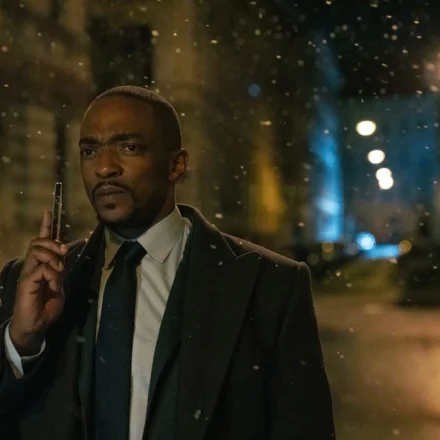
While Chloë Grace Moretz provides a steady, neurotic anchor for the film, it is Anthony Ramos who steals the proceedings. Ramos, known for his roles in In the Heights and Hamilton, brings a grounded, "real-world" energy to the character of Dash. Described as a "fuckboi with a nesting impulse," Dash could have easily been a one-dimensional love interest. Instead, Ramos imbues him with a drawling, beguiling sincerity that makes his pursuit of Louisa feel like the only grounded element in an otherwise "floaty" narrative.
The ‘My Best Friend’s Wedding’ Influence
Critics have pointed out the obvious parallels between Love Language and the 1997 classic My Best Friend’s Wedding. Both films are set in Chicago, both involve a protagonist attempting to navigate the wedding of a former flame, and both feature a "gay best friend" archetype (played here by Lukas Gage). However, where the 1997 film thrived on the moral ambiguity of Julia Roberts’ character, Love Language plays it safer. Louisa’s dilemma feels less like a desperate act of home-wrecking and more like a prolonged exercise in indecision.
The Missing ‘Com’ in Rom-Com
One of the most significant data points regarding the film’s reception is the observation that it neglects the "comedy" half of its genre. While the premise of ghostwriting wedding vows offers ample opportunity for satire and wit, the film opts for a "cozy" and "sentimental" tone. This reflects a broader trend in modern romantic media where the fear of being "cringe" often results in a lack of genuine humor, replaced instead by a pleasant, low-stakes vibe.
IV. Official Responses and Critical Reception
The critical consensus on Love Language suggests a film that is "palatable" and "attractively assembled," yet perhaps lacking in the bite required to become a generational touchstone.
The Variety Perspective
Reviewers have noted that Joey Power’s direction is "the best with words himself," implying that the film’s visual language is more sophisticated than its dialogue. The film "coasts off the combined charms of its ensemble and location," with the Chicago setting being treated almost as a character itself. The "warm, perma-autumnal tones" of the cinematography have been praised for creating a sense of comfort, even if the script fails to provide the "emotional complexities of an evenly weighted choice."
Industry Implications
From an industry standpoint, Love Language is being viewed as a "safe bet" for streaming platforms and mid-budget theatrical releases. By adhering to the ’90s template, the film minimizes financial risk while appealing to a demographic that is currently obsessed with "Y2K" and "90s" nostalgia. The inclusion of Isabel May (of 1883 fame) and Manny Jacinto (The Good Place) ensures a cross-section of fandoms that are highly active on social media.
V. Implications: What This Means for Gen-Z Cinema
The existence of Love Language raises important questions about the future of the romantic comedy and how it serves the youngest adult generation.
1. The Comfort Watch as a Cultural Currency
In an era of high anxiety and digital exhaustion, the "comfort watch" has become a vital commodity. Gen-Z viewers, despite their reputation for being "disruptors," often seek out media that offers a sense of predictability and nostalgia. Love Language succeeds because it is "recognizable." It doesn’t challenge the viewer; it hugs them. This suggests that for the near future, the rom-com genre will continue to look backward to move forward.
2. The Professionalization of Intimacy
The film’s focus on "ghostwriting vows" is a poignant metaphor for the modern dating experience. In a world of curated dating profiles and AI-generated opening lines, the idea that we need a "professional" to articulate our deepest feelings is both a comedic premise and a sad reality. Love Language taps into the insecurity that Gen-Z feels regarding authentic communication, even if it doesn’t fully deconstruct the implications of that insecurity.
3. The Search for a Generation-Defining Rom-Com
While Love Language is a pleasant addition to the canon, it highlights the void where a "generation-defining" rom-com should be. We have yet to see a film that captures the specific cadence of Zoomer romance—the digital ghosting, the "situationships," the hyper-awareness of therapy-speak—with the same definitive clarity that When Harry Met Sally or Annie Hall did for previous cohorts.
Conclusion
Love Language is a film that bridges the gap between the old world of cinema and the new world of the audience. It is a testament to the enduring power of the ’90s romantic template and the undeniable charisma of its young stars. While it may not reinvent the wheel, it provides a smooth, scenic ride through the streets of Chicago, offering a temporary escape into a world where even the messiest heart can eventually find the right words. For a generation still finding its voice, perhaps a "palatable" comfort watch is exactly what the doctor ordered.