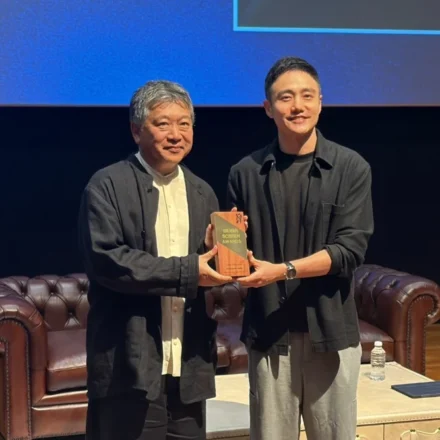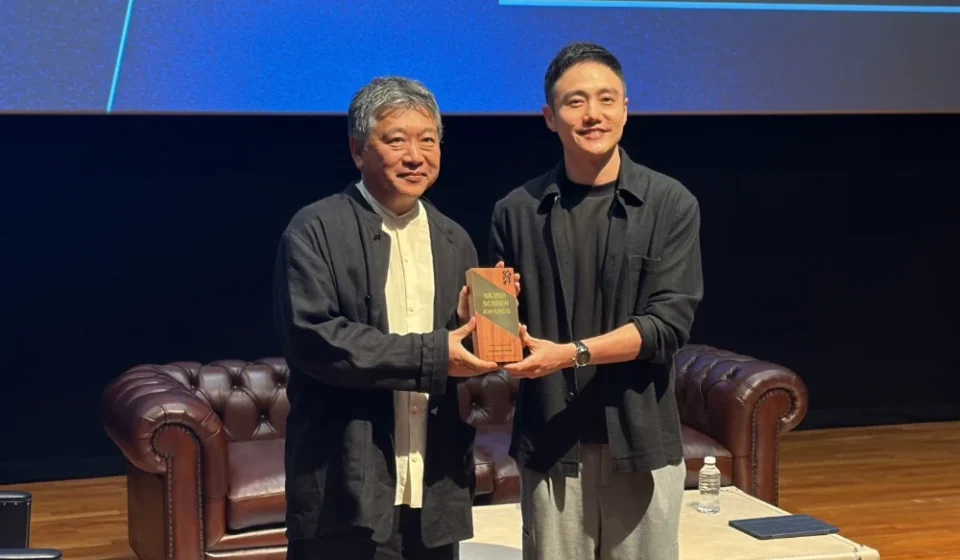

At the Singapore International Film Festival, amidst the bustling cultural landscape of the National Museum of Singapore, Japanese auteur Kore-eda Hirokazu stood as the recipient of the festival’s Cinema Honorary Award. The accolade, which recognizes profound contributions to Asian cinema, placed him in the company of legends such as Im Kwon-taek and Jafar Panahi. Yet, for a filmmaker whose career spans three decades, the honor triggered a moment of introspection rather than conclusion. "I feel like I still have about half my career left," Kore-eda mused, "and yet it kind of feels like I’m being told it’s time to graduate."
Far from graduating, the director of Shoplifters and Monster is entering what he defines as the "second half" of his professional life. In a candid, wide-ranging conversation with festival chair Boo Junfeng, Kore-eda peeled back the layers of his legendary process, offering a masterclass in the ethics of filmmaking, the delicate nature of directing children, and the necessity of discarding the blueprint.
The Philosophy of the Unseen Tear
Perhaps the most striking revelation from the session was Kore-eda’s self-imposed restriction regarding his young actors: he refuses to film them crying. While the director is world-renowned for eliciting naturalistic, heart-wrenching performances from children, he maintains that the camera should capture something more enduring.
"It’s not that I can’t, or that it’s difficult. I don’t shoot it," Kore-eda explained. "The ideal is that after viewers finish watching, they remember that child’s smile and cry." By opting against the spectacle of a weeping child, Kore-eda preserves the dignity of his performers, focusing instead on the quiet, internal shifts of emotion that resonate far longer than a scripted outburst. This restraint is indicative of a broader philosophy: the filmmaker as a guardian of the subject’s humanity rather than an extractor of emotional output.
Chronology of a Method: From Storyboards to Instinct
Kore-eda’s journey toward his current, highly intuitive style was not without its hurdles. He recounted a pivotal moment early in his career following the completion of his 1995 debut, Maborosi. Having meticulously storyboarded every shot, he showed the final product to Taiwanese master Hou Hsiao-hsien, expecting validation. Instead, he received a severe critique.
Hou’s advice was transformative: "Where you shoot a scene from—you go into the location, feel the space, see the light falling there, and that’s when you first decide how the actors move. Once the actors’ movements are decided, only then do you decide the camera position. You have to do it in that order."
The realization hit Kore-eda with the force of a revelation. He had been treating his films like blueprints, prioritizing technical planning over the organic reality of the space. "I swore I’d never draw storyboards again," he confessed. This shift toward a documentary-informed approach—treating the camera as an observant eye rather than a controlling force—became the bedrock of his subsequent work.
Supporting Data: The Ethics of Child Direction
Kore-eda’s approach to working with children is famously fluid, shifting from film to film based on the needs of the narrative and the personality of the cast.
- Dialogue as Personality: In films like The Truth and Broker, Kore-eda eschewed traditional scripts. Instead, he audited his young actors, rewriting dialogue to match their natural vocabulary and internal conviction. He would then feed them lines on set or describe a situation, allowing them to react with authentic language.
- Safety Through Structure: Conversely, for his 2023 film Monster, he chose to provide full scripts. The subject matter was deemed "risky" enough that the director felt it was safer to maintain a psychological barrier between the children and the heavy thematic content of their roles.
- The "Why" Factor: His process is nothing if not reactive. During auditions for Like Father, Like Son, he encountered a boy who answered every query with "Why?" While production staff found it frustrating, Kore-eda was captivated. He rewrote the character to mirror the child’s own inquisitive, defiant nature.
This methodology is deeply informed by his respect for Ken Loach. Recalling a conversation with the British director regarding Kes, Kore-eda noted how Loach once instructed a boy to look for a missing bird without explaining the darker reality of the scene. Loach’s lesson was that the director must weigh the ethics of every shot in the moment, rather than relying on past successes or "standard" techniques. "I keep it firmly in mind that judging things that way—that it worked on the last shoot so it will work this time—is the most dangerous thing in directing children," Kore-eda warned.
Official Responses and Future Directions
As he looks toward his 2026 slate, which includes Sheep in the Box and Look Back, Kore-eda sees a return to his roots. Sheep in the Box, which delves into the use of generative AI to "recreate" a deceased child, explores the complex territory of grief. Despite the technological premise, Kore-eda frames it as a deeply human story about the necessity of saying goodbye.
His adaptation of the manga Look Back marks a return to the documentary-style observation of his early career. By simplifying his visual language, he is attempting to reset his creative clock. "So I think the second half of my career probably starts next year," he noted.
His perspective on modern technology, specifically AI, remains skeptical. After a producer suggested he use AI to analyze a script, the software predictably praised the work as a "sure thing" for the Cannes Film Festival. Kore-eda abandoned the experiment, concluding that the AI lacked the lived experience required to understand what makes a film truly transformative.
Implications: The Audience as an Individual
Perhaps the most profound takeaway from the session was Kore-eda’s rejection of the "mass audience" mindset. In an era obsessed with demographic data and algorithmic success, he adheres to the advice of a mentor from his early television days: "If you think of them as viewers, it won’t reach anyone. Picture one person’s face and make it for them."
This radical intimacy—the idea that a film is a conversation between the creator and one specific, imagined person—explains the enduring power of his work. It is an architecture of empathy, built not on the foundations of market research, but on the shifting light of a location, the natural cadence of a child’s voice, and the memory of a bowl of tenzaru soba shared at a small shop in Akasaka.
As he prepares for the next phase of his career, Kore-eda remains an anomaly in modern cinema: a director who has achieved global acclaim by intentionally shrinking his scope, focusing on the minute, the human, and the profoundly quiet moments that define a life. He is not graduating; he is simply learning to see again.