
By: Editorial Staff
Date: July 22, 2026
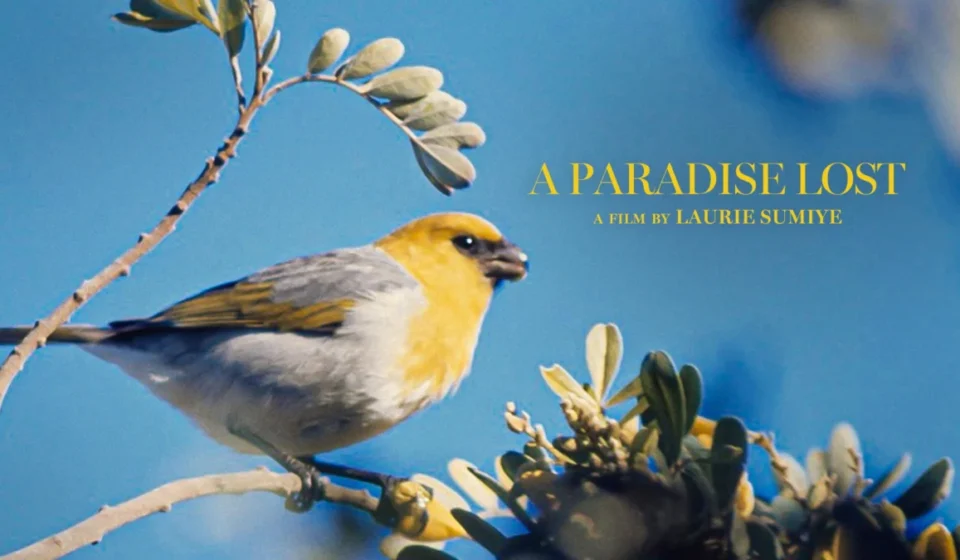
In the vast, verdant landscapes of the Hawaiian Islands—often celebrated as a tropical utopia—a quieter, more desperate battle has been raging for decades. It is a struggle not of men and machinery, but of survival and legal precedent. This week, filmmaker and artist Laurie Sumiye unveiled the official trailer for her highly anticipated documentary, A Paradise Lost, a poignant, visually arresting exploration of the "Bird Extinction Capital of the World." The film chronicles the harrowing plight of the Palila, a rare, yellow-feathered bird whose fight for survival became the centerpiece of one of the most unconventional and significant environmental lawsuits in history: Palila v. Hawaii Department of Land and Natural Resources.
The Core Narrative: A Bird’s Day in Court
The central premise of A Paradise Lost is as provocative as it is historic: "What species has the right to exist?" To answer this, Sumiye weaves a narrative that blends traditional documentary filmmaking with expressive animation. The film centers on the 1979 landmark litigation, where, for the first time, an endangered species—the Palila—was named as the lead plaintiff in a federal lawsuit against the state of Hawaii.
The legal strategy was audacious: by positioning the bird as a plaintiff, conservationists sought to force the government to remove non-native sheep and goats from the Palila’s critical habitat on the slopes of Mauna Kea. These introduced game animals were—and in some respects, still are—devouring the native mamane forests that the Palila rely on for food and nesting. As the trailer reveals, the film features a stuffed Palila specimen serving as the symbolic "lead plaintiff" in the courtroom, an image that serves as a powerful metaphor for the voicelessness of nature in the face of human expansion and mismanagement.
Chronology of a Crisis: From 1979 to the Present
To understand the weight of A Paradise Lost, one must look at the timeline of the Palila’s struggle. The 1979 lawsuit was not merely a singular event; it was the catalyst for a decades-long saga of environmental stewardship.

- 1979: The landmark case Palila v. Hawaii Department of Land and Natural Resources is filed. The court rules in favor of the bird, mandating that the state must protect the species by removing destructive game animals from its habitat.
- The Mid-1980s to 1990s: Despite the legal victory, the implementation of habitat restoration proves sluggish. Disputes between conservationists, local hunting groups, and government agencies lead to ongoing friction regarding the management of Mauna Kea’s sub-alpine forests.
- 2016-2025: Filmmaker Laurie Sumiye begins production on A Paradise Lost. Over the course of a decade, she captures the changing landscape of Hawaii Island, interviewing stakeholders, conservationists, and the descendants of those who fought in the original 1979 case.
- 2025: The film holds its world premiere at the Hawai’i International Film Festival, garnering critical acclaim for its unique blend of vérité footage, archival research, and animation.
- July 31, 2026: The film is slated for its theatrical debut across select cities in the United States.
Supporting Data: The Extinction Capital of the World
Hawaii is frequently referred to by biologists as the "Extinction Capital of the World." The statistics are sobering. Since human settlement, the islands have seen the loss of a significant percentage of their endemic bird species. The Palila, a species of Hawaiian honeycreeper, is currently listed as Critically Endangered by the IUCN.
The primary threats identified in the film include:
- Invasive Species: The introduction of ungulates (sheep and goats) has decimated the mamane-naio forests. These trees are the exclusive food source for the Palila.
- Climate Change: Rising temperatures are pushing avian malaria-carrying mosquitoes into higher elevations, further constricting the bird’s safe range.
- Habitat Fragmentation: Fire and human-induced land degradation have pushed the remaining Palila population into a dangerously small area on the slopes of Mauna Kea.
A Paradise Lost does not shy away from these grim realities. Through stunning cinematography of the misty, sub-alpine forests, the film provides a visceral look at a species clinging to the edge of existence.
Perspectives and Official Responses
The documentary features an array of voices, ranging from legal experts to native Hawaiian practitioners. The cast includes Kalā Lindsey-Asing, Michael Sherwood, Marjorie Ziegler, and Kaipo Schwab, who lends his voice to the character of "Ānuenue," a narrative device used to channel the bird’s perspective.
Laurie Sumiye, an artist whose work has long focused on the intersection of nature and humanity, describes the film as a "timely fable." In interviews, she has emphasized that the film is not just about the Palila; it is about the broader human responsibility to the natural world. "We are telling a story of life, death, rebirth, and recovery," Sumiye noted during the film’s festival run. "The Palila was the first to sue, but they are certainly not the last species in need of a voice."

The response from the scientific community has been overwhelmingly supportive. Environmental lawyers have praised the film for its accurate portrayal of the 1979 case, which set a precedent for "standing"—the legal right of a party to bring a lawsuit—in environmental law.
The Broader Implications: Why It Matters Now
A Paradise Lost arrives at a moment of global reckoning regarding biodiversity loss. As the international community debates the "Rights of Nature"—a movement that seeks to grant legal personhood to ecosystems, rivers, and species—the story of the Palila feels more relevant than ever.
The Legal Legacy
The Palila case is often cited in law schools as a fundamental pillar of the Endangered Species Act (ESA). It demonstrated that the courts could be a viable venue for protecting biodiversity when political channels fail. By revisiting this case, the film challenges audiences to consider whether our current legal frameworks are sufficient to handle the rapidly accelerating climate crisis.
The Intersection of Art and Advocacy
One of the most striking features of the film is its use of animation. By personifying the bird through the character of Ānuenue, Sumiye bridges the gap between scientific observation and emotional connection. This technique is designed to bypass the clinical distance often associated with conservation reports, instead fostering a sense of empathy that is essential for driving public engagement and policy change.
The PBS Connection
The upcoming broadcast on PBS represents a significant milestone for the project. By reaching a national television audience, A Paradise Lost aims to transcend the "niche" documentary category and spark a wider conversation about the stewardship of public lands. It is a clarion call for viewers to reconsider their relationship with the environment and the extent to which they are willing to advocate for species that have no political power of their own.

Final Reflections
As the theatrical release date of July 31, 2026, approaches, the film stands as a testament to the endurance of both the Palila and the people who have dedicated their lives to its recovery. It is a cautionary tale, yet one imbued with hope. Through the lens of Laurie Sumiye, the viewer is invited to step into the misty forests of Mauna Kea and witness a story that is as much about the human spirit as it is about the survival of a rare, yellow bird.
In a world increasingly dominated by the consequences of ecological neglect, A Paradise Lost offers a compelling, poetic, and necessary look at what happens when we choose to listen to the voiceless. As the trailer asks, "What species has the right to exist?" The film suggests that perhaps the answer is not for us to decide, but for us to protect.
For those interested in the ongoing efforts to save the Palila and other Hawaiian native species, the film’s official website provides extensive resources, including educational materials and links to conservation organizations currently working on the ground in Hawaii. Whether through the lens of history, law, or art, A Paradise Lost is an essential viewing experience for anyone concerned about the future of our planet’s biodiversity.