Beyond the Cabin: How ‘The Crawling’ Reinvents Alien Horror Through the Lens of Fragile Masculinity

In the pantheon of horror cinema, the "isolated cabin" trope is as venerable as the jump scare itself. Yet, writer-director Christian Everhard’s latest feature, The Crawling, which recently held its world premiere at the FilmQuest festival in Provo, Utah, manages to breathe fresh, unsettling life into the subgenre. By weaving together visceral extraterrestrial body horror with a claustrophobic psychological study of a crumbling marriage, Everhard has crafted a film that is as emotionally taxing as it is visually grotesque.
The Genesis of an Alien Nightmare
The concept for The Crawling was born not in a writer’s room, but in the vulnerable, liminal space of a sleepless night. While vacationing in a remote, secluded cabin with his partner, Everhard found himself plagued by the intrusive, late-night anxieties common to any horror enthusiast.
"I started thinking about the scariest worst-case scenario," Everhard reflected in an interview following the film’s October 23 premiere. "Could a dangerous local break into the house? Could an animal scurry in?"
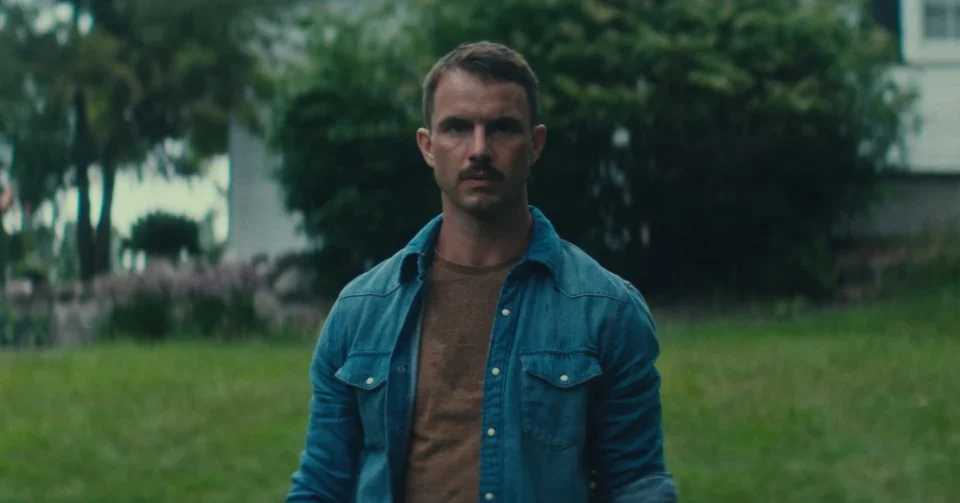
Those mundane fears, however, were abruptly shattered by a visual anomaly—a bright, inexplicable flash of light that pierced the darkness of his vacation home. That moment of confusion and existential dread served as the catalyst for the screenplay. The film centers on Mike (Will Brittain of Kong: Skull Island), a suspended police officer dealing with the fallout of an assault charge, and his wife, Emma (Katherine Hughes of Tell Me Lies). Their attempt to escape the pressures of their daily lives is interrupted by a terrifying, otherworldly intrusion that Mike experiences firsthand—or does he? As the narrative unfolds, the tension shifts from the external threat of an alien presence to the internal, fraying threads of a marriage built on secrets and societal expectations.
A Chronology of a Relationship Unraveling
The structure of The Crawling is a deliberate slow-burn, meticulously paced to mirror the disintegration of its leads.
Act I: The Facade of Stability
The film opens with the couple attempting to navigate the strain of fertility struggles. For Mike, this biological hurdle is not just a medical issue; it is a direct assault on his identity. As a man who defines himself through traditional archetypes of "alpha" masculinity and professional dominance, the inability to conceive acts as a catalyst for his psychological unraveling. The audience is introduced to a protagonist who is difficult to root for—a man whose pride and latent aggression make him an unconventional lead.
Act II: The Night of the Incident
The turning point arrives with the arrival of the "crawling" entity. The film utilizes the expertise of Steve Wang and Cleve Gunderman of Onyx Forge, whose creature effects provide a tactile, nauseating reality to the extraterrestrial visitors. Mike’s confrontation with the being is immediate and violent, but the narrative pivot occurs when Emma, a therapist, expresses skepticism. The ambiguity of the encounter forces the audience to question: Is Mike suffering from a stress-induced psychosis, or is Emma gaslighting him to maintain control?

Act III: The Descent into Chaos
As the film progresses, the distinction between the alien threat and the couple’s interpersonal toxicity blurs. The "crawling" is no longer just an extraterrestrial force; it becomes a metaphor for the secrets, resentments, and lack of consent that have permeated their relationship. The climax of the film pushes both characters to their breaking points, stripping away the performances they have built for one another.
Dissecting the Protagonist: Why Mike Matters
One of the most daring elements of The Crawling is Everhard’s insistence on centering the film around a character who, by all traditional metrics, is an "asshole."
"I was really interested in trying to see if I could take the audience from not liking this guy to starting to understand him and then start to actually care about him once the ending happens," Everhard explained.
By casting Mike as a disgraced police officer, Everhard taps into modern cultural anxieties regarding authority, violence, and the fragility of the "alpha male" persona. When stripped of his badge and his perceived biological dominance, Mike is left with nothing but his internal trauma. His journey is one of forced vulnerability; he is a man whose boundaries are being eroded by forces—both human and cosmic—that he cannot arrest or intimidate.
Technical Mastery and Creature Design
A horror film of this ambition lives or dies by its execution. The collaboration with Onyx Forge represents a significant investment in practical effects, a choice that grounds the film’s surreal elements in a physical, "gnarly" reality.
In an era where digital effects often sanitize the horror experience, the work of Wang and Gunderman brings a visceral, wet, and tactile quality to the creature design. This choice complements the performances of Will Brittain and Katherine Hughes. Brittain’s portrayal of a man physically and emotionally dismantled requires a high level of commitment, while Hughes manages to elevate what could have been a standard "put-upon wife" role into something far more enigmatic and dangerous. Her performance subtly shifts as the film progresses, suggesting that the "truth" of the marriage is far more complex than the audience initially assumes.
Implications: The Horror of Modern Intimacy
While The Crawling is undoubtedly a creature feature, its true power lies in its thematic resonance. The film draws inevitable comparisons to recent works that utilize the horror genre to critique modern dating, consent, and power dynamics.

The horror here is not just in the "alien mayhem," but in the realization that a relationship can be a source of profound isolation. When the couple is trapped in the house, the physical threat of the aliens serves as a pressure cooker, forcing the couple to address their hidden agendas. For many in the audience, the film’s exploration of how easily we can lose our footing with the person we think we know best may resonate as deeply as the jump scares.
Official Reception and Future Outlook
Since its world premiere at FilmQuest, The Crawling has generated significant buzz, not just for its scares, but for its willingness to challenge the audience’s empathy. The film is currently being represented for sales by producer Nick Donadio, and industry insiders are keeping a close eye on its distribution potential.
The critical consensus emerging from early screenings is that Everhard has managed to balance the "high-concept" requirements of a creature feature with the "high-art" requirements of a character-driven drama. The film does not offer easy answers, nor does it provide a tidy resolution. Instead, it leaves the viewer to grapple with the same existential questions that haunted the director on that fateful night in the cabin.
As the industry looks for the next wave of elevated horror, The Crawling stands out as a testament to the power of independent vision. It is a film that demands to be seen on the largest screen possible, not just for the spectacle of its creature effects, but for the uncomfortable, mirror-like quality it holds up to the audience. Whether it will achieve widespread success remains to be seen, but for those who value horror that stays with them long after the credits roll, The Crawling is a formidable new entry into the canon.
For now, audiences will have to settle for the hauntingly effective teaser trailer, a brief window into a world where the greatest danger isn’t necessarily coming from the stars, but from the person sleeping right next to you.