
As the cinematic world turns its gaze toward the floating city of Venice this September, the 81st Venice Film Festival will play host to more than just world premieres and red-carpet galas. Amidst the screenings and accolades, a new, high-stakes intellectual initiative is set to take center stage. On September 4, the historic Scuola Vecchia della Misericordia will serve as the backdrop for "The Future of… Creativity," an inaugural, invitation-only forum that promises to define the conversation regarding the intersection of human artistry and rapid technological evolution.
Presented by the strategic consultancy Finch & Partners and the powerhouse talent agency CAA, the event seeks to bridge the gap between traditional storytelling and the disruptive realities of artificial intelligence. By assembling a constellation of luminaries from literature, cinema, the visual arts, and the technology sector, the organizers hope to dissect one of the most pressing existential questions of our era: How will the definition of human creativity endure in an age of unprecedented transformational change?
The Architect of the Discourse: A Distinguished Guest List
The forum is curated under the stewardship of Venice Film Festival artistic director Alberto Barbera. The roster of participants reflects a deliberate attempt to diversify the perspective on what constitutes "creative work."
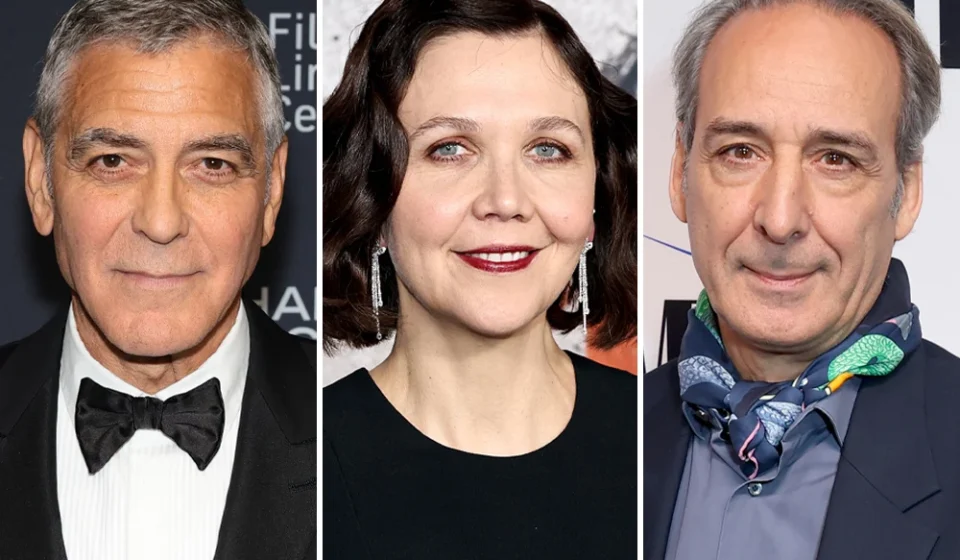
Headlining the discussions is George Clooney, the multi-hyphenate icon who will be simultaneously honored at the festival with the prestigious Golden Lion for Lifetime Achievement. Joining him is Maggie Gyllenhaal, who assumes a dual role of intellectual contributor and current Venice Jury President. The creative side of the panel is further bolstered by Alexandre Desplat, the Oscar-winning composer whose collaborations with Wes Anderson have become synonymous with modern cinematic craft; legendary Italian auteur Giuseppe Tornatore; and Emmy-winning director Shannon Murphy, known for her sharp work on Killing Eve.
However, the forum intentionally ventures beyond the traditional "Hollywood" bubble. By inviting Cardinal Jose Tolentino de Mendonca—the Vatican’s Prefect for the Dicastery for Culture and Education—the organizers are signaling a desire to incorporate ethical, moral, and philosophical frameworks into the discussion. The inclusion of sculptor and painter Kennedy Yanko and visual artist Marc Quinn provides a tactile, fine-arts perspective, while Meredith Whittaker, President of the encrypted messaging platform Signal, brings a critical, tech-focused lens to the dialogue regarding data, surveillance, and the infrastructure of the digital age.
A Chronology of the Conversation: From Cannes to the Lagoon
The Venice forum is not a singular, isolated event, but rather the next chapter in an ongoing series. The initiative finds its roots in the inaugural "The Future of… Film" forum held during the Cannes Film Festival this past May.
In Cannes, the focus was primarily structural. The panel featured heavyweights like Darren Aronofsky, James Gray, Nadine Labaki, and Whit Stillman, alongside senior executives from industry stalwarts such as Mubi, A24, Sony Pictures Classics, Neon, and Focus Features. That event served as a "proof of concept," demonstrating that high-level industry leaders were hungry for a space to discuss the logistical and commercial future of cinema.
The transition from the Cannes edition to the Venice gathering marks a significant broadening of scope. Where Cannes interrogated the business of film, Venice is tasked with interrogating the nature of culture itself. By expanding the focus from "Film" to "Creativity," the organizers are acknowledging that AI’s impact is not confined to the editing suite or the production pipeline; it is an epochal shift that touches the bedrock of human expression.
The Technological Paradigm: Understanding the Stakes
To understand the gravity of this forum, one must look at the specific concerns articulated by the organizers. The dialogue is not intended to be a luddite rejection of technology, but rather a sophisticated inquiry into the "ethics of the machine."
Alberto Barbera, in a formal statement, drew a provocative comparison: "Artificial intelligence may prove the greatest change yet, with an impact on human activity perhaps greater even than that of the 19th-century Industrial Revolution."
This comparison is critical. The Industrial Revolution fundamentally altered the relationship between human labor and production, shifting the world from a craft-based economy to a mechanized one. AI, as Barbera posits, threatens to do the same for the "creative class." The concerns cited—namely, the erosion of employment for artists, the complexities of copyright and intellectual property, and the potential theft of image rights—are the frontline issues for creative unions and guilds worldwide.
Yet, the forum aims to pivot from these defensive positions to a more proactive, creative inquiry. The central question for the Venice participants is: What new tools does AI offer that could actually support the work of artists, rather than replace them?
Official Responses and Strategic Vision
The leadership behind the forum emphasizes that this is a conversation of substance, not a PR exercise.
Claire Ingle-Finch, managing partner at Finch & Partners, frames the debate through the lens of human history. "Human beings have always told stories," she noted. "It is how we make sense of ourselves, and how one generation speaks to the next. The stories are handed down through centuries and millennia; only the form changes. In 2026, the form is changing again, and artificial intelligence is that change."
Her comments underscore a sentiment shared by many in the creative community: that while the medium of delivery (the "form") is fluid, the underlying human impulse to create is constant. The goal of the forum is to ensure that this impulse remains centered on the human experience, even as the tools of the trade become increasingly automated.
Roeg Sutherland, Co-head of CAA Media Finance, echoed this vision, emphasizing the role of the forum as a sanctuary for those who shape culture. "We are convening those who shape culture and are dedicated to sustaining and protecting art in all its forms," Sutherland stated. "As we saw at our event in Cannes, world-class business leaders, creators, and visionaries from across industries share a collective interest in harnessing technology to deepen creativity."
Implications for the Future of Art
The implications of the "Future of… Creativity" forum extend far beyond a single day in Venice. As AI tools become more sophisticated, the line between "human-authored" and "machine-assisted" art will continue to blur.
1. The Legal and Ethical Frontier
One of the most significant implications is the ongoing legal battle regarding copyright. If an AI model is trained on the works of the artists sitting in the room—Tornatore, Desplat, or Quinn—who owns the output? The forum provides a rare, non-litigious environment for these creators to interface with tech leaders, potentially shaping the ethical guidelines that will govern future development.
2. The Cultural Preservation Argument
By involving the Vatican’s representative, the forum also raises questions about the "sanctity" of art. If creativity is indeed a divine or uniquely human trait, does the automation of that process diminish the value of culture? This philosophical inquiry may lead to a broader consensus on how society should value human-made art in a market flooded with generative content.
3. A New Collaborative Model
Perhaps the most optimistic implication is the emergence of a new collaborative model. If, as the organizers hope, creators can "harness" AI to deepen their work, we may see a renaissance of experimental storytelling. Much like the invention of the camera forced painters to move away from realism and toward Impressionism and Abstract Expressionism, AI may force filmmakers and writers to explore new frontiers of narrative that algorithms cannot replicate.
Conclusion: A Defining Moment in Venice
As the film world prepares to descend upon the Lido, the significance of the "Future of… Creativity" forum cannot be overstated. It represents an acknowledgment that the industry is at a crossroads. The convergence of George Clooney’s star power, Alberto Barbera’s curatorial vision, and the diverse expertise of the invited panel creates a unique opportunity to set the tone for the next decade of artistic production.
Venice, a city that has preserved its identity through centuries of shifting power and innovation, acts as the perfect symbolic host. It reminds us that while the tools of the era may change—from the printing press to the AI model—the fundamental human need to tell stories remains the heartbeat of civilization. Whether this forum succeeds in charting a clear path forward remains to be seen, but it has already succeeded in doing something equally important: it has forced the most influential voices in the room to stop, look at the horizon, and confront the future together.