
The slasher genre has long been defined by its rigid architecture: the isolated location, the archetypal victims, and the unstoppable force of nature that hunts them. In his feature debut River, director Joshua Giuliano does not reinvent this framework so much as he polishes it to a mirror sheen, creating a visceral, atmospheric experience that feels both like a throwback to the golden age of horror and a masterclass in modern tension. Premiering at the 2026 Toronto International Film Festival, the film has already begun to carve out a reputation as a must-see for genre purists and casual thrill-seekers alike.
The Anatomy of an Opening: A Masterclass in Subversion
River begins with a sequence that serves as a thesis statement for the film’s approach to horror. Rather than opening with an overt act of violence, Giuliano and cinematographer Nick Matthews opt for an auditory preamble. The audience is introduced to the film’s initial victims through the disembodied, intimate sounds of a young couple caught in the throes of affection in the woods.
Matthews’ lens lingers on the mundane—a rusted car, a scattering of beer cans, the deep, verdant sprawl of a clearing—building a sense of place that is simultaneously idyllic and unsettling. When the violence finally arrives, it is off-screen, a choice that forces the audience to project their own fears into the dark. The reveal is sudden: a bloodied body in the grass, followed by a harrowing, wide-angle shot of a young woman sprinting toward the camera, only to be snatched into the darkness by an unseen force. It is a visually arresting, brutal introduction that establishes the film’s core contrast: the intersection of lush, vibrant nature and the jagged edge of human cruelty.
The Sibling Dynamic: Grief as a Catalyst
Beneath the veneer of a survival slasher lies a grounded, often painful drama about the complexities of grief. The plot centers on three estranged siblings returning to their father’s favorite river to scatter his ashes.
- Lucy (Jane Levy): The pragmatic anchor of the trio. Having stayed behind to care for their father during his final days, she embodies the resentment and exhaustion of the caretaker.
- Carla (Jessica Rothe): The eldest, who escaped the familial orbit long ago. Her performance is sharp and confrontational, acting as the necessary friction in the group’s dynamic.
- Drew (Max Mattern): The youngest and most vulnerable. Lanky and soft-spoken, his gentle nature acts as the emotional buffer between his sisters. While Mattern’s performance is nuanced, his penchant for mumbling—a character choice that emphasizes his alienation—provides a rare moment of levity for the audience, who may find themselves wishing for subtitles during his more reflective monologues.
The tension is not merely external; it is baked into their history. As they sort through their father’s belongings in the old family home, the film utilizes archival footage to remind us that once, these three were a cohesive unit. However, on the water, the masks slip. Lucy delivers a eulogy marked by traditional piety, while Carla shatters the silence with a raw, vitriolic indictment of their father’s history of abuse and infidelity. It is a moment of profound vulnerability that, in true genre fashion, is immediately punctured by the encroaching threat of the film’s antagonist.
Chronology of Terror: The Descent into the River
The film’s second act shifts from character-driven drama to a relentless survival loop. Once the siblings are stranded on their father’s boat, the technology that connects them to the modern world fails: the engine dies, the radio goes silent, and the cell service vanishes. This isolation is the crucible that forces their archetypal traits to the forefront.

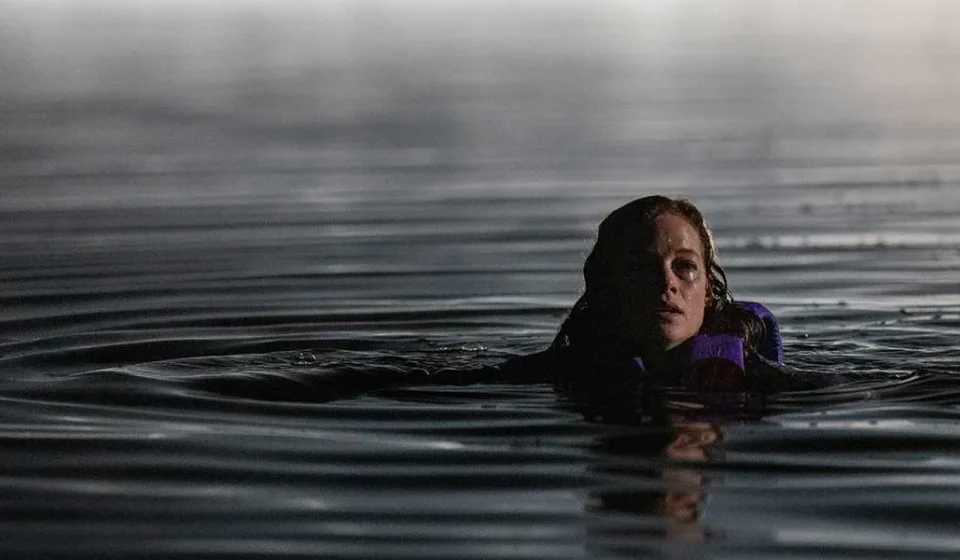
Carla, driven by her impulsive need for agency, attempts to swim to shore, triggering the first real encounter with the killer. From this point forward, the film operates on a kinetic, high-stakes tempo. The killer, portrayed with terrifying, elongated physicality by 6-foot-8 actor Dane DiLiegro, is a departure from the chatty, iconic villains of the 80s. He is a silent, grotesque figure—a nameless, faceless entity who wears the flayed skin of his victims as a mask.
Giuliano’s script keeps the motivations opaque, which is a bold, effective choice. The killer has no personal vendetta against the siblings; they are merely obstacles in his path, fodder for his singular, violent purpose. This lack of backstory makes him feel more like a force of nature than a human, turning the final act into a frantic, ground-level pursuit that keeps the audience pinned to their seats.
Supporting Data and Production Craft
What elevates River above its peers is the intentionality behind its craft. The production team leaned heavily into the visual language of the landscape. As the chase moves from the boat to the shoreline, the river itself transforms. It shifts from a place of mourning to a labyrinthine, almost mystical prison.
The color palette—deep greens, muddy browns, and the startling, bright crimson of the film’s practical gore effects—creates a sensory experience that feels tangible. The collaboration between director Joshua Giuliano and cinematographer Nick Matthews suggests a shared vision of "beautiful evil." They remind us that horror is not merely a collection of jump scares, but an exercise in composition and mood.
Furthermore, the performances of Levy and Rothe provide the emotional stakes necessary for the audience to care when the carnage begins. As seasoned "scream queens," their chemistry is palpable. Even when their characters are at their most fractured, the bond of shared history makes the threat of their individual deaths feel significant.
Implications for the Slasher Genre
The release of River comes at a pivotal moment for horror. With streaming platforms like Shudder consistently curating high-quality, mid-budget independent horror, films like River are finding a massive, dedicated audience that might have previously been ignored by major studio tentpoles.

However, the film’s director has made it clear that while River will eventually find a home on digital platforms, it was constructed with the cinematic scale in mind. The wide shots of the river, the imposing figure of DiLiegro, and the stark sound design are intended for the immersive environment of a theater.
The film’s success at the Toronto International Film Festival suggests a potential resurgence for the "back-to-basics" slasher. By stripping away unnecessary convoluted plot threads and focusing on the primal fear of being hunted in a beautiful, indifferent landscape, Giuliano has crafted a blueprint for future filmmakers.
Final Assessment: A Genre Benchmark
River is a visceral, lean, and terrifying debut. It manages to balance the weight of family trauma with the adrenaline of a traditional slasher film without letting one overshadow the other. While the film’s twist regarding parent-child dynamics adds a layer of thematic depth, it never distracts from the core mission: to scare, to thrill, and to leave the audience breathless.
It is a film that respects the lineage of its predecessors—from Friday the 13th to The Texas Chain Saw Massacre—while carving out a distinct, modern identity. For those who believe the slasher genre has run out of new ways to terrify us, River is a cold, refreshing splash of reality. It serves as a reminder that even in the most familiar of settings, there is always room for a new kind of nightmare.
Grade: B
Independent Film Company and Shudder have acquired the rights to "River," with a wide release strategy to be announced in the coming months.