Between Air Raids and Identity: How ‘I Rarely Wake Up Dreaming’ Redefines the Ukrainian War Drama

The current global film festival circuit is saturated with Ukrainian documentaries. From the frontlines of the Donbas to the quiet, harrowing interiors of displaced families, the non-fiction lens has become the primary vehicle for understanding the ongoing Russian invasion. However, this glut of documentary work has inadvertently obscured a stark reality: the country’s domestic fiction film industry is facing an existential crisis.
Shooting a narrative feature in post-invasion Ukraine is less a creative endeavor and more a logistical military operation. Production schedules are dictated by the unpredictable rhythm of air raid sirens, which interrupt takes and, tragically, claim lives. Curfews starting at 11 p.m. necessitate a constant, exhausting stream of bureaucratic petitions for permission to work through the night. Furthermore, the industry’s most vital talent—actors, grips, lighting technicians, and sound engineers—are largely serving on the front lines. Amid this landscape, the production of I Rarely Wake Up Dreaming, a German-Ukrainian co-production, stands as a triumph of artistic endurance.
A New Cinematic Language of Resistance
Directed by the acclaimed German filmmaker Isabelle Stever and co-written with her Ukrainian wife, novelist and curator Anna Melikova, I Rarely Wake Up Dreaming offers a rare, intimate look at the intersection of personal identity and national catastrophe. The film, which premiered to critical acclaim at the 2026 Locarno Film Festival, does not merely set its story against the backdrop of war; it treats the invasion as an inescapable, suffocating participant in the protagonists’ lives.
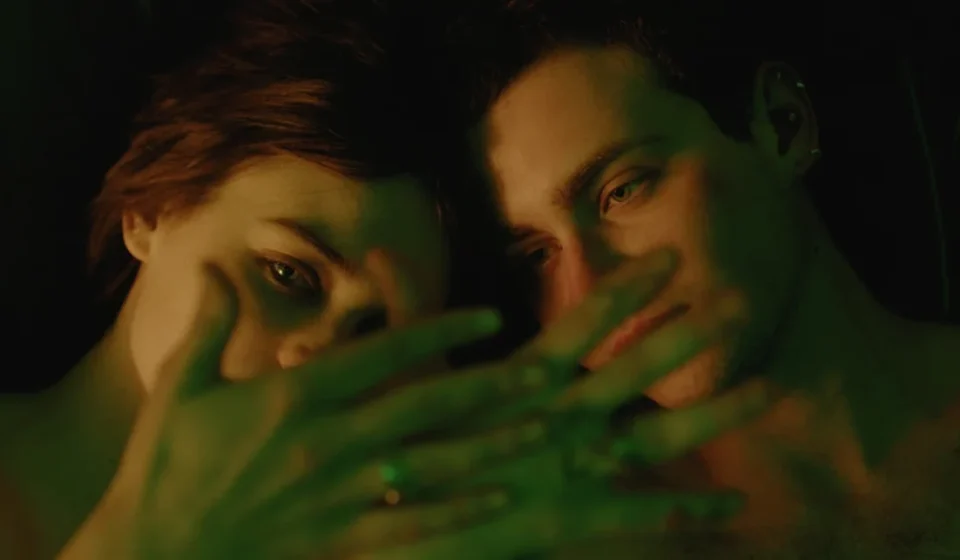
The story centers on Olya (Tania Myronyshena) and Oleh (Markus Bright), a couple whose lives are upended by the convergence of Russia’s invasion and Oleh’s gender transition. The film captures the surreal nature of their reality: a New Year’s party where the existential dread of massing troops is masked by the quiet, tender intimacy of a couple talking through their trauma in a five-minute unbroken mirror shot.

Stever, known for her ascetic style and penchant for exploring compromised, morally precarious characters, shifts gears here. While her previous work, such as The Weather Inside, used irony to critique European humanitarian efforts, I Rarely Wake Up Dreaming is a departure—a deeply felt, sensory exploration of what it means to belong to a nation that is physically being erased while you are simultaneously trying to define your own identity.
The Chronology of a Crisis: From Script to Screen
The project began long before the full-scale invasion, rooted in Melikova’s personal observations of the queer community in Ukraine and the shifting dynamics of her social circle as friends navigated gender transitions. As the war escalated, the screenplay underwent a profound metamorphosis. What began as a drama about personal evolution became an essential document of national survival.
The production was defined by a constant race against time and geography. Following the initial Russian mobilization, the characters in the film—much like the filmmakers themselves—are forced to navigate the harrowing process of evacuation. The film expertly captures the absurdity of the situation: Olya, obsessed with the fact that men aged 18 to 60 are barred from leaving the country, finds herself fixated on her own mismatched attire—a ridiculous, fluffy hat that acts as a symbolic, if ineffective, shield against the societal collapse unfolding around her.
The film’s most powerful sequence involves a border crossing, which serves as a masterclass in using "transition" as a metaphor for both gender and geography. The protagonists are forced through two separate checkpoints, one for each gender. The resulting scene, in which two female border officers—conditioned by Soviet-era attitudes—struggle to process Oleh’s transgender documents, highlights the intergenerational divide and the rigid moral frameworks still present in the region.

Supporting Data: The Craft of Sensory Dislocation
The film’s aesthetic success is largely due to its integration of local Ukrainian talent, many of whom cut their teeth on the country’s most decorated war documentaries. The production features the work of sound artist Mykhailo Zakutskyi, known for his work on Intercepted and Divia, and cinematographer Volodymyr Usyk, whose portfolio includes the celebrated Songs of Slow Burning Earth.
This team brings an "observational register" to the fiction film, utilizing tactical distance, sonic textures, and associative montage to convey pain without relying on the graphic, exploitative imagery often found in war films. Usyk’s camera is particularly adept at rendering "echoing dissociation," focusing on mundane, visceral details: the slick, fatty texture of liver at a market, or the sharp, biting sensation of a manicure drill against a cuticle. These images are "ablaze with a screaming muteness," effectively translating the psychological toll of living under the constant threat of annihilation.
The performances by non-professionals Tania Myronyshena and Markus Bright are equally transformative. Myronyshena, a journalist for The Kyiv Independent, and Bright, an activist and co-founder of the NGO The Third Place, bring a level of raw, lived experience that elevates the script from a mere drama to a profound experiential document.
Implications for the Future of Ukrainian Cinema
The success of I Rarely Wake Up Dreaming holds significant implications for the future of Ukrainian cinema. It proves that fiction films, when handled with the documentary-like sensitivity developed over the last two years, can offer a more nuanced look at the war than simple reportage.

Stever’s direction suggests that the most effective way to address the war is to examine the "collision of personal freedom and convention." In the context of the invasion, this collision becomes a matter of survival. The film avoids the "fatigue" that has begun to set in among festival audiences regarding war stories from Ukraine by focusing on the interiority of its characters. It shows that while the war is a massive geopolitical event, it is also a series of intimate, deeply personal losses—a transition interrupted, a passport denied, a life held in stasis.
A New Standard for War Drama
As the film moves toward its screening at the Main Slate of the 2026 New York Film Festival, it is already being cited as a contender for the most significant piece of fiction to emerge from the region since 2022. It represents a "brightest film" in Stever’s career, proving that even on the "grimmest terrain our present has to offer," art can find a way to reassemble the shattered pieces of human identity.
I Rarely Wake Up Dreaming is a reminder that cinema is not just a reflection of reality, but a tool for processing it. By moving beyond the headlines and into the quiet, often agonizing spaces of daily life, Stever and Melikova have created a work that is as much about the endurance of the human spirit as it is about the trauma of the state. For the global film industry, the film serves as a clarion call: the stories emerging from Ukraine are not just about the war—they are about the individuals who, despite everything, refuse to stop dreaming.
Grade: A-

The film is currently seeking U.S. distribution following its successful premiere at Locarno.