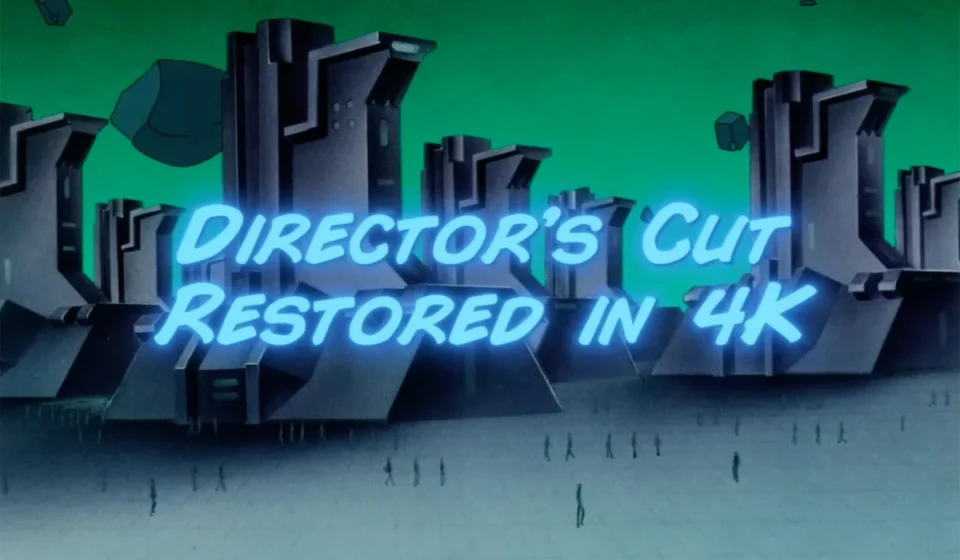
A Vision Restored: Janus Films Unveils the 4K Resurrection of René Laloux’s Sci-Fi Masterpiece ‘Gandahar’

By Alex Billington | July 17, 2026
In the annals of animation history, few names carry the weight and visionary intensity of René Laloux. A pioneer of the surreal and the philosophical, the late French filmmaker redefined what the medium could achieve, pushing it far beyond the boundaries of children’s entertainment and into the realms of high-concept existential inquiry. Today, Janus Films—the gold standard for cinematic preservation—has gifted cinephiles a monumental announcement: a brand-new, 4K restoration of Laloux’s 1987 final feature film, Gandahar.
This is not merely a digital polish; it is a long-overdue rectification of a cinematic injustice. For decades, Western audiences have known Gandahar only through a heavily edited, dubbed, and truncated 1988 U.S. theatrical release. By returning to the original French uncut version, Janus Films is offering the world the chance to see Laloux’s swan song exactly as it was intended: a lush, mind-bending, and deeply humanistic odyssey.
The Narrative: A Utopian Crisis Across Time
"A future passed, a past yet to come." The tagline for Gandahar encapsulates the temporal complexity of its narrative. The film transports viewers to the titular planet, a seemingly perfect utopia where peace is the default state and poverty is a relic of history. The inhabitants of Gandahar live in a serene, nature-integrated society, shielded from the harsh realities that plague lesser worlds.

However, this tranquility is shattered when reports emerge from the frontiers of the planet. Citizens are being turned into living stone by a mysterious, encroaching force. The council of matriarchs, recognizing the existential threat posed to their paradise, dispatches the young, valiant, but largely inexperienced warrior Sylvain to investigate.
Sylvain’s journey takes him into the outer reaches of his world, where he encounters the "Deformed"—a race of mutants cast out of society following a series of failed scientific experiments. Through this alliance, Sylvain discovers the source of the devastation: an army of metal automata controlled by a gargantuan, ancient brain known as Metamorphis. The battle against Metamorphis is not just a physical conflict; it is a temporal war. As Sylvain partners with the beautiful Airelle, the stakes escalate, forcing them to traverse time itself. The film posits a haunting, cyclical paradox: "In a thousand years, Gandahar was destroyed, and all its people massacred. A thousand years ago, Gandahar will be saved, and what can’t be avoided will be."
The Chronology of a Masterpiece
To understand the significance of this 4K restoration, one must look at the trajectory of René Laloux’s career.
- 1973: The Breakthrough: Laloux arrived on the global stage with Fantastic Planet (La Planète sauvage), a film that remains a cornerstone of surrealist animation. Its stop-motion-influenced aesthetic and allegorical depth set a high bar for the director.
- 1982: The Middle Chapter: Laloux continued his exploration of space and time with The Time Masters (Les Maîtres du temps), which featured character designs by the legendary French comic artist Moebius.
- 1987: The Final Act: Gandahar (known as Light Years in some international markets) was released in France. It marked the culmination of Laloux’s thematic obsession with biological evolution, artificial intelligence, and the fragility of utopia.
- 1988: The U.S. Disfigurement: Upon arriving in the United States, the film was subjected to the common practices of the era—dubbing, re-editing, and tonal shifts that diluted the nuance of the original French production.
- 2025-2026: The Restoration Era: Following the critical success of their 4K restoration of The Time Masters last year, Janus Films turned their attention to the crown jewel of the Laloux catalog. This 4K scan of the original negative restores the vibrant, surreal color palette and the intricate, bizarre character designs of comic book artist Caza.
The Artistic Vision: Caza and the Surrealist Aesthetic
What distinguishes Gandahar from the standard sci-fi fare of the 1980s is its visual DNA. The film’s aesthetic was heavily influenced by the work of Philippe Caza, a renowned comic-book artist whose contributions to the film gave it a visceral, dreamlike quality that feels as fresh in 2026 as it did nearly forty years ago.

The environment of Gandahar is not merely a backdrop; it is a character in its own right. From the bioluminescent flora to the terrifying, clockwork machinery of the Men of Metal, every frame is a dense, painterly composition. The restoration process has revitalized these elements, allowing the textures of the background art to breathe, and providing a level of clarity that reveals the meticulous craftsmanship of the original animation team. For those who grew up on the muddy, low-resolution VHS copies of the late 80s, the 4K restoration is akin to viewing the film through a completely new lens.
Official Responses and Preservation Ethics
Janus Films, in coordination with the restoration partners, has emphasized that this release is intended to preserve the integrity of the "uncut" French version. By removing the 1988 edits, they have restored the pacing and the thematic gravity intended by Laloux and his screenwriter, Raphael Cluzel.
The restoration project has been met with widespread enthusiasm from the animation community. Critics and archivists have noted that the 4K transfer provides a "visceral, visionary head-trip." By returning to the original audio and visual source material, the restoration highlights the intelligence of the screenplay, which is based on the novel Les hommes-machines contre Gandahar by Jean-Pierre Andrevon. The score, composed by Gabriel Yared, is also given new life in this high-definition format, with its haunting melodies now clear of the audio compression that plagued earlier home video releases.
Implications for Modern Animation and Sci-Fi
The re-release of Gandahar arrives at a pivotal moment in the landscape of animation. With the rise of AI-generated imagery and the dominance of hyper-realistic 3D, there is a renewed interest in the tactile, hand-drawn, and unapologetically strange aesthetics of the 20th century.

Gandahar serves as a reminder of the power of the medium to act as a vehicle for complex philosophical inquiry. Unlike many contemporary films that lean into spectacle, Gandahar focuses on the moral weight of progress and the consequences of discarding those we deem "deformed" or "useless."
Furthermore, the success of the Janus Films restoration program for Laloux’s work suggests a growing market for "prestige animation." By treating these films with the same archival rigor as the works of Kurosawa or Hitchcock, Janus is effectively validating the place of animation in the canon of high art.
The Future of the Laloux Legacy
As we look toward the theatrical re-release on August 28th, 2026, the cultural impact of this restoration is already palpable. It is not just an opportunity for older fans to relive a childhood classic; it is a chance for a new generation to discover a filmmaker who was decades ahead of his time.
René Laloux’s Gandahar is a testament to the idea that animation is not a genre, but a medium—one capable of holding the furthest reaches of human imagination. Whether one is a devotee of classic French science fiction or a newcomer to the works of Laloux, the upcoming 4K release offers a vital, necessary glimpse into a cinematic universe that refuses to be forgotten.

In a world increasingly concerned with the preservation of digital culture, the return of Gandahar serves as a beacon, reminding us that true art, no matter how old, carries the potential to remain as startling and relevant as the day it was created.
Technical Details and Availability:
- Format: 4K Restoration
- Original Release Date: December 1987
- Restored Theatrical Release: August 28, 2026
- Distributor: Janus Films
- Director: René Laloux
- Screenplay: René Laloux, Raphael Cluzel
- Composer: Gabriel Yared
For those eager to experience the restoration, check your local art-house cinema listings for the August 28th premiere. The official Janus Films website provides additional context on the restoration process, as well as a gallery of the newly preserved assets. As the film prepares for its grand return to the big screen, one question remains for the audience: Are we ready to confront the destiny of Gandahar once more?