The Primetime Emmy Stakes: A High-Voltage Clash of Politics, Satire, and Industry Flux

The road to the 76th Primetime Emmy Awards on September 14 is paved with more than just red carpet aspirations; it is defined by a turbulent intersection of corporate restructuring, regulatory pressure, and an increasingly volatile political landscape. As the Television Academy prepares to distribute 23 marquee awards across the comedy, drama, and variety spectrums, the industry finds itself grappling with a significant consolidation of categories—a move that has set the stage for a high-stakes showdown between the titans of late-night television.
The Architecture of Change: Navigating the Academy’s New Rules
The logistics of the Emmys are a massive undertaking, involving not only the main televised event but also the two Creative Arts ceremonies held a week prior, where roughly 100 awards are conferred in craft and guest-acting categories. However, this year’s narrative is less about the sheer volume of awards and more about the shifting regulatory framework governing them.
The Television Academy has introduced a series of stringent eligibility rules, most notably a prohibition against nominating a performer in a guest category if they have previously vied for a lead or supporting award for the same role. This change has had immediate, high-profile consequences. Most notably, Jon Hamm, the celebrated star of Apple’s The Morning Show, found himself disqualified from the guest actor category. Because he was previously submitted as a supporting actor for the role in 2024, the Academy’s new guidelines rendered his current guest spot ineligible. While the oversight was attributed to a submission error by the streamer, the incident underscores the rigidity of the current ruleset.
A Chronology of Variety: From Carson to the Modern Satirist
The variety series category, arguably the most culturally resonant segment of the Emmys, has been a battlefield of identity for over seven decades. Established in 1951, the category’s history is a map of television’s changing tides. In the early 1970s, the Academy recognized the inherent differences between talk-centric formats like The Tonight Show with Johnny Carson and the high-concept musical/sketch hybrids such as The Carol Burnett Show, prompting a brief, logical split.
However, from the mid-1970s until 2014, the category functioned as a monolithic entity, leading to a period of "mismatched competitors." Viewers witnessed surreal moments, such as Jay Leno’s Tonight Show triumphing over the musical prestige of MTV Unplugged in 1995. By the mid-2000s, the landscape had shifted toward the dominant late-night talk format, with Jon Stewart’s The Daily Show carving out a legendary streak of 10 consecutive wins, effectively squeezing out sketch-based competition.
The 2015 split—dividing the category into "Variety Talk" and "Variety Sketch"—was intended to restore equity. It ushered in an era where Inside Amy Schumer and Key & Peele could be recognized, followed by a six-year dominance by Saturday Night Live. The subsequent decision to move John Oliver’s Last Week Tonight into the scripted category further complicated the ecosystem. Now, in 2026, the consolidation of these categories once again brings the titans—Colbert, Kimmel, Oliver, and SNL—into a singular, cutthroat arena.
The Corporate and Political Pressure Cooker
The timing of this year’s competition is impossible to decouple from the current political climate. The "Late Night" genre has become a primary target of the Trump administration, with the fallout manifesting in tangible, career-altering ways for some of the medium’s most prominent voices.
The End of an Era: The Cancellation of The Late Show
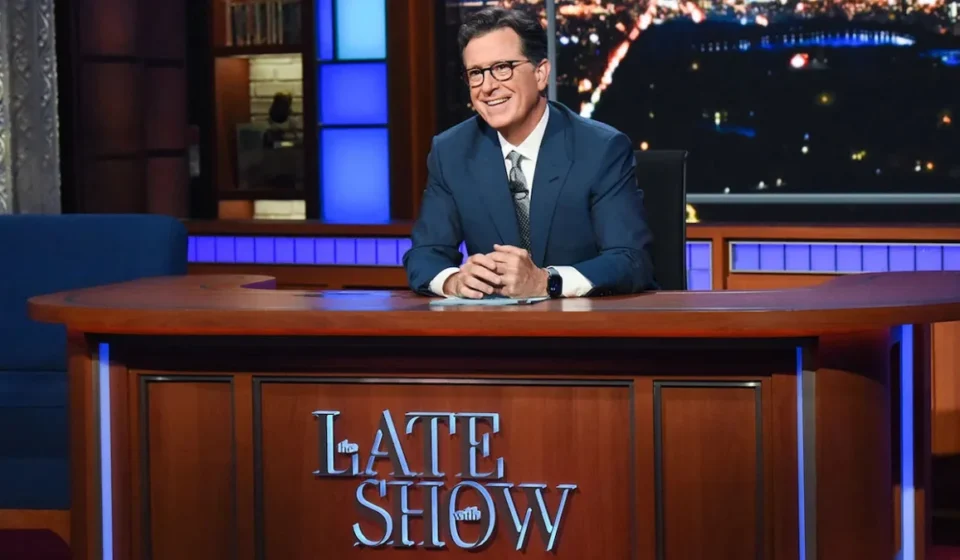
On May 21, 2026, the curtain fell on Stephen Colbert’s The Late Show after an 11-season run. The cancellation of the franchise—a CBS staple for 33 years—sent shockwaves through the industry. While the official justification provided by the new leadership at Paramount, under the David Ellison-led Skydance Media, cited a $40 million annual deficit, the explanation failed to silence critics. Many industry analysts argue that the move was a direct consequence of Colbert’s unrelenting critique of the Trump administration, suggesting that the merger of corporate interests and political proximity played a decisive role in the show’s demise.
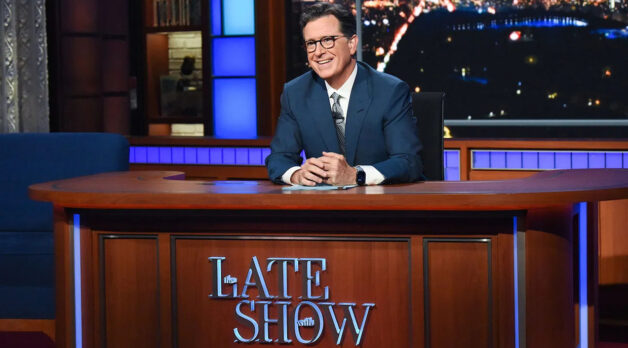
Despite the abrupt end, Colbert leaves on a high note. His final season was defined by a reflective, celebratory tone, and having secured his first-ever talk series Emmy last September, he remains the emotional frontrunner for the 2026 award.
The Kimmel Controversy: A Test of Free Expression
Parallel to the Colbert saga was the precarious situation surrounding Jimmy Kimmel. Following a monologue that drew the ire of the Trump administration and FCC Chairman Brendan Carr, Jimmy Kimmel Live! faced a genuine threat of removal from the airwaves. Major station groups like Nexstar and Sinclair threatened to pull the broadcast. However, the subsequent public backlash served as a barometer of the host’s immense popularity. Kimmel’s return to the air on September 23 saw a record-breaking 6.26 million viewers, with his monologue generating 26 million views across digital platforms. This "streisand effect" has only bolstered Kimmel’s position as a symbol of defiance, placing him in a strong, albeit underdog, position for the Emmy.
Supporting Data and Institutional Perspectives
The competition is not solely limited to the late-night hosts. Saturday Night Live continues to be a formidable contender. Despite the departure of long-time fan favorite Bowen Yang at the end of Season 51, the show has pivoted toward the absurd, arguably finding a renewed sense of purpose that avoids the exhaustion of constant political sparring. Furthermore, the surprising success of the debut season of SNL UK has fortified Lorne Michaels’ position as the definitive architect of global comedy, keeping the franchise in the top tier of voters’ minds.
The Daily Show remains a wild card. With Jon Stewart back at the desk for Monday nights, the show has regained a sense of institutional gravity. Having won the talk show category in the post-Trevor Noah transition, the show’s rotating-host model has proven resilient.
Implications: The Ballot as a Political Statement
As the September 14 ceremony approaches, the underlying tension is clear: the Emmy ballot has effectively become a proxy for the broader cultural divide in the United States.
The Academy, historically known for its liberal-leaning membership, faces a choice that carries symbolic weight. A vote for Colbert is a final nod to a terminated cultural institution; a vote for Kimmel is a defense of the platform against regulatory interference; a vote for Oliver is a validation of journalistic satire; and a vote for SNL is a testament to the endurance of the sketch form.
Industry observers anticipate that regardless of who claims the statuette, the result will be met with immediate reaction from the current administration. The ceremony, typically a night of celebration, is expected to be a flashpoint. Whether the result triggers a "Truth Social" rant from the President or a series of defiant acceptance speeches, the 2026 Emmys will be remembered as the year the awards ceremony finally, and perhaps irrevocably, stepped into the crosshairs of national politics. The industry is watching, not just to see who wins, but to see how the medium of late-night television survives its most challenging era to date.