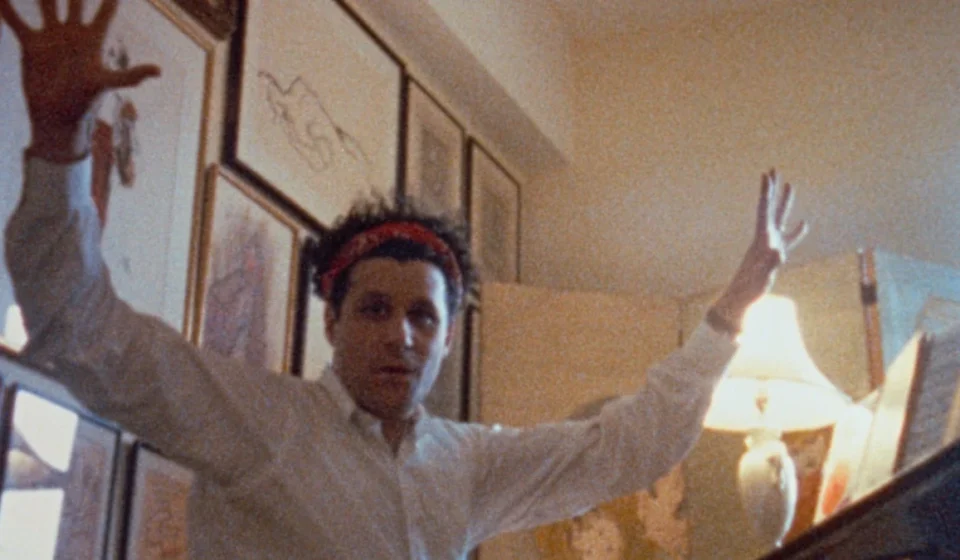

In the realm of documentary filmmaking, the line between observer and participant is often blurry, but rarely is it as inextricably intertwined as in Douglas Keeve’s 1995 masterpiece, Unzipped. As the film returns to theaters this weekend in a stunning 4K restoration courtesy of Janus Films—and with the blessing of the Sundance Institute and the UCLA Film & Television Archive—it serves as a time capsule for an era of fashion, celebrity, and, most notably, a deeply personal romantic entanglement.
For journalists and filmmakers alike, being romantically involved with one’s subject is an ethical minefield. Yet, in the case of Keeve and his then-partner, the rising fashion luminary Isaac Mizrahi, this proximity did not result in a compromised editorial perspective. Instead, it produced a work of unparalleled intimacy, capturing the frenetic, brilliant, and often volatile mind of a designer at the peak of his creative powers.
A Chronology of Chaos: The Making of an Icon
To understand Unzipped, one must understand the New York fashion landscape of 1994. It was a time when the industry was a closed loop of supermodels, high-stakes runway theatrics, and the looming influence of global fashion houses. At the time, Chanel held a majority financial stake in the Isaac Mizrahi fashion house, providing the capital for his vision of "sensibly chic" haute couture.
This was a decade before Mizrahi would pivot toward mass-market ubiquity—long before his recognizable "Eraserhead" shock of hair became a household staple via his Target diffusion lines. Keeve’s camera followed Mizrahi as he mounted his 1994 collection, a line famously inspired by the 1922 documentary Nanook of the North.
The film tracks the grueling, high-pressure process of preparation for Paris Fashion Week. It is a portrait of a creative mind in motion, navigating the tension between artistic integrity and the crushing weight of commercial success. As the cameras rolled, the relationship between director and subject was unfolding in real-time, hidden behind the lens.
Supporting Data: The Anatomy of a Masterpiece
Unzipped is, in many ways, a miniature chronicle of a bygone New York. It features an ensemble cast that reads like a who’s who of 1990s iconography: Naomi Campbell, Christy Turlington, Linda Evangelista, Cindy Crawford, and Kate Moss.

For contemporary audiences currently experiencing a wave of 1990s nostalgia—fueled by the renewed cultural obsession with the era’s aesthetic, epitomized by the recent interest in the life of Carolyn Bessette-Kennedy—the film provides an authentic, unfiltered look at the period. It captures the smoke-filled rooms, the Calvin Klein denim, and the specific cadence of the high-fashion industry before the digital age homogenized the runway experience.
Technically, the 4K restoration offers a clarity that heightens the film’s "vérité" aesthetic. While the documentary utilizes both color and black-and-white cinematography, the restoration preserves the grain and the soul of the 16mm film, ensuring that the emotional resonance remains as sharp as the visual fidelity.
The Human Element: Official Reflections on a Complicated Bond
The relationship between Keeve and Mizrahi famously soured shortly after the film’s 1995 premiere at the Sundance Film Festival, where it earned an audience award. However, to label the documentary as the cause of their breakup would be a reductive oversimplification of a complex human dynamic.
"Did the movie break us up? I’m not sure I know how to answer that because relationships are so complicated," Keeve told IndieWire in a recent interview. "Isaac is complicated, I’m complicated. So you have two complicateds, plus a complicated world. Our lives were so different, and in some ways, I couldn’t quite keep up with his."
Keeve describes a professional and personal disparity that eventually became unsustainable. "Isaac goes to two cocktails, a dinner, and an after-hours party in one night, every night. And I just couldn’t do that. I had my own working life, and it was busy. He wanted a partner who could share those things, which I think is correct. There was so much external pressure from different things."
Despite the eventual fracture, Keeve views the film as a testament to his affection for his subject. "The movie had nothing to do with our breakup at all. There was pressure around finishing the movie because we had a deadline, but I was so in love with Isaac and in love with just who he is. The movie is—I hate to say it because when you make a movie like that, it just becomes utter rubbish—but it is a love letter to him, I think, because he’s just so extraordinary."

The Ethics of the Camera: Observations and Exploitation
Unzipped is not an exercise in hagiography. Mizrahi is presented as a figure of benign volatility—a man with a singular vision who feels deeply and sometimes behaves erratically. In one of the film’s most memorable sequences, Mizrahi becomes profoundly flummoxed by a rival fashion house’s collection that bears a striking similarity to his own. Simultaneously, the audience sees his meticulous process, such as his decision to base the hair and makeup of his models on Loretta Young in the 1935 film The Call of the Wild.
The director’s proximity allowed for moments that would have been inaccessible to a traditional documentary crew. "I wouldn’t show Isaac the movie when we were editing it at all, and only when I was happy with it, I brought it to him," Keeve recalled. "There may be those moments in the movie that may seem like I’m shooting him in the bathtub and exploiting him, but I just always had a camera, and Isaac is somewhat oblivious to the camera in a way."
This "obliviousness" allowed for profound moments of human vulnerability, such as scenes where Mizrahi is on the phone with his mother, Sarah, while Keeve records him in the bathroom. The presence of Sarah Mizrahi—a quintessential "Jewish mother" figure who is both supportive and perpetually interfering—adds a layer of warmth and comedy to the proceedings.
Keeve noted, "They had that typical Jewish mother relationship, which is incredibly close, probably mama’s-boy close, and yet incredibly fraught. The thing that Fran Leibowitz says is that stereotypes tend to be true. So she said it, not me, but she was a wonderful woman, and I liked her very much."
Implications for Future Filmmaking
The legacy of Unzipped extends beyond its status as a fashion documentary; it serves as a case study for the value of immersion. The film captures the performance of celebrity, particularly in the case of Linda Evangelista. During a scene where she appears to be having a "hissy fit," Keeve suggests that she was acutely aware of the camera’s gaze.
"She’s not so much that person, but she knows we’re making a movie, and she knows that," Keeve explained. "Linda said, ‘I have to bring it,’ so she did. She just turns to the camera, and she gives this look like she’s just staring at the camera like, ‘I dare you to judge me or whatever,’ and then she turns away. For me, that’s an incredible moment."

As Keeve reflects on the restoration process, he emphasizes that the technical polish is secondary to the emotional memory. "When I’m watching the movie, I’m not really looking at the technical part of the film about how the diamond has been polished even more. I’m really seeing those moments and feeling those feelings."
The enduring appeal of Unzipped lies in this dichotomy: it is a technical triumph of film restoration and a raw, unvarnished look at a human heart. It reminds us that while the fashion industry may be defined by its surfaces, the people behind the designs are as complex, flawed, and deeply human as any other. The film’s return to theaters is not just a chance to see a piece of history; it is an invitation to witness an intimate, complicated, and beautiful portrait of love and art in the heart of the 1990s.
‘Unzipped’ is currently playing at Film Forum in New York, with a broader theatrical expansion scheduled, including a Los Angeles premiere on October 9.