
Content Warning: This article contains graphic details regarding a murder, mutilation, and the abuse of a minor.
The legal proceedings surrounding David Anthony Burke—the 21-year-old artist professionally known as "D4vd"—have taken a dramatic turn. Once a rising star in the music industry, Burke now stands at the center of a harrowing criminal trial that has gripped the public, involving allegations of brutal violence, the exploitation of a minor, and a calculated attempt to conceal a horrific crime. As the case moves toward trial, the narrative has shifted from the glitz of the recording studio to the cold, clinical realities of a courtroom in Los Angeles.
I. A Significant Shift in Legal Representation
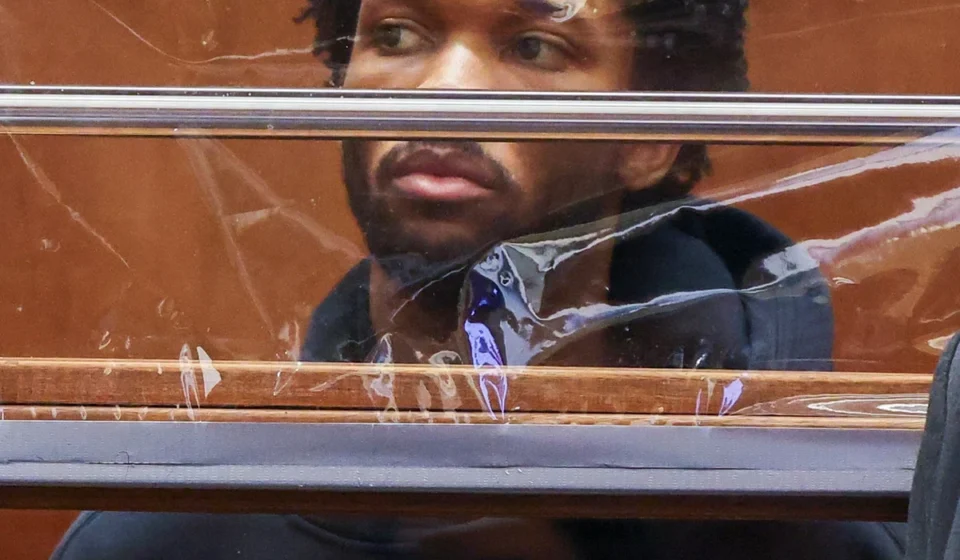
In an August 31 court appearance, the legal landscape of the case shifted abruptly. Burke’s former high-profile legal team, led by Blair Berk and Regina Peter, formally requested to withdraw from the case. The request was granted by L.A. County Superior Court Judge Charlaine Olmedo, who questioned the defendant directly regarding his intent to secure a public defender.
"Yes," Burke replied when asked if he wished to proceed with court-appointed counsel. Shortly thereafter, public defender Walid Fouad Kandee stepped forward to assume the defense.
In a statement released following the hearing, Berk and Peter expressed their continued support for their former client, noting, "We are grateful that the Los Angeles County Public Defender’s Office has taken over the representation and that David has a highly capable and committed team of attorneys and investigators behind him."
The transition signals a new phase in what has become a complex and high-stakes legal battle. The Public Defender’s Office, while maintaining the defendant’s right to a robust defense, issued a statement acknowledging the gravity of the situation: "We recognize the loss of life underlying the allegations and extend our sympathies to those who are grieving. At the same time, David Burke is entitled to a defense that takes his circumstances seriously."
II. The Charges and The Allegations
David Anthony Burke faces a suite of grave charges: murder, continuous sexual abuse of a child under the age of 14, and the unlawful mutilation of human remains. Burke has entered a plea of not guilty to all counts.
The prosecution, spearheaded by L.A. County District Attorney Nathan Hochman, paints a picture of a man who allegedly chose to commit a "ghoulish" act to protect his career. The central tragedy of this case is the death of 14-year-old Celeste Rivas Hernandez. According to the state’s theory, the relationship between the then-13-year-old victim and the adult artist was not only illicit but became a catalyst for murder when the victim threatened to expose their history.
III. A Chilling Chronology of Events
The timeline presented in court suggests a pattern of manipulation, desperation, and calculated destruction.
The Relationship and the Abortion
Evidence presented during preliminary hearings includes text messages and photos recovered from Burke’s digital devices. Prosecutors allege that in 2024, when Hernandez was 13, she became pregnant with Burke’s child. Documents presented in court indicate that Burke pressured the minor to undergo an abortion.
In a January 2024 exchange, Burke allegedly asked, "wen u gonna get it done," to which Hernandez replied, "two days." When she later expressed emotional trauma regarding the procedure, writing, "I killed my kid [for] you," it underscored the psychological hold the prosecution alleges Burke maintained over the victim.
The Final Days
By April 2025, the relationship had reportedly soured. Jealousy regarding other women allegedly led Hernandez to send a threatening message to Burke on April 22: "I will tell my dad so many … lies about u … i will end ur career and ur life."
The following day, April 23, 2025, proved to be the final day of Hernandez’s life. The final exchange occurred at 10:01 p.m., with Hernandez texting, "girly pop im almost there open your door if you are home." Burke replied, "got you," followed shortly by, "gate open door unlocked."
The Cover-Up
Prosecutors allege that after the murder, Burke engaged in a disturbing series of actions to dispose of the body. Court filings suggest that between April and July 2025, Burke made a series of online purchases—including a shovel, two chainsaws, a body bag, and a "burn cage"—using the pseudonym "Victoria Mendez."
The remains of Hernandez were eventually discovered on September 8, 2025, inside the trunk of an impounded Tesla registered to Burke. Forensic evidence, including blue plastic fragments found among the remains, appears to corroborate the prosecution’s theory that he used items purchased online to dismember the victim. Furthermore, prosecutors allege he specifically removed the victim’s ring finger because she had his name tattooed upon it.
IV. Forensic and Investigative Data
The preliminary hearings have featured intense scrutiny of the physical evidence:
- Garage Evidence: LAPD criminologist Lauren Wallace testified that chemical testing revealed evidence of blood in the garage of Burke’s Hollywood Hills home. While the defense cross-examined this, emphasizing that the result was "possibly" blood rather than a definitive match, it remains a pillar of the prosecution’s case.
- The Murder Weapon: Despite an extensive investigation, a murder weapon has not been recovered. Deputy Medical Examiner Grant Ho testified that he could not definitively identify the instrument used, nor could he reconstruct the exact circumstances of the slaying.
- Digital Footprint: Detective Corey Farell testified to finding nearly 50 photographs on Burke’s phone depicting the defendant and the victim in states of undress or engaged in sexual acts, providing a digital foundation for the sexual abuse charges.
V. Official Responses and Legal Strategy
The defense strategy has been contentious. During earlier hearings, attorney Blair Berk questioned the degree to which Hernandez’s family was aware of the relationship, noting that they had signed a travel waiver for her to visit London with Burke. Defense counsel also attempted to highlight that the victim’s sister was in Las Vegas at the same time as the pair, suggesting the family was not as unaware of the dynamic as they have claimed.
This tactic drew sharp criticism from the family’s legal representative, Patrick Steinfeld, who labeled the defense’s attempts to shift blame onto a 14-year-old child as "horrifying."
District Attorney Nathan Hochman has remained steadfast in his condemnation. "D4vd allegedly squandered his fame and fortune by brutally killing a young girl because he feared their illicit sexual relationship would ruin his aspiring career," Hochman stated. "The only headlines that will accompany his stage name from here forward will be about the vicious murder of a young girl."
VI. Broader Implications
The trial of David Anthony Burke serves as a grim reflection on the dangers of power imbalances between adults and minors, especially within the entertainment industry. The case has sparked national conversations regarding the responsibilities of those in positions of influence and the tragic consequences when those boundaries are ignored.
As the case moves toward its next scheduled appearance on October 19, the public and the legal community await further developments. For the family of Celeste Rivas Hernandez, the proceedings are a painful, necessary step in seeking justice for a life cut short in a manner that defies comprehension. For the defense, the task remains daunting: to navigate a case where the evidence—digital, forensic, and behavioral—presents an uphill battle in the face of public outcry and severe allegations.
The courtroom will ultimately decide the fate of David Anthony Burke, but the "ghoulish" details of the case have already permanently altered the legacy of the artist, transforming his public identity from one of rising musical success to that of a defendant in a harrowing trial of moral and criminal culpability.