The Radical Resonance of Valerie Solanas: Mary Harron on the 4K Restoration of I Shot Andy Warhol

Before she masterfully dissected the hollowed-out consumerism of the 1980s in American Psycho (2000), filmmaker Mary Harron turned her lens toward a different, more jagged brand of New York pathology. Her 1996 debut feature, I Shot Andy Warhol, remains a foundational text of 1990s independent cinema—a gritty, kinetic, and deeply empathetic exploration of Valerie Solanas, the radical feminist who attempted to assassinate pop-art icon Andy Warhol in 1968.
Nearly three decades after its initial release, the film is returning to theaters in a pristine 4K restoration, inviting a new generation to grapple with the complexities of Solanas, the limitations of the art-world establishment, and the enduring volatility of the SCUM Manifesto.
The Genesis of an Outsider’s Portrait
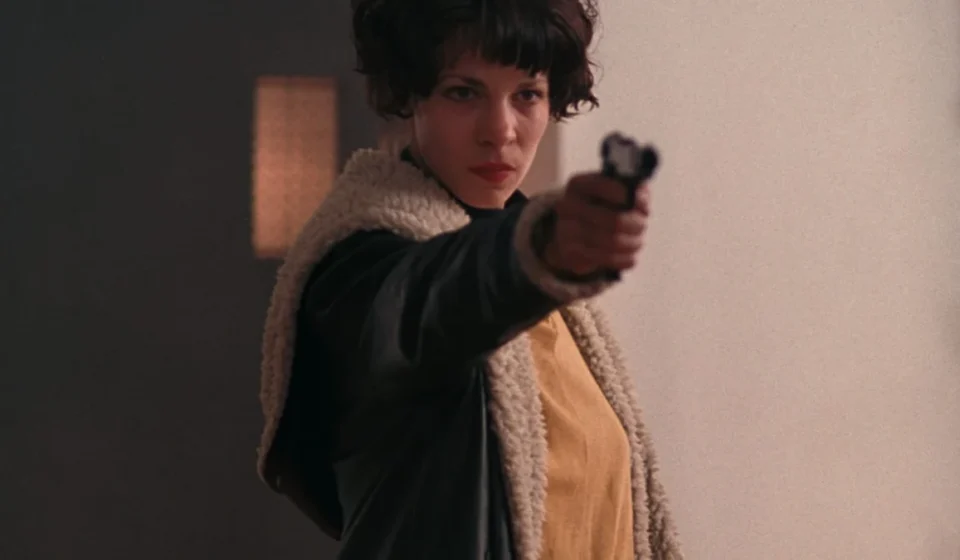
The story of Valerie Solanas is one of intense friction. As portrayed by Lili Taylor—who delivers a performance of deadpan, simmering rage—Solanas is a woman existing on the fringes of the downtown art scene, hawking copies of her SCUM Manifesto for a sliding scale of "two dollars for men, one dollar for women."
Harron’s film does not seek to canonize Solanas, nor does it dismiss her as a mere footnote to Warhol’s legend. Instead, it captures the raw ambition of a woman who felt systematically erased by the patriarchal structures of the 1960s. The film orbits the Factory, Warhol’s legendary studio, where the cast—including Martha Plimpton, Michael Imperioli, and Stephen Dorff as the iconic Candy Darling—brings a vibrant, lived-in energy to the era.
With a soundtrack featuring Pavement and Yo La Tengo, and a score composed by John Cale after the Velvet Underground’s Lou Reed denied permission for his songs to be used, the film functions as a living document of a specific, transient moment in New York history.
Chronology: From the Margins to the Screen
The journey of I Shot Andy Warhol from a research project to a feature film was marked by the same "outsider" spirit that defined its subject.
- The Discovery: While working as a researcher for a BBC documentary on Andy Warhol, Mary Harron encountered the SCUM Manifesto. Struck by the irony and sophisticated writing style of a text often dismissed as the ramblings of a "crazy woman," Harron became obsessed with the woman behind the violence.
- The Development: Harron spent years refining the narrative, facing the inherent challenges of securing funding for a film that centered on an unlikable, radical female protagonist.
- The Production: With a small, pivotal investment from a BBC producer and the eventual support of legends like Christine Vachon and Tom Kalin, the film was brought to life in the mid-1990s.
- The Release and Legacy: Upon its 1996 debut, the film was met with both praise and confusion; critics struggled to categorize it. It didn’t offer a clean moral arc, which was exactly Harron’s intention.
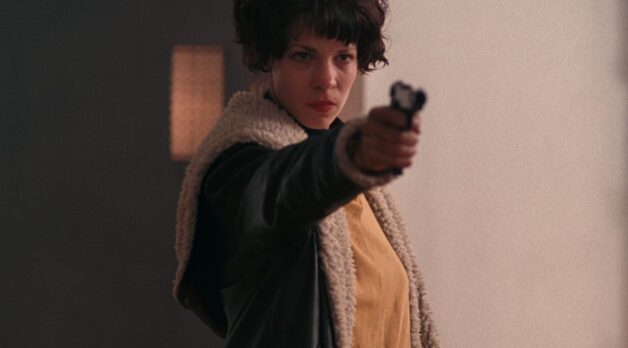
- The Restoration: In 2026, the 4K restoration, supervised by cinematographer Ellen Kuras, allows audiences to see the film’s "poetic realism" with newfound clarity, highlighting the interplay between the grunge of the city and the magical, colored-light atmosphere of the Factory.
Supporting Data: Aesthetics and the "Factory" Myth
A major component of the film’s success lies in its visual language. Ellen Kuras’s cinematography avoids the overly stylized polish of traditional period pieces. Instead, Harron and Kuras relied on documentary sources—photographs from Magnum, magazine archives, and the raw, naturalistic look of 1990s cinema—to ground the film in a tactile reality.
"I never watch dramatic films when I’m working on a period piece," Harron notes. "They’re too stylized. If you’re trying to recreate a period, go look at magazines, real life, documentary material. Then you’ll create your world."
This commitment to authenticity extends to the portrayal of Warhol himself. Jared Harris’s performance captures the artist’s "incredible fragility and elusiveness," moving away from the villainous tropes often applied to him in the aftermath of the shooting. Harron’s Warhol is a man who was simultaneously kind and cruel, sensitive and cold—a complex figure who gave a platform to the "hungry-for-attention" outcasts of the 60s, only to discard them when they became inconvenient.
Official Responses and Creative Intent
In a recent interview regarding the 4K restoration, Mary Harron reflected on the film’s place in the current cultural landscape. When asked about the "consensus" around the SCUM Manifesto in the 90s, Harron admits that it was once a "weirdo outlier." Today, however, its reach has expanded, with the text finding new life in graphic novels and academic discourse.
Harron remains firm in her refusal to simplify Solanas’s politics. "Categorizing it as satire almost keeps it in a safe place it doesn’t really belong in," she explains. "It’s both brilliant and fantastically well-written but also disturbing and awful at moments."
Regarding the film’s ending—which features a note on the SCUM Manifesto’s status as a classic radical text rather than a note on Solanas’s tragic death in a welfare hotel—Harron acknowledges that while it felt like a "stretch" at the time, it has evolved into a truth. "It’s become true in a way it wasn’t 30 years ago," she says.
Implications: The Modern Resonance of Rage
The rerelease of I Shot Andy Warhol comes at a time when feminist rage is once again a central topic of public discourse. Harron observes that the "backlash" to feminism in the 90s has, in the present day, transformed into something far more volatile.
"Now there’s been this extraordinary, brutal, clumsy backlash that’s almost beyond parody," Harron observes. "I’ll be very interested to see whether the film strikes a chord because of our current awful situation."
Furthermore, the film invites a necessary conversation about the "gendered economy" of the art world. Warhol, while championing trans women and drag queens, operated within a system that mirrored the ruthlessness of a Hollywood studio. Solanas’s rage was not merely a mental health crisis; it was a response to a system that offered a temporary spotlight before discarding those it could no longer use.
Whether Solanas would have thrived in the era of social media is a question Harron finds compelling. "You can make your own fame now in a way you couldn’t in the 60s," she muses. While the internet has provided a megaphone for the marginalized, it has also introduced a new, more cynical form of content creation.
Ultimately, I Shot Andy Warhol remains a vital, unsettling piece of cinema because it refuses to provide easy answers. It asks the audience to sit with their discomfort, to shift their sympathies, and to recognize the humanity in those whom society has found "too difficult" to metabolize. As the 4K restoration hits screens, it serves as a timely reminder that the questions Valerie Solanas raised about power, control, and visibility remain as urgent today as they were when the camera first rolled on her story.