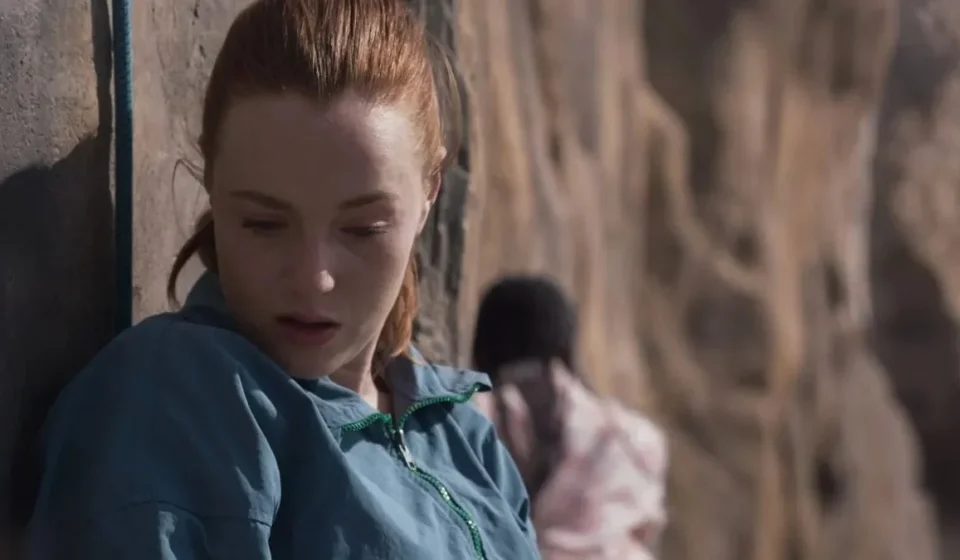
High Altitude, Low Stakes: Why ‘Fall 2: Deadpoint’ Fails to Reach the Heights of Its Predecessor

In the summer of 2022, the cinematic landscape was emerging from the long, shadow-drenched dormancy of the pandemic. As theaters struggled to lure audiences back, Scott Mann’s Fall arrived with a simple, terrifying proposition: two women, a 2,000-foot tower, and nowhere to go but down. It was a masterclass in minimalist tension, turning a $3 million budget into a $21.8 million global box office success. It was visceral, claustrophobic, and fundamentally understood the primal fear of heights.
Four years later, the franchise has returned with Fall 2: Deadpoint. Directed by the Spierig Brothers—known for their work on Jigsaw and Winchester—the sequel attempts to replicate the lightning-in-a-bottle success of the original. However, as the dust settles on this new, 97-minute endurance test, it becomes clear that Deadpoint suffers from a fundamental misunderstanding of what made the first film a survival horror standout.
The Premise: A Legacy of Grief and Reckless Abandon
Fall 2: Deadpoint centers on Jax (Harriet Slater), the younger, more reserved sister of the late Shiloh Hunter, who perished in the original film’s tower disaster. In the years following the tragedy, Shiloh has been posthumously transformed into a martyr for the "thrill-seeker" subculture. Her social media presence—dubbed her "fall-owers"—has turned her reckless demise into a twisted form of internet mythos.
Jax, conversely, is presented as the antithesis of her sister: camera-shy, risk-averse, and still clinging to analog technology like a Nokia brick phone. This characterization serves as the film’s inciting friction when she is approached by Luce (Arsema Thomas), a college friend of the deceased Shiloh. Over drinks, Luce convinces a grieving and seemingly impressionable Jax that the only way to process their shared loss is to embark on an illegal, life-threatening "plank-walk" on a mountain in Thailand.
The destination? A site rumored to house a "fear-eating" statue known as the Death Dragon. What follows is a narrative sequence that defies logical character motivation. Within days, the duo is halfway across the world, guided by a shady local named John (Tom Brittney) to a 4,000-foot vertical climb. As expected, a combination of geological instability and structural failure leaves the women stranded, mirroring the plot beats of the original with an uncomfortable, almost derivative, rigidity.
A Chronology of Tension: From the Tower to the Mountain
To understand the trajectory of the Fall franchise, one must look at the mechanical structure of its survival scenarios.
- The Original (2022): The narrative was built on a foundation of isolation. The Mojave Desert tower was an artificial construct, a rusted needle in an ocean of sand. The scarcity of resources—water, signal, hope—created a "ticking clock" scenario that forced the audience into the shoes of the protagonists.
- The Transition (2026): Deadpoint shifts the setting from the man-made tower to a natural mountain face in Thailand. While the verticality remains, the shift in tone is palpable. The film leans heavily into the "grief-as-motivation" trope, utilizing frequent, jarring flashbacks of Shiloh skydiving and dispensing life advice to explain Jax’s sudden pivot toward extreme sports.
- The Crisis: The inciting incident—the destruction of the planks—occurs with a sense of inevitability that drains the scene of genuine surprise. Once the women are stranded, the film relies on a familiar bag of tricks: the single scavenging vulture, the hallucinated conversation with a deceased loved one, and the agonizingly slow inspection of rusted hardware.
Technical Merits and Cinematic Craft
Despite its narrative shortcomings, Fall 2: Deadpoint is not a complete failure of production. Cinematographer Andrew Strahorn deserves significant credit for the film’s visual language. The vertigo-inducing shots of the Thai mountain face are genuinely stomach-churning, and the camera work successfully communicates the sheer scale of the drop.
Furthermore, the performances of Harriet Slater and Arsema Thomas represent the strongest element of the production. Both actresses are forced to do the heavy lifting in a script that relies heavily on soapy exposition and predictable plot developments. They navigate the emotional landscape of the film—grief, betrayal, and the "fear-eating" lore—with a level of commitment that the screenplay rarely earns. Even when the dialogue pivots into motivational platitudes, the actors maintain a grounding presence that keeps the audience tethered to the screen, even if the plot itself begins to drift.

Implications: The Franchise’s Future
The most telling aspect of Fall 2: Deadpoint is its final act. In a move clearly inspired by the Marvel Cinematic Universe, the film concludes with a post-credits-style teaser that points toward a third installment, reportedly set in a snowy, alpine environment.
This suggests that the producers view Fall not as a singular, harrowing story of survival, but as an anthology of "stuck in a high place" scenarios. While the commercial logic is sound—the franchise clearly has a dedicated, albeit shrinking, audience—the artistic implications are concerning. By shifting from the specific, character-driven trauma of the first film to a formulaic "destination-of-the-week" structure, the franchise risks turning its most compelling element—the visceral, real-world fear of heights—into a repetitive gimmick.
Critical Analysis: Why the Magic Faded
The core issue with Deadpoint is a lack of ingenuity. The original Fall succeeded because it was lean and mean; it stripped away the fluff and focused on the claustrophobia of being suspended in the void. Deadpoint, by contrast, feels cluttered.
The inclusion of the "Death Dragon" statue and the pseudo-spiritual subtext feels like a desperate attempt to add depth where none was needed. The audience isn’t looking for a meditation on the philosophy of fear; they are looking for the white-knuckle, palms-sweating experience of survival. When the film pauses for a long-winded monologue about the nature of courage, the tension leaks out of the room like air from a punctured tire.
Moreover, the predictability of the narrative makes the 97-minute runtime feel bloated. Unlike Final Destination, which turned the mechanics of death into a Rube Goldberg-esque puzzle, Deadpoint simply forces the characters to wait. They wait for the next beam to snap, they wait for the next hallucination to pass, and they wait for the inevitable rescue or demise. It is an exhausting exercise that lacks the "nastiness" or the cleverness required to make a survival thriller truly memorable.
Conclusion
Fall 2: Deadpoint is a film that looks down, realizes the height, and decides to jump anyway—only to find that it forgot to pack a parachute. While the technical craft remains high and the lead performances are commendable, the script is a hollow echo of its predecessor.
The franchise is currently at a crossroads. It can either continue down this path of increasingly absurd, formulaic sequels, or it can attempt to rediscover the minimalist tension that made the first film a cultural phenomenon. For now, Deadpoint serves as a cautionary tale: even at 4,000 feet, if you don’t have a solid foundation, the only direction you’re heading is down. Whether the audience will follow the franchise to its next snowy, precarious peak remains to be seen, but for those who valued the grounded terror of the original, this latest excursion is a steep climb for very little reward.