Lost in the Multiverse: Why Apple TV+’s ‘Constellation’ Was a Casualty of the Modern Streaming Era

The landscape of prestige science fiction on television has undergone a radical transformation over the last five years, with Apple TV+ positioning itself as the undisputed titan of the genre. From the chilling corporate allegory of Severance to the sweeping, generational scope of Foundation, the streamer has cultivated a reputation for high-concept, cerebral storytelling. Yet, even in a ecosystem designed to foster ambition, some projects fail to find the oxygen they need to survive. The cancellation of Peter Harness’s Constellation after a single eight-episode season stands as a stark reminder of the brutal economics governing modern streaming platforms.
Starring Noomi Rapace and Breaking Bad icon Jonathan Banks, Constellation was a dense, atmospheric, and profoundly challenging piece of television. Despite its pedigree, critical acclaim, and ambitious narrative scope, it was cut short just as it began to peel back the layers of its own central enigma.
The Core Premise: A Reality Unmoored
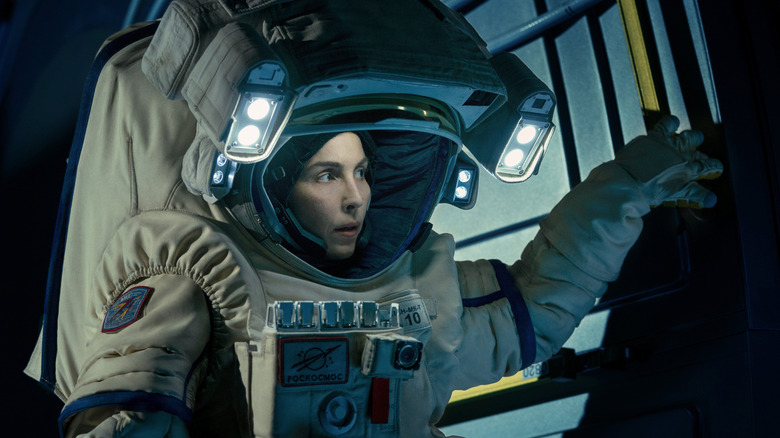
At its heart, Constellation is a story of displacement. Noomi Rapace portrays Jo Ericsson, a Swedish astronaut whose life is irrevocably shattered following a catastrophic collision on the International Space Station. While the incident itself is terrifying, the true horror begins upon her return to Earth. Jo finds herself existing in a reality that feels tangibly "wrong." Small details—the color of a car, the language her daughter speaks, the layout of her home—have shifted, suggesting she has returned not to her home, but to a version of it that is fundamentally altered.
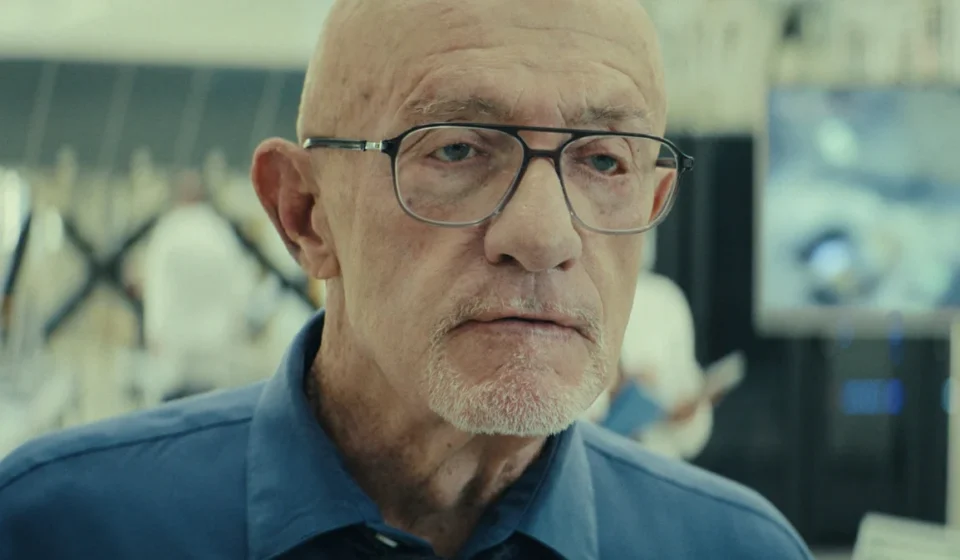
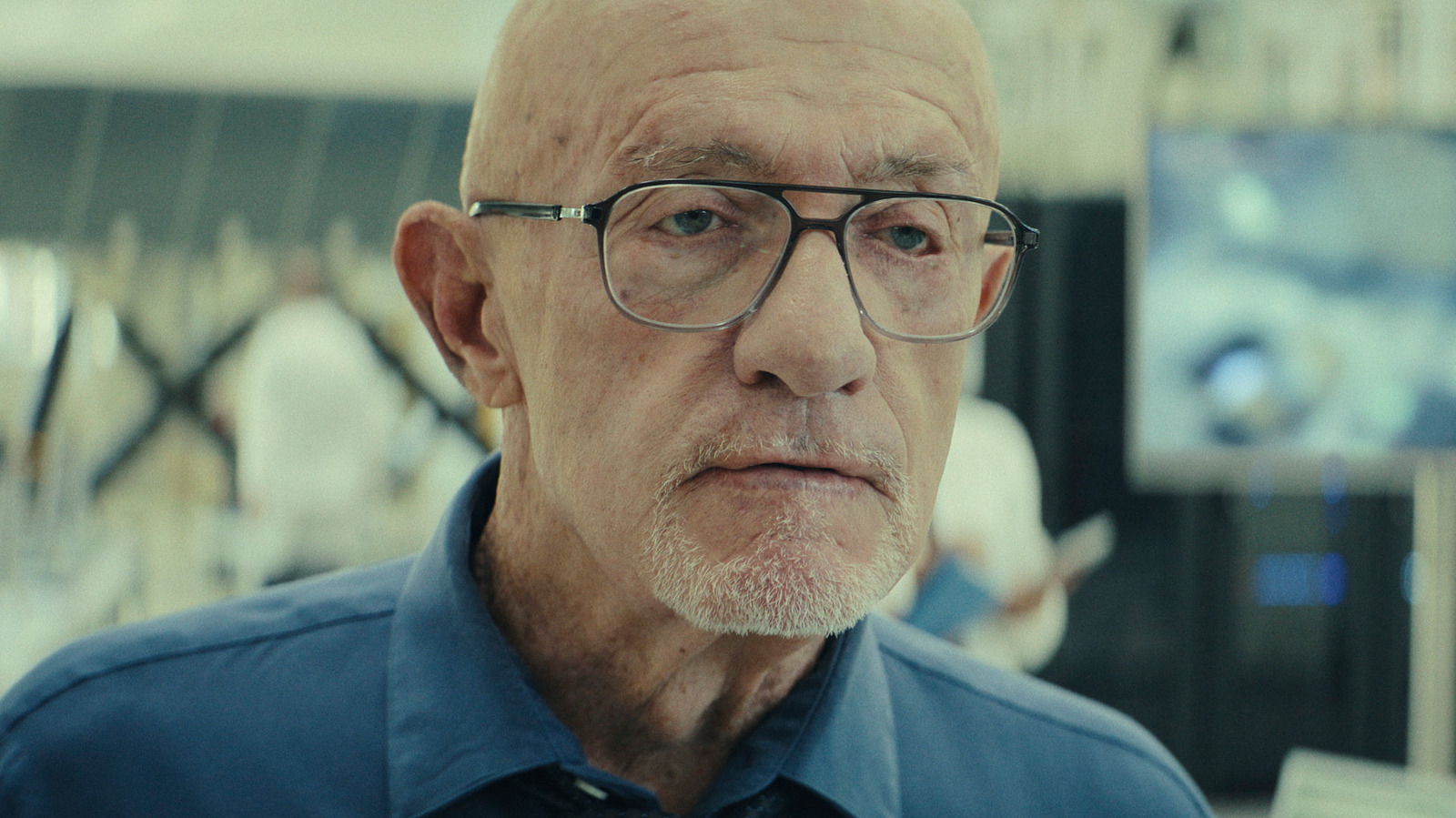
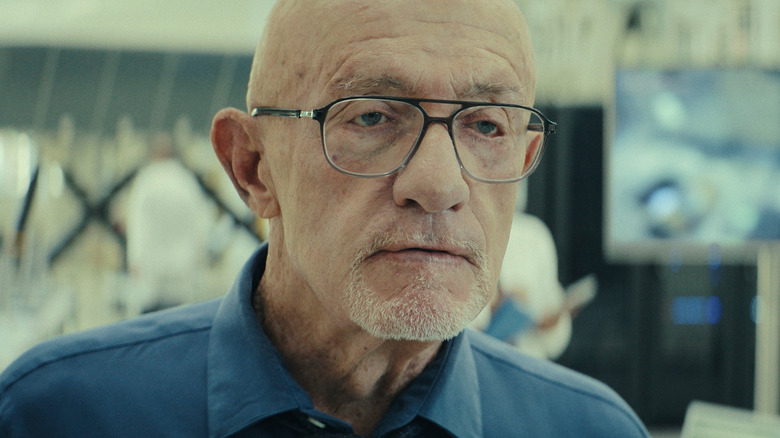
Parallel to Jo’s journey is the story of Henry Caldera, played with a weary, intellectual intensity by Jonathan Banks. Caldera is a physicist whose research into quantum physics serves as the anchor for the show’s more speculative elements. Through his dual portrayal of Henry and his alternate-universe counterpart, Bud, the series explores the "observer effect"—the theory that the act of observing a quantum state changes its outcome. It is a show that asks, "What if the ghosts of our past lives are not memories, but tangible remnants of choices we didn’t make?"
Chronology of a Cancellation
The trajectory of Constellation was short and, for its dedicated fanbase, abruptly truncated. The series premiered on Apple TV+ in February 2021, rolling out its eight episodes over the course of the following month.
- February 2021: The series makes its debut, positioning itself as a "mystery-box" thriller in the vein of Dark or The Leftovers.
- March 2021: The finale airs, leaving viewers with more questions than answers. The narrative threads regarding body-swapping, the Soviet space program, and the metaphysical implications of the ISS incident are left dangling.
- Post-Season 1: While Apple TV+ never officially cited a specific reason for the cancellation, the industry consensus points toward a lack of "viral" traction. Despite high production values and a stellar cast, the show failed to penetrate the mainstream cultural zeitgeist in the same way Severance or Ted Lasso did.
Supporting Data: The "Headiness" Hurdle
The primary criticism leveled against Constellation was not necessarily that it was "bad," but that it was perhaps too dense for the average viewer. The show demanded an immense amount of cognitive labor from its audience. It was a series that rewarded repeat viewings and deep dives into symbolism—a point evidenced by the proliferation of analytical articles, such as those detailing the series’ heavy reliance on the paintings of Finnish artist Hugo Simberg.
Comparative Successes
To understand why Constellation was canceled, one must compare it to its peers on the same platform:
- Severance: By creating a clear, binary premise (work-self vs. home-self), Severance provided a hook that was easy to market. It turned "appointment viewing" into a social phenomenon.
- Pluribus: Similarly, this series utilized high-concept science fiction to explore universal human themes of collective consciousness. It had a "punchy" premise that could be explained in a single elevator pitch.
- Constellation: The premise of Constellation was intentionally oblique. It was a story about the fragmentation of identity, grief, and the cold indifference of quantum mechanics. It lacked the "water-cooler" accessibility that platforms now prioritize to justify massive production budgets.
The Cost of Ambition
In the 2020s, the "Golden Age of Television" has shifted into the "Age of Efficiency." Even for a platform as well-funded as Apple TV+, the cost of producing a sci-fi series with space sequences, period-accurate flashbacks, and complex VFX is astronomical.
For a show to be renewed, it must not only be "good"; it must be "sticky." It must generate enough new subscriptions or retain enough existing ones to offset its per-episode cost. Constellation, by all accounts, was an expensive production. The complexity of its narrative—which involved characters swapping bodies and multiple timelines bleeding into one another—likely made it difficult for casual viewers to jump into mid-season. When a show’s entry barrier is high, the audience retention rate often suffers, leading to the "chopping block" reality faced by many high-minded genre shows today.
Official Responses and Critical Reception
The critical reception of Constellation was largely split between those who admired its intellectual rigor and those who found it impenetrable. Critics like A.A. Dowd of Primetimer noted the parallels between the show’s existential dread and the works of Philip K. Dick, praising the show for its bravery in refusing to spoon-feed the audience.
Conversely, voices like Nick Schager of The Daily Beast correctly identified that the show’s sprawling, complex structure was a ticking time bomb. Schager’s review suggested that the show was "the multiverse meets a giant headache," a sentiment that likely resonated with the executives at Apple who prioritize broader audience reach. Despite these differing opinions, there was a consensus that Constellation was a high-quality production that, had it been given a second season, might have ironed out its pacing issues and provided the cathartic resolution viewers craved.
Implications for Future Sci-Fi Television
The cancellation of Constellation carries significant implications for the future of serialized science fiction.
1. The Decline of the Slow Burn
Networks and streamers are becoming increasingly wary of "slow-burn" shows. In a world where viewers have near-infinite options, the luxury of waiting three seasons for a show to "find its footing" is vanishing. Shows are now expected to be immediate hits.
2. The Rise of the "Elevator Pitch"
The future of genre television appears to be leaning toward concepts that are easily summarized in a single sentence. If you cannot explain the central conflict of your show in under ten seconds, it is becoming exponentially harder to get a green light for a multi-season commitment.
3. The Need for Resolution
Constellation highlights the growing frustration among audiences regarding "incomplete" storytelling. When a high-concept mystery is canceled after one season, it leaves a void that diminishes the value of the platform’s library. Viewers are becoming more hesitant to start new, original shows for fear that they will never receive a satisfying conclusion.
Final Reflections
Constellation was a victim of its own sophistication. It was a show that asked its audience to do more than just watch; it asked them to participate in the construction of its reality. While it may not have achieved the commercial dominance of its platform-mates, it remains a testament to the fact that television can still be a medium for profound, philosophical exploration.
The tragedy of the series is not that it existed, but that it was not given the time to finish what it started. As the streaming wars continue to evolve, the industry may eventually realize that by canceling ambitious projects like Constellation in favor of "safer" hits, they are slowly eroding the very prestige that made their platforms essential in the first place. For now, the cabin in the Swedish hinterlands remains a locked door, its secrets tucked away in the multiverse, forever unresolved.