The Architect Duo: John Francis Daley and Jonathan Goldstein on Creative Synergy, ‘Mayday,’ and the Future of ‘Star Trek’

Tucked away in a quiet corner of the historic Paramount Pictures lot, just steps from the former dressing room of legendary sitcom icon Lucille Ball, sits an office that serves as the creative epicenter for some of Hollywood’s most inventive modern spectacles. This is where John Francis Daley and Jonathan Goldstein, the writer-director duo behind the sleeper hits Game Night and Dungeons & Dragons: Honor Among Thieves, refine the witty banter and intricate, high-stakes action sequences that have become their signature.
The pair operates with a rare, telepathic-like creative rhythm. They share a single desk, constantly trading ideas, critiquing dialogue, and meticulously mapping out the visual geography of their films. It is a partnership that has survived nearly two decades of industry shifts, evolving from television comedy writers to architects of major studio blockbusters.
“When we’re not here, we’re on Zoom,” Goldstein says, gesturing to their shared workspace. “We talk to each other every day. Honestly, we spend more time together than we do with our own spouses.”
For Daley, the process is an exercise in constant iteration. “It’s just one long conversation,” he adds. “We go back and forth, building what the characters are saying and doing, and then we tweak it as we go. We don’t stop until the rhythm feels right.”
The Shift to Streaming: The ‘Mayday’ Paradigm
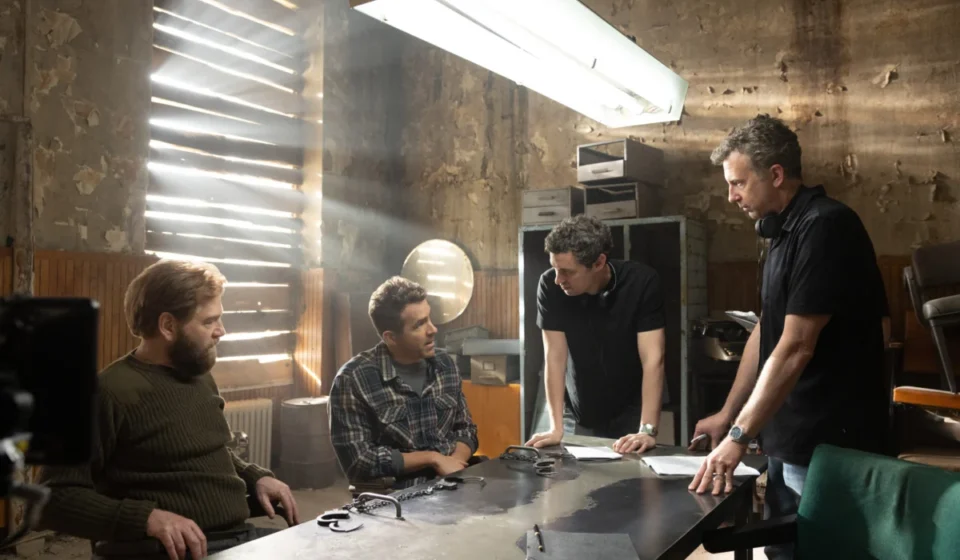
The duo’s latest venture, Mayday, is an ambitious, big-budget action thriller set to debut on Apple TV+ on September 4. The film features Ryan Reynolds as a beleaguered fighter pilot who finds himself forced into an unlikely alliance with a grizzled former KGB agent, played by Kenneth Branagh, after his aircraft goes down behind enemy lines in Russia.
Mayday marks a significant milestone for Daley and Goldstein: it is their first major project to bypass a traditional theatrical release. While the transition to streaming has required an adjustment in perspective, both directors acknowledge that the digital-first model has provided a unique sense of creative liberation.
“It’s definitely different to have something premiere on streaming,” Daley admits. “The truth is, I don’t know if a movie like this would have worked commercially in theaters today. The landscape for mid-budget or niche-genre films is incredibly volatile. It’s hard to get a general audience interested in a Cold War-era thriller. Streaming gave us the freedom to tell this story without the crushing weight of opening-weekend box office anxiety.”

Goldstein, leaning back on their shared office couch, echoes the sentiment. “It’s nice to not have to worry about the box office numbers on a Monday morning. Opening weekends are terrifying for everyone involved. Here, we can focus on the craft.”
A Chronology of Collaboration
The success of Daley and Goldstein is not an overnight phenomenon; it is the result of years of professional evolution. Their collaboration began during their time working in television comedy. Goldstein, a former lawyer who pivoted to writing for series like The Geena Davis Show, met Daley—who was then a young actor—on set.
“I had been a lawyer, I quit, I came out here, and got hired on TV comedies,” Goldstein recalls. “John was an actor on the show, and he showed me these short films he had made. I was impressed, and we just started talking.”
Their early efforts included writing a pilot titled Honey Pot, a comedy about the son of a Hugh Hefner-esque mogul. While the project never materialized, it cemented their bond. They followed it up with The $40,000 Man, a spec script that landed on the prestigious Blacklist and gained the attention of New Line Cinema. Although that project stalled, it served as their entry point into the studio system.
Since then, the duo has navigated the industry with precision, moving from scripts like Horrible Bosses to directing Vacation and the critically acclaimed Game Night. Their ability to blend dark, character-driven humor with technically proficient action—as seen in their work on Spider-Man: Homecoming—has established them as one of the most sought-after creative teams in Hollywood.
Crafting the Action: The Influence of the 80s and 90s
While Mayday is a modern production, its DNA is firmly rooted in the golden age of 80s and 90s action cinema. Daley notes that the project began to take shape during the post-production phase of Dungeons & Dragons.
“In the editing bay, we started brainstorming this idea of a ‘comedic Misery,’” Daley explains. “We loved the dynamic of a character being at the mercy of someone whose true intentions remain obscured. We wanted that sense of creeping dread, and then we added the Cold War backdrop to give it scale.”

The duo was also heavily influenced by the resurgence of the “patriotic hero” archetype seen in films like Top Gun: Maverick. However, they were careful not to lean into parody. “We weren’t going to spoof these characters,” Goldstein says. “We wanted to celebrate them, but approach them from a fresh angle.”
To achieve this, they turned to Ryan Reynolds—a long-time acquaintance of Daley’s since their time working together on the film Waiting. They knew they needed a grounded, dramatic anchor to play against Reynolds’ natural comedic charisma. Kenneth Branagh was at the top of their list.
“We wanted someone with true gravitas,” Daley says. “Someone who isn’t known primarily as a comedic actor but who has the range to handle both the drama and the levity. Kenneth brought that exact energy.”
The Technicality of Directing as a Duo
Practicality is the cornerstone of their directorial style. Because they share a singular vision, they emphasize intense preparation before arriving on set. “We have to be more prepared than other directors,” Daley explains. “We storyboard everything. We have detailed shot lists. We’ve been working together for 20 years, so we’ve become one mind. When we’re conceiving a scene on the page, we’re already imagining the camera movement.”
This rigorous preparation allowed them to push Kenneth Branagh into the realm of action, a new frontier for the Shakespearean veteran. They insisted on a rehearsal period in Montreal, where Branagh worked closely with their stunt coordinator, Brad Martin.
“He was as gung-ho as you could hope,” Goldstein says. “He’s a classically trained actor, and he’s used to the physicality of stage sword fighting. He approached the action scenes with the same intensity he would bring to a monologue.”
Implications for the Future: ‘Star Trek’ and Beyond
Looking ahead, the pair has set their sights on a massive undertaking: a Star Trek reboot. The challenge, they admit, is balancing the utopian optimism of Gene Roddenberry’s original vision with the cynical, often chaotic realities of the modern world.

“How could we not incorporate our current fears into the story?” Daley says. “The show started as a vision of a futuristic nirvana, but we have our own concerns about the direction of technology and social discourse. In many ways, this is the darkest thing we’ve ever written.”
Despite the darker tone, they insist the film remains true to the Star Trek spirit. “It’s not a cynical film,” Goldstein clarifies. “But it features cynical characters. We’re interested in how anarchistic individuals challenge the ideals of an institution like Starfleet. That’s where the drama comes from.”
When asked about the potential for a Dungeons & Dragons sequel, the duo remains optimistic but pragmatic. “We have a script we love,” Goldstein says. “We just need someone willing to put up the dough.”
For Daley and Goldstein, the goal remains the same regardless of the project: to honor the legacy of the intellectual property while ensuring their own distinctive voice shines through. As they continue to balance big-budget franchises with smaller, character-driven narratives, one thing is clear: they are a pair that knows exactly how to play the audience like a fiddle.