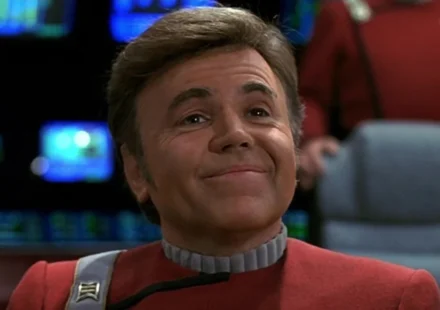
The Legacy of a Starfleet Icon: Walter Koenig’s Unfulfilled Vision for ‘Star Trek’

In the vast, interconnected tapestry of the Star Trek universe, few figures remain as endearing and historically significant as the late Walter Koenig. As the actor who brought the youthful, earnest Pavel Chekov to life in Star Trek: The Original Series…

Beyond the Veil: How Star Trek: Strange New Worlds Uses Arthur C. Clarke to Bridge Science and Fantasy

In the expansive tapestry of the Star Trek universe, the line between scientific discovery and the supernatural has often been thin, yet rarely has it been addressed with such meta-textual flair as in the recent Star Trek: Strange New Worlds episode,…

Strategic Submarines in the Stars: Analyzing the Greatest Space Battles of ‘Star Trek: The Original Series’

When audiences first tuned into Star Trek in 1966, they were greeted not by the frantic, high-speed dogfights of modern space operas, but by a tense, cerebral approach to interstellar combat. While William Shatner’s Captain James T. Kirk famously…

Becoming Captain: Paul Wesley on the Evolution of James T. Kirk in Star Trek: Strange New Worlds

The mantle of James T. Kirk is perhaps the most iconic weight an actor can carry within the Star Trek franchise. Since William Shatner first stepped onto the bridge of the USS Enterprise in the 1960s, the character has become the archetype for the…
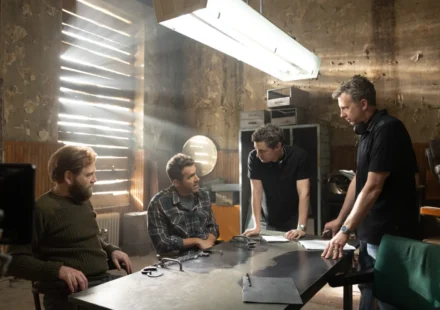
The Architect Duo: John Francis Daley and Jonathan Goldstein on Creative Synergy, ‘Mayday,’ and the Future of ‘Star Trek’

Tucked away in a quiet corner of the historic Paramount Pictures lot, just steps from the former dressing room of legendary sitcom icon Lucille Ball, sits an office that serves as the creative epicenter for some of Hollywood’s most inventive modern…
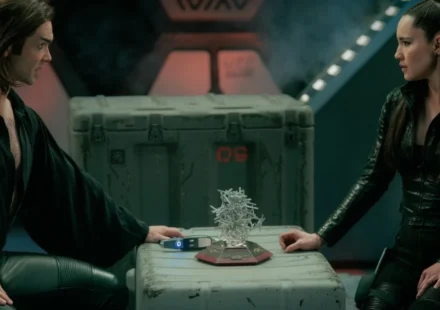
Logic in the Midst of Chaos: The Resurgence of Kal-toh in ‘Star Trek: Strange New Worlds’

The Star Trek universe has always been defined by more than just its warp drives and phaser arrays; it is a tapestry of cultural world-building, where the minutiae of daily life—what characters eat, how they relax, and the games they play—provide the…
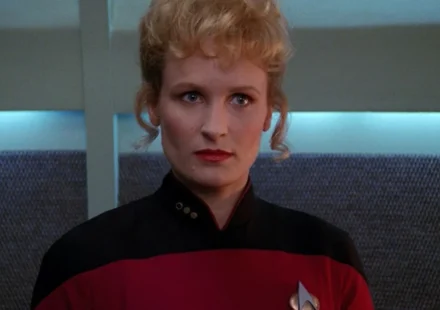
The Lost Frontier: Why Peter David’s "Star Trek" Novels Deserved the Small Screen Treatment
The 1990s represented a golden age for Star Trek. Following the unprecedented success of Star Trek: The Next Generation, the franchise expanded into a sprawling, interconnected universe. By 1994, Deep Space Nine was already established, and Star Trek:…
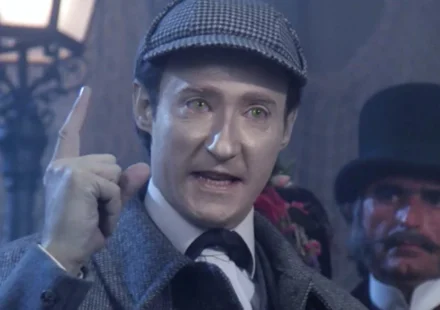
The Holodeck Hazard: A Comprehensive Retrospective on Star Trek’s Most Dangerous Glitches

The holodeck remains one of the most iconic pieces of technology in science fiction history. Introduced primarily as a narrative device in Star Trek: The Next Generation, this all-purpose simulation chamber—capable of generating photorealistic…
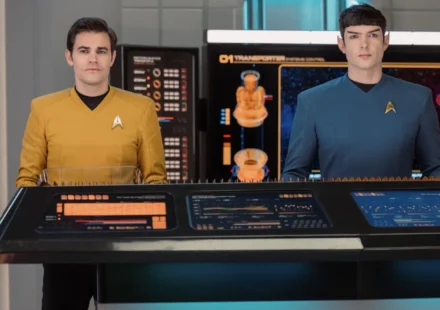
The Unlikely Genesis: How Star Trek: Strange New Worlds Redefines the Kirk-Spock Bond

In the vast, interconnected tapestry of the Star Trek franchise, few narrative pillars are as immovable as the friendship between Captain James T. Kirk and his First Officer, Spock. For decades, this bond has served as the emotional bedrock of the…

Boldly Into the Absurd: Why ‘Star Trek: Strange New Worlds’ Season 4 Remains the Franchise’s North Star

Midway through the raucous, genre-bending fourth season of Star Trek: Strange New Worlds, a frustrated guest aboard the U.S.S. Enterprise finally voices the sentiment that has been simmering in the background of the series for years. Surrounded by a crew…