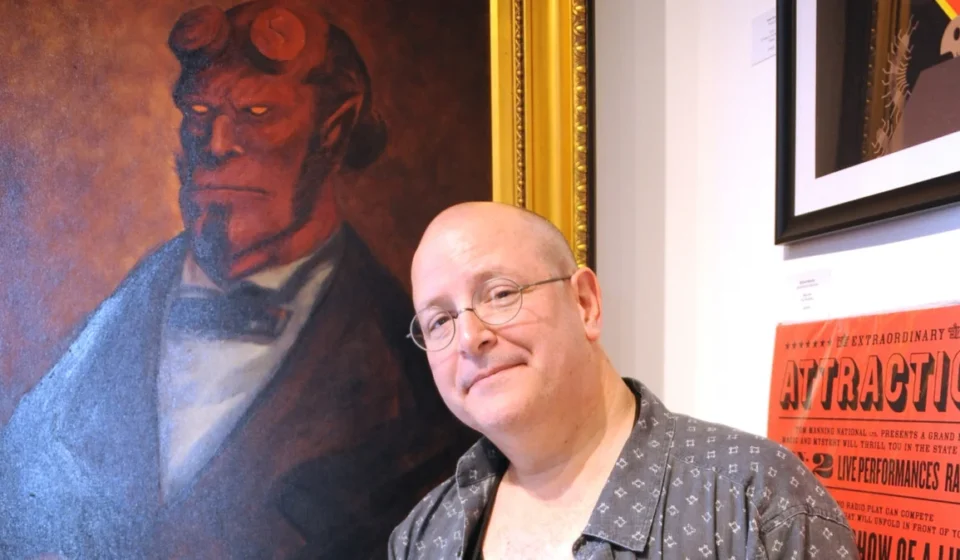

In the pantheon of 20th and 21st-century graphic literature, few names command the reverence afforded to Mike Mignola. As the architect of the "Mignolaverse"—a sprawling, interconnected tapestry of folklore, cosmic horror, and pulp sensibilities—Mignola has fundamentally altered the landscape of the medium. Yet, for a man whose visual language is as iconic as his protagonist, Hellboy, the act of creation remains a complex, often grueling duality.
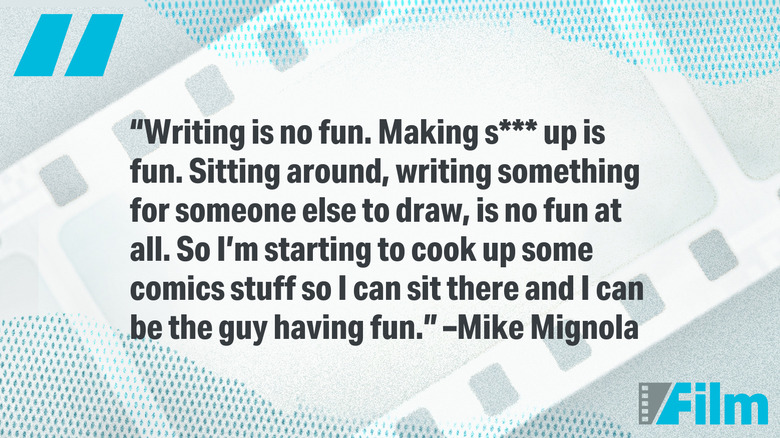
Recently, a candid reflection from the artist resurfaced, shedding light on the fundamental tension between the thrill of conception and the drudgery of execution: *"Writing is no fun. Making s** up is fun. Sitting around, writing something for someone else to draw, is no fun at all. So I’m starting to cook up some comics stuff so I can sit there and I can be the guy having fun."
This sentiment, articulated by Mignola in a 2019 interview, serves as a gateway into understanding the creative process of one of the medium’s most influential figures, highlighting the chasm between the spark of an idea and the discipline required to manifest it.
The Chronology of a Master Stylist
Born in 1960 in Berkeley, California, Mignola’s early life was steeped in the atmospheric traditions of his Catholic upbringing, which fostered an early fascination with the macabre—graveyards, ecclesiastical statuary, and the silent weight of religious architecture. His formative years were spent as a voracious reader; at age 12, his encounter with Bram Stoker’s Dracula cemented his lifelong obsession with gothic literature.
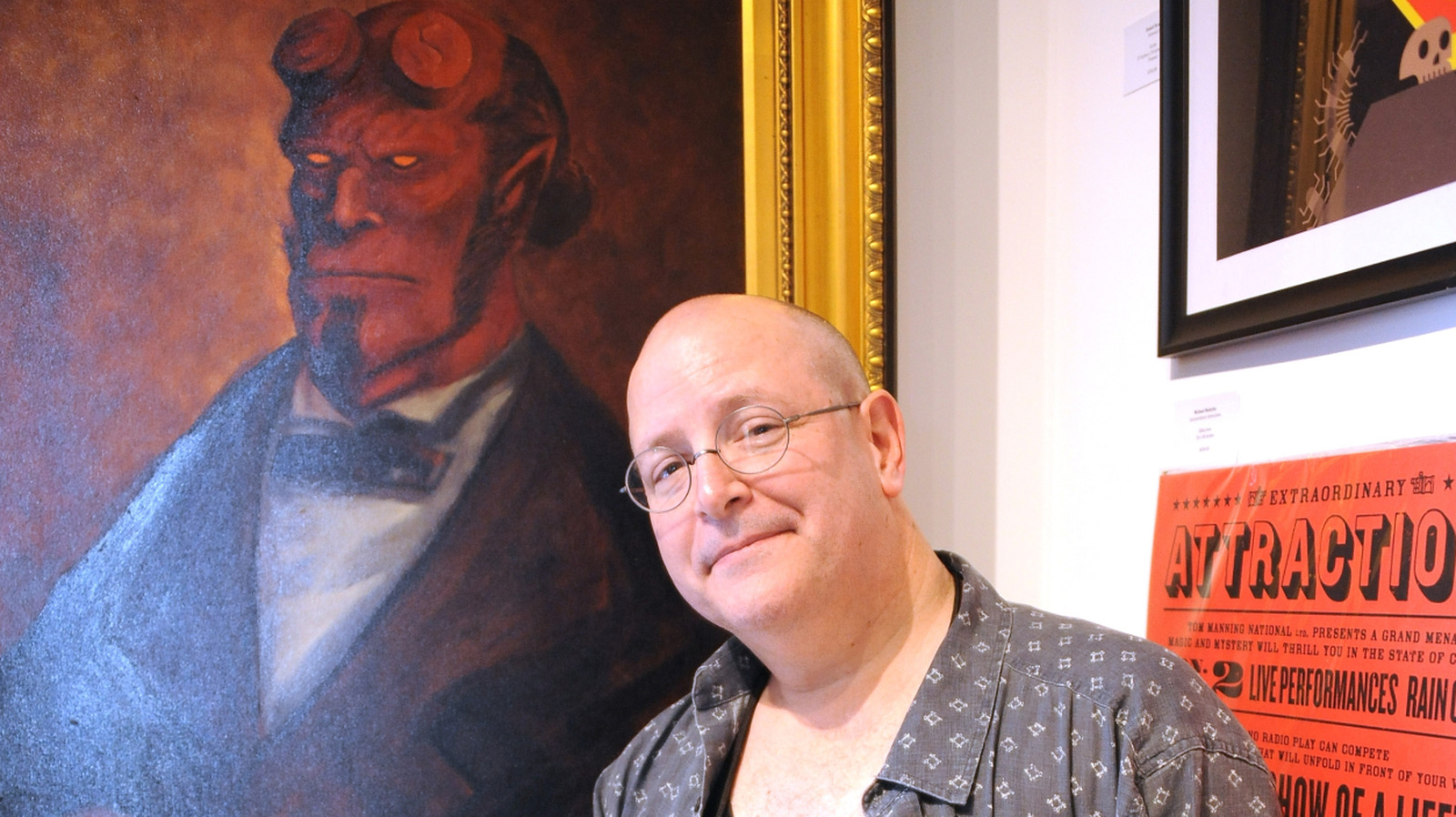
Following his graduation from the California College of the Arts in 1982 with a BFA in Illustration, Mignola moved to New York City. He quickly found his footing within the industry, contributing to the "Big Two"—Marvel and DC Comics. During this period, he honed his technical precision, though he often felt restricted by the requirements of traditional superhero fare. His breakthrough moment arrived with the 1989 release of Gotham by Gaslight, a Victorian-era Batman tale that allowed him to lean into his signature "gothic minimalism."
By 1993, Mignola moved beyond the constraints of established IP. He birthed Hellboy, a character that initially seemed an unlikely commercial candidate. Yet, the red-skinned, horn-filed demon—an antithesis to the sleek, perfectionist aesthetic of 90s comics—became the bedrock of Dark Horse Comics’ most successful franchise.
Defining the "Mignolaesque" Aesthetic
To understand why Mignola views writing as a labor, one must understand his visual prowess. Critics and peers have long struggled to encapsulate his style. While often attributed to the legendary Alan Moore as "Jack Kirby meets German Expressionism," the description is startlingly accurate. Mignola’s work is defined by:
- Heavy Black Ink: The strategic use of negative space and deep shadows creates a sense of dread and mystery that transcends the page.
- Gothic Minimalism: Where other artists clutter their panels with excessive detail, Mignola strips the environment down to its most evocative, geometric components.
- Color Palette: Collaborating with master colorist Dave Stewart, Mignola utilized a muted, earthy, and often flat color palette that allows the bold lines to pop, creating a stark, moody atmosphere.
This visual language is the manifestation of "making s*** up"—it is where the fun resides for Mignola. The writing, conversely, represents the structural scaffolding necessary to hold the art together.
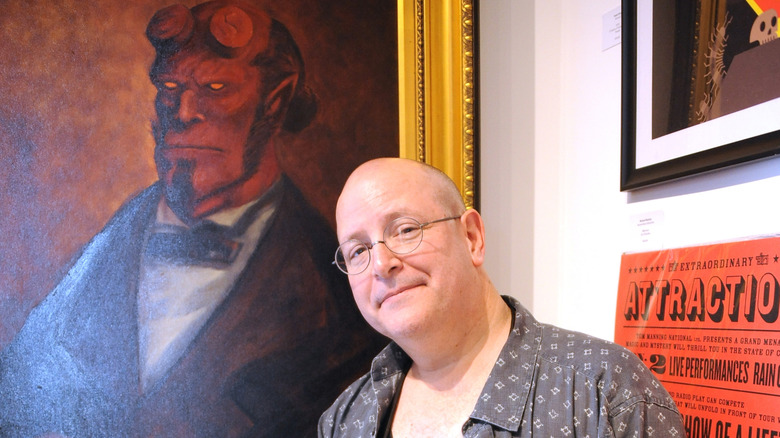
Supporting Data: The Evolution of the Mignolaverse
The Mignolaverse is not merely a collection of stories; it is a meticulously plotted shared universe. The publication of B.P.R.D.: The Devil You Know in 2019 marked the conclusion of a long-form narrative that had spanned over two decades.
Despite the "definitive" end of that cycle, Mignola’s creative engines have not stalled. His return to projects like Hellboy in Hell—where he returned to both writing and drawing duties—highlights his desire to regain full control over the creative process. When he works with collaborators, he is often the "architect," providing the blueprint while others handle the masonry. However, as his 2019 comments suggest, the act of being the architect is inherently less satisfying than being the builder.
Creative Methodology
- Initial Phase: Conceptualization (The "Fun" Phase).
- Middle Phase: Scripting/Writing (The "Labor" Phase).
- Final Phase: Drawing/Inking (The "Fun" Phase).
Mignola’s admission that he originally deferred scripting the first Hellboy miniseries, Seed of Destruction, to John Byrne underscores his early apprehension regarding the "work" of writing. He had to learn to build his own bridge to that side of the craft.
Implications in the Age of Generative AI
Mignola’s distinction between "imagination" and "execution" carries profound weight in the current cultural climate, dominated by the rise of generative AI. In an era where algorithms can mimic the "look" of an artist, Mignola’s philosophy serves as a vital counterpoint.
Generative AI treats the act of creation as a "cheat code"—an output without the underlying labor. Mignola’s career, by contrast, is a testament to the idea that the "fun" of imagination is useless without the human struggle to translate it into reality. Hellboy is not merely a design; he is a projection of Mignola’s own history. The character’s stoicism and blue-collar cynicism were directly inspired by Mignola’s father, a Korean War veteran and carpenter.
This level of personal, human history cannot be scraped from a database or prompted into existence. It is the result of a lifelong process of observation, technical practice, and emotional synthesis.
Conclusion: The Privilege of the Architect
Mike Mignola occupies a rare space in the industry. He has achieved the status of an auteur, someone whose name on a cover is as significant as the character within. While he remains critical of the writing process, his "labor" has resulted in one of the most cohesive and celebrated universes in comic history.
His words remind us that art is not just about the "spark." It is about the grit. For a younger artist, Mignola’s path serves as a blueprint: imagine wildly, but be prepared to put in the grueling hours of drawing, inking, and structuring to bring those visions to life. Without that willingness to perform the "no fun" work, the shadows of the Mignolaverse would never have been cast, and the world would be significantly less monstrous—and much less interesting.