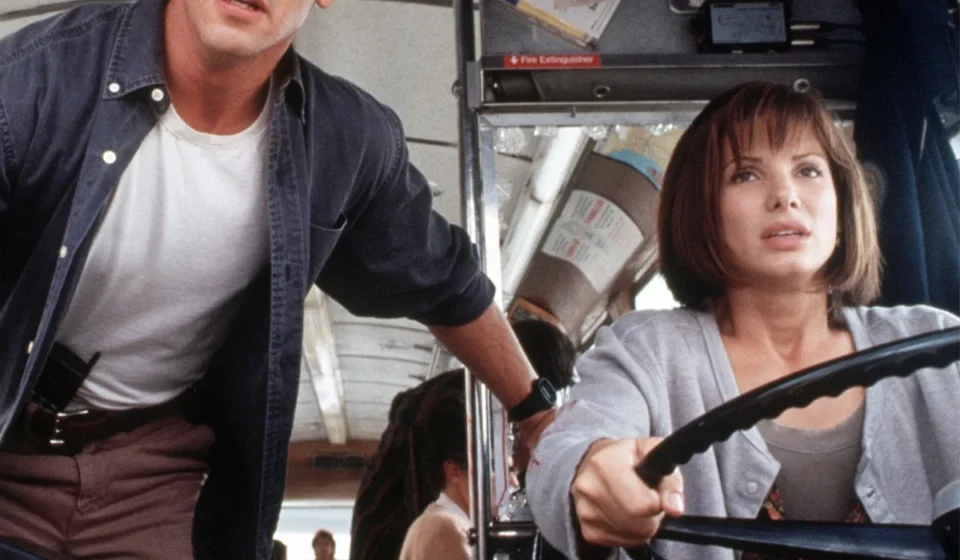

It has been over three decades since a runaway bus, a ticking bomb, and an immovable speed limit turned the cinematic landscape on its head. In June 1994, 20th Century Fox released Speed, an action thriller that defied the cynical expectations of the industry to become a global phenomenon. Grossing $350 million worldwide, the film did more than just fill theater seats; it cemented the status of its leads, Keanu Reeves and Sandra Bullock, as icons of the era and created a blueprint for the high-concept, tension-fueled blockbusters that would dominate the late 90s.
The High-Octane Premise: A Pop Culture Milestone
Directed by Jan de Bont, a former cinematographer making his directorial debut, Speed operated on a premise that felt simultaneously ridiculous and terrifyingly plausible. LAPD SWAT officer Jack Traven (Reeves) discovers that a city bus has been rigged with a bomb set to detonate if the speedometer dips below 50 miles per hour.
The film’s intensity was unrelenting. From the opening elevator rescue to the climactic subway chase, the narrative barely allowed the audience—or the characters—to catch their breath. While critics and industry insiders initially scoffed at the "bonkers" premise, the execution was nothing short of masterful. The film transformed the morning commute into a site of psychological warfare, anchored by the chemistry between a stoic Reeves and a then-rising star in Sandra Bullock, who played Annie, the accidental bus driver thrust into an impossible situation.
A Chronology of Success: From 1994 to Today
The cultural footprint of Speed remains visible today. In May 2024, the stars of the film reunited—not on screen, but through the medium of the 50 MPH podcast, which is dedicated to dissecting the film’s production history. The reflection offered by the cast suggests that the success of Speed was rooted in a sense of genuine camaraderie and craft.
"I just remember a vehicle full of really kind and fun people and a concept that I remember people scoffing at," Bullock recalled during the podcast. "Look, I was just happy to be there."
Reeves echoed this sentiment, highlighting the behind-the-scenes atmosphere that fueled the performances. "All of the artists who worked on it and the craftspeople who worked on it, there was a warmth to everyone and a sincerity," he noted. This "lovefest," as it has been described, allowed the ensemble to ground the high-stakes absurdity of the script in authentic, relatable human reactions.
Supporting Data: The Evolution of an Ensemble
The cast of Speed serves as a "who’s who" of Hollywood talent, many of whom were either on the precipice of stardom or already established character actors who would go on to define prestige television and film for decades.
Keanu Reeves (Jack Traven)
Already a recognized face, Speed solidified Reeves’ status as a premier action star. His career arc moved from the intensity of The Matrix trilogy to the methodical violence of the John Wick tetralogy, while maintaining a range that includes romantic leads in The Lake House and Sweet November. His recent comments on the 50 MPH podcast regarding a potential third installment—"We’d freakin’ knock it out of the park"—have ignited speculation among fans, though no official plans have been announced.
Sandra Bullock (Annie Porter)
Bullock’s turn as Annie was the quintessential breakthrough role. She seamlessly transitioned from this high-octane thriller into the role of America’s Sweetheart, dominating the rom-com genre with While You Were Sleeping and Miss Congeniality. Her evolution as an actress—from comedy to the gravity of The Blind Side (for which she won an Oscar) and the technical challenge of Gravity—marks her as one of the most versatile performers of her generation. Despite a recent hiatus following the passing of her partner, Bryan Randall, her impact on the industry remains profound.
Jeff Daniels (Harry Temple)
The versatile Daniels was initially hesitant to sign on, as his character was originally slated to die early in the film. After receiving assurances that the script would be adjusted, he joined the cast. Following Speed, Daniels balanced blockbuster success with acclaimed television work, most notably his Emmy-winning performance in Aaron Sorkin’s The Newsroom. His career is a testament to the longevity of a character actor who successfully pivoted to lead roles in both drama and comedy, such as his iconic turn in Dumb and Dumber.
Joe Morton (Capt. Herb "Mac" McMahon)
Playing the steady hand behind the scenes, Morton’s career is a masterclass in professional consistency. From his roles in Terminator 2: Judgment Day to his six-season run as Rowan Pope on Scandal, Morton has balanced film and television work with a rigorous dedication to theater. He has noted that the financial security provided by "big films" like Speed allowed him the freedom to pursue the low-budget, experimental stage work that fueled his artistic passion.
Official Responses and Behind-the-Scenes Insights
The 50 MPH podcast has provided a rare glimpse into the production’s internal dynamics. The consensus among the cast is that the film’s success was largely due to Jan de Bont’s vision. De Bont, transitioning from cinematography, brought a visual language to the film that elevated the action sequences from standard genre fare to high-art choreography.
Dennis Hopper, who played the villainous Howard Payne, famously appreciated the film’s technical ambition. In a 2008 interview, he praised the director’s transition, stating that de Bont "did a terrific job." Hopper’s performance as the calculating, vengeance-driven bomber provided the necessary gravitas to make the audience believe in the threat, a feat made all the more impressive by the absurdity of the plot.
Implications for Modern Cinema
The legacy of Speed is a cautionary tale and an inspiration for modern Hollywood. In an era where CGI often dictates the scope of action films, Speed remains a benchmark for practical effects and narrative tension.
1. The Power of High-Concept Simplicity
Speed proved that a single, clear, and urgent goal (keep the bus at 50 mph) is more effective than a convoluted plot. The simplicity of the stakes allowed for deep character development within the confines of a moving vehicle.
2. The "Ensemble Effect"
The casting of recognizable faces in small, crucial roles—such as Alan Ruck, Beth Grant, and Glenn Plummer—lent the film an air of authenticity. Each passenger on that bus represented a different facet of the human experience, making their collective survival a matter of genuine emotional investment for the audience.
3. The Durability of Star Power
The chemistry between Reeves and Bullock was the "secret sauce" of the film. Their ability to flirt, bicker, and survive under extreme duress established a dynamic that is still analyzed in film schools today. Their willingness to reunite for future projects, even in speculative terms, demonstrates the deep respect they hold for the project that launched them into the stratosphere of A-list fame.
Conclusion: Why We Still Watch
Thirty-two years later, Speed does not feel dated; it feels foundational. Whether it is being rediscovered on streaming platforms like Fandango at Home or analyzed on deep-dive podcasts, the film continues to resonate because it respects the audience’s intelligence and emotions.
It was a film that dared to be "bonkers" and, in doing so, achieved a kind of perfection. As the cast members continue to reflect on their time on that bus, the takeaway remains clear: Speed was more than just a summer blockbuster. It was a moment in time where talent, timing, and a very simple, very fast idea collided to create something that, much like the bus itself, refuses to slow down.