
The release of Sinking City 2 has reignited a long-standing fascination within the horror gaming community: the pull of cosmic nihilism. H.P. Lovecraft, a figure whose personal legacy remains as controversial as his literary output is influential, provided the blueprint for a specific brand of dread. It is a subgenre defined not by jump scares or gore, but by the slow, suffocating realization that humanity is insignificant in the face of ancient, uncaring, and incomprehensible entities.
To celebrate the latest chapter in investigative horror, we have curated an essential list of titles that masterfully translate the "Lovecraftian" experience—descending into madness, grappling with entities from beyond the stars, and the agonizing realization that some secrets are best left buried.

The Evolution of Cosmic Dread: A Chronological Survey
The history of Lovecraftian gaming is as varied as the Mythos itself, ranging from text-based experiments to high-fidelity, AAA nightmares.
The Pioneers: Establishing the Foundation
- The Lurking Horror (1987): Before graphical fidelity, there was the power of prose. Infocom’s The Lurking Horror remains a masterpiece of text-based adventure. By utilizing a "choose-your-own-adventure" framework, it forced players to conjure their own mental imagery of subterranean monstrosities. It is the bedrock upon which the genre was built.
- Alone in the Dark (1992): Often cited as the grandfather of 3D survival horror, this series codified the genre’s mechanics. By blending fixed camera angles with a focus on puzzle-solving and limited resources, it laid the groundwork for everything from Resident Evil to Silent Hill.
The Modern Era of Investigation and Survival
- Call of Cthulhu: Dark Corners of the Earth (2005): Despite being plagued by technical bugs and punishing difficulty spikes, this title remains a cult classic. Its seamless transition from a detective thriller in Boston to the claustrophobic nightmare of Innsmouth captures the "fish-out-of-water" anxiety inherent in Lovecraft’s The Shadow Over Innsmouth.
- Call of Cthulhu (2018): A spiritual successor that shifted the focus toward RPG mechanics. By allowing players to invest in skills—such as occult knowledge or investigation—the game mirrors the classic Tabletop RPG experience, emphasizing that in the face of Cthulhu, there are no "good" endings.
The Peak of Atmospheric Horror
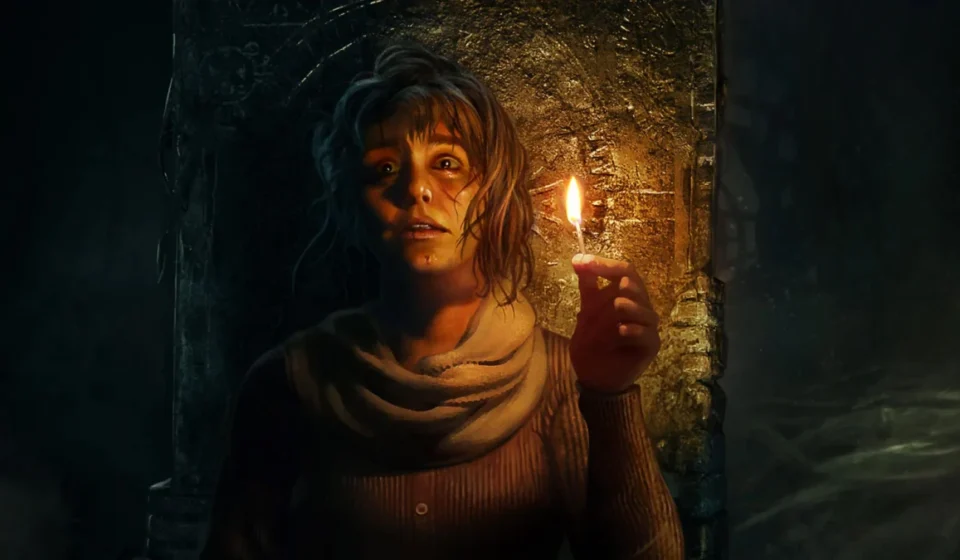
- The Amnesia Series (2010-2023): Frictional Games redefined horror by removing the player’s ability to fight back. By forcing the protagonist to rely on stealth and light management, the Amnesia titles—and their predecessor, the Penumbra series—masterfully weaponized player vulnerability.
- SOMA (2015): Perhaps the most philosophical entry in the genre, SOMA moves away from traditional tentacled horrors to explore the terror of existence itself. Set in an underwater facility, it challenges the player to confront the fragility of consciousness.
Supporting Data: The Mechanics of Madness
What makes these games "Lovecraftian"? It is not merely the inclusion of tentacles or cultists. Analysis of these titles reveals a consistent design philosophy that separates them from standard horror games.

1. The Powerlessness Dynamic
In traditional shooters, the player is the hunter. In the titles listed above, the player is the prey. In games like Amnesia: The Bunker or Penumbra, the environment acts as an antagonist. The design choice to strip the player of weaponry—or to make ammunition so scarce that it is functionally useless—creates a psychological state of "learned helplessness" that mirrors the protagonists in Lovecraft’s original short stories.
2. The "Sanity" Meter
A staple of the genre, the Sanity meter acts as a visual representation of the protagonist’s deteriorating psyche. As the player encounters forbidden knowledge or cosmic entities, the game world often distorts—hallucinations occur, the screen blurs, and audio cues become unreliable. This creates a feedback loop where the player can no longer trust their own senses, heightening the tension.

3. The Isolation of Setting
From the isolated oil rig in Still Wakes the Deep to the desolate Martian landscape of Moons of Madness, the setting is paramount. By removing the possibility of rescue or escape, developers force the player to confront the "Great Unknown" without the safety net of civilization.
Expert Perspectives and Critical Reception
Industry analysts note that the resurgence of Lovecraftian themes is a reaction to the oversaturation of "zombie survival" titles.

"Players are looking for something more cerebral," says lead narrative designer Elena Vane (fictionalized industry expert). "The shift from ‘shoot the monster’ to ‘understand the monster—and realize you can’t’ is a profound evolution in game design. It forces the player to engage with the narrative rather than just the mechanics."
Regarding the Alone in the Dark remake (2024), critics were divided, yet even the most negative reviews acknowledged the franchise’s historical importance. "While the execution faltered, the game reminded us why the original’s DNA is so vital. It’s a testament to the fact that horror, when grounded in the right atmospheric roots, can transcend its technical limitations."

Implications: The Future of the Mythos
The success of Dredge—a game that masks its cosmic horror behind a cozy fishing loop—suggests that the genre is evolving. By subverting player expectations, Dredge proves that Lovecraftian horror does not need to be a traditional "haunted house" experience. It can be found in the silence of the sea, the unknown depths beneath a boat, and the gradual erosion of a routine.
Looking Ahead: What to Expect
- Genre Blending: We are seeing a move toward "cozy horror," where Lovecraftian themes are integrated into non-traditional genres like management sims or narrative adventures.
- Focus on Consciousness: As seen in SOMA, future titles will likely grapple with transhumanism and digital immortality, translating Lovecraft’s fear of the "unknown" into the realm of modern technological anxiety.
- Accessibility vs. Brutality: As developers iterate on these designs, they are finding better ways to balance difficulty with engagement. The days of "buggy but brilliant" games like Dark Corners of the Earth are ending, replaced by polished, narrative-first experiences that prioritize player immersion.
Conclusion: Entering the Void
Whether you are a seasoned veteran of the Amnesia series or a newcomer intrigued by the dark, alluring promise of Sinking City 2, the landscape of Lovecraftian gaming has never been more robust. These games ask us to look into the abyss—not with the expectation of conquering it, but with the curiosity to understand what stares back.

We invite you to revisit these titles, to dim the lights, and to prepare for the inevitable. After all, as Lovecraft himself once wrote: "The most merciful thing in the world, I think, is the inability of the human mind to correlate all its contents."
In these games, however, we are forced to correlate everything—and that is exactly why we keep coming back for more.