Canine Capitalism and Prehistoric Perils: An Analytical Review of ‘PAW Patrol: The Dino Movie’

The global juggernaut that is the PAW Patrol franchise continues its relentless march across the cultural landscape with its latest theatrical offering, PAW Patrol: The Dino Movie. In a rare moment of self-awareness early in the film, the villainous Mayor Humdinger sneers, “PAW Patrol… are they still a thing?” It is a brief flash of irony in a production that is otherwise strikingly earnest. For the millions of parents of preschoolers worldwide, the answer to Humdinger’s question is a resounding, and perhaps weary, “yes.”
While the franchise has often been criticized for its formulaic nature and blatant commercialism, this new installment represents a calculated leap in production ambition. By blending high-stakes prehistoric adventure with the brand’s signature "heroic puppy" tropes, the film seeks to cement its status as a box-office powerhouse while navigating the treacherous waters of modern animation standards and socio-political subtext.
Main Facts: A New Frontier for Adventure Bay
PAW Patrol: The Dino Movie departs from the familiar confines of Adventure Bay, transplanting its cast of "highly trained anthropomorphic puppies" into a hidden "Lost World" scenario. The core premise involves the team—led by their ten-year-old handler, Ryder—discovering an island where dinosaurs have survived into the modern era.
The film serves as a vehicle for several key developments:
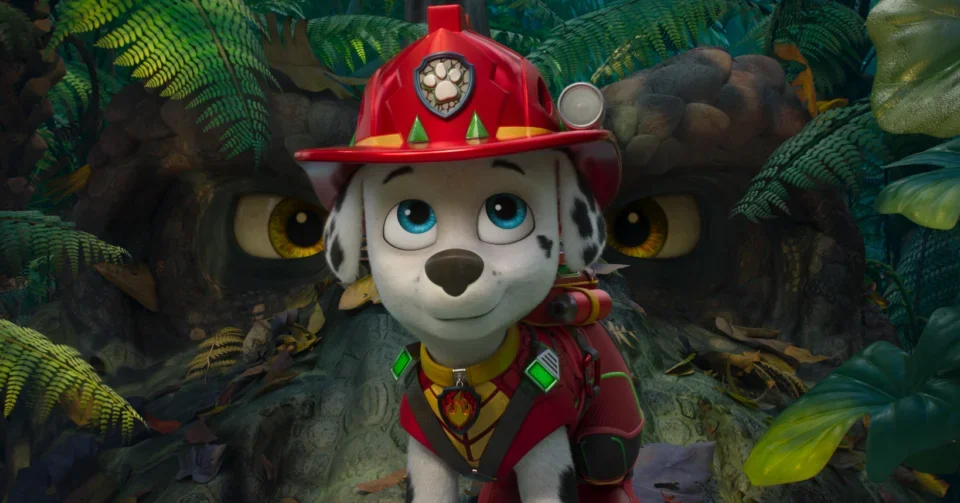
- Main Character Shift: While Chase is typically the face of the franchise, this narrative places Marshall, the firefighting Dalmatian, at the emotional center, focusing on his personal growth and bravery.
- Introduction of Rex: The film introduces Rex, a Bernese Mountain Dog who is paraplegic and uses a specialized wheeled apparatus. Rex has lived on the dinosaur island for two years, acting as a bridge between the pups and the prehistoric creatures.
- High-Profile Soundtrack: In a bid to appeal to the parents in the audience, the film features an original song, "Bottle Up," written by global superstar Ed Sheeran and performed by the iconic 90s boy band, the Backstreet Boys.
- Visual Overhaul: The animation quality shows a marked improvement over the television series, utilizing advanced lighting and environmental rendering to create a lush, cinematic jungle atmosphere.
Chronology: From High Seas to the "Lost World"
The narrative structure of PAW Patrol: The Dino Movie follows a traditional three-act hero’s journey, albeit one populated by talking dogs in high-tech jets.
The Inciting Incident
The story opens with the pups patrolling the high seas. The sequence serves as an immediate showcase for the franchise’s "toyetic" nature, featuring a fleet of naval vehicles. The team is forced into action when they encounter a yacht belonging to a family of TikTok influencers. After a rescue operation involving a fire on board, a freak "super-storm" catches the PAW Patrol off guard, pushing their vessel far off its charted course.
Discovery and Exploration
As the storm clears, the team finds themselves on the shores of an uncharted island. Here, the film shifts genres from a standard rescue procedural to an adventure epic. The pups encounter Rex, who has built a sophisticated, pre-industrial life for himself among the dinosaurs. Rex’s existence on the island for two years without modern technology provides a brief, if ultimately discarded, counterpoint to the PAW Patrol’s reliance on gadgets.
The Conflict and Climax
The tranquility of the island is shattered when the PAW Patrol inadvertently alerts the outside world to its existence. This brings the perennial antagonist, Mayor Humdinger, to the scene. Motivated by the discovery of vast natural diamond reserves on the island, Humdinger arrives with a demolition crew and heavy machinery. The third act culminates in a volcanic eruption triggered by Humdinger’s greed, forcing Marshall and the team to execute a massive evacuation of both the dinosaurs and the intruders.
Supporting Data: Technical Achievements and Aesthetic Dissonance
From a technical standpoint, PAW Patrol: The Dino Movie is a significant step up for Spin Master Entertainment. Critics have noted that the animation teams appear to have drawn inspiration from more prestigious works, such as the 2023 feature Kensuke’s Kingdom.
Visual Fidelity
The environmental design is the film’s strongest suit. The "Dino Wilds" are rendered with a level of detail previously unseen in the franchise.
- Lighting: The film employs sophisticated global illumination. A sequence featuring Marshall navigating the jungle at night is particularly noteworthy, utilizing deep shadows and bioluminescent flora that evoke the "Golden Age" of Disney animation, specifically the painterly backgrounds of Sleeping Beauty.
- Physics Engines: The rendering of the initial sea storm demonstrates a high-level mastery of fluid dynamics, creating a sense of genuine peril that contrasts with the "plastic" look of the characters.
The "Uncanny Valley" of Character Design
Despite the environmental beauty, the character models remain a point of contention. The pups are designed with exaggerated, "Margaret Keane-style" eyes and a hyper-smooth, synthetic texture. This creates a visual dissonance—the "uncanny valley" effect—where highly realistic environments are inhabited by characters that look like "yassified Lassies" or high-end plastic toys. This aesthetic choice is likely intentional, ensuring that the characters on screen perfectly match the merchandise available on retail shelves.
Official Responses and Industry Perspective
The release of PAW Patrol: The Dino Movie has elicited a variety of responses from industry analysts and the creative team behind the brand.
Spin Master’s Strategic Vision
Spin Master, the toy company turned entertainment giant, has been vocal about the film’s role in their "evergreen" strategy. Executives suggest that by introducing "Dino" themes, they are tapping into a perennial childhood obsession that guarantees long-term toy sales. The inclusion of Rex is also touted as a major step forward for disability representation in preschool media, a move that has been largely praised by child advocacy groups.
Critical Reception
Film critics have been more measured. While acknowledging the technical prowess, many have pointed out the "grating" nature of the vocal performances. The child actors voicing the pups utilize a clipped, hyper-enunciated delivery that some reviewers have compared to the stilted British radio broadcasts of the 1950s.
Furthermore, the inclusion of the Ed Sheeran/Backstreet Boys collaboration is seen as a transparent attempt to "parent-proof" the movie. By involving 90s icons like the Backstreet Boys, the producers are signaling to Millennial parents that the franchise acknowledges their presence in the room, even if the plot is aimed strictly at the four-year-old demographic.
Implications: The Muddled Politics of Adventure
Beneath the colorful surface of PAW Patrol: The Dino Movie lies a complex, and at times contradictory, set of themes regarding modernity, nature, and authority.
The "Narc" Problem and Environmentalism
One of the most interesting, if unintentional, aspects of the film is its portrayal of the "pristine" island. The pups stumble upon a prehistoric paradise—a "prelapsarian" world—and their first instinct is to "alert the authorities." By bringing the island into the grid of modern communication, they effectively end its isolation and invite the very destruction that Mayor Humdinger represents.
The film struggles to reconcile its environmentalist message with its pro-technology stance:
- Nature vs. Gadgetry: Rex’s Rube Goldberg-style treehouse is initially presented as charming and sufficient. However, the film quickly replaces his low-tech solutions with "shiny new gadgetry" provided by Ryder.
- The Libertarian Undertone: The film displays a "borderline libertarian" worldview where problems are solved not by community or conservation, but by superior technology and individual heroism. The "coolness" of the dogs’ vehicles is equated with their moral rightness, while Humdinger’s "old, rusted jalopy" is a sign of his villainy and pollution.
The Franchise’s Longevity
Ultimately, PAW Patrol: The Dino Movie confirms that the franchise is far from over. It has successfully moved beyond the "rescue-of-the-week" format into high-concept cinema. For the target demographic, the film is a triumph of action and "puppy power." For the broader industry, it is a masterclass in how to leverage a brand into a multi-platform ecosystem that includes music, cinema, and retail.
As the Backstreet Boys sing in the closing credits, there is a sense of "growing up," but for the PAW Patrol, the mission remains the same: to remain at the top of the preschool food chain through a mixture of high-end animation, relentless optimism, and a very large fleet of branded trucks.