The Architect of Horror: How Scott Snyder’s ‘Absolute Batman’ Has Been Hiding Professor Pyg in Plain Sight

The hallmark of a truly legendary comic book run is not merely the spectacle on the page, but the invisible architecture supporting it. In the case of DC’s Absolute Batman, the collaborative tour de force from writer Scott Snyder and artist Nick Dragotta, that architecture is proving to be as rigid and deliberate as the steel girders of the Gotham construction sites their protagonist frequents. While the series has already garnered critical acclaim for its gritty, blue-collar reimagining of Bruce Wayne, it is the long-form narrative planning—the "breadcrumb trail" of easter eggs and foreshadowing—that has fans buzzing following this year’s San Diego Comic-Con (SDCC).
Recent revelations have confirmed that one of Batman’s most unsettling modern antagonists, Professor Pyg, has been woven into the tapestry of the Absolute Universe since the very first issue. This discovery highlights a broader truth about the series: the Absolute Universe is not a collection of disparate stories, but a meticulously mapped, singular narrative entity.
The Foundation of a New Mythology
In the traditional DC Universe, Batman’s rogues’ gallery evolved over 85 years of trial, error, and changing editorial directions. Characters were introduced, refined, and occasionally reinvented, creating a sprawling, organic, and sometimes contradictory history. In stark contrast, the Absolute Universe was conceived as a closed loop—a narrative ecosystem where every domino was positioned by Snyder and Dragotta long before the first issue hit the stands.
This foundational difference is the primary reason for the series’ addictive quality. In Absolute Batman, readers are not merely watching a hero fight villains; they are participating in a detective story where the authors are the masterminds. We see this in the radical departure from Bruce Wayne’s classic persona: he is no longer the billionaire scion of a legacy family, but a rugged construction worker, forced by necessity to improvise his arsenal from the very materials he uses to build the city. This grounding of the character serves as a metaphor for the series itself—a narrative built from the ground up, where every structural element has a purpose.

Chronology of a Reveal: From Issue #1 to SDCC 2026
The timeline of this revelation is as calculated as the Joker’s machinations within the story.
- August 2024 (Approximate): Absolute Batman #1 introduces readers to a Gotham under the thumb of a new, enigmatic architect: the Absolute Joker. The issue establishes the presence of "Ark M," an ominous facility serving as the nexus of the city’s darkness.
- Ongoing Serialization: Over the subsequent twenty-plus issues, subtle clues—ranging from Scarecrow-themed visual motifs to the systematic dismantling of the city’s power structures—began to surface.
- August 2026 (SDCC): During their keynote panel at San Diego Comic-Con, Snyder and Dragotta officially announced the integration of Professor Pyg into the Absolute Batman: Ark M series.
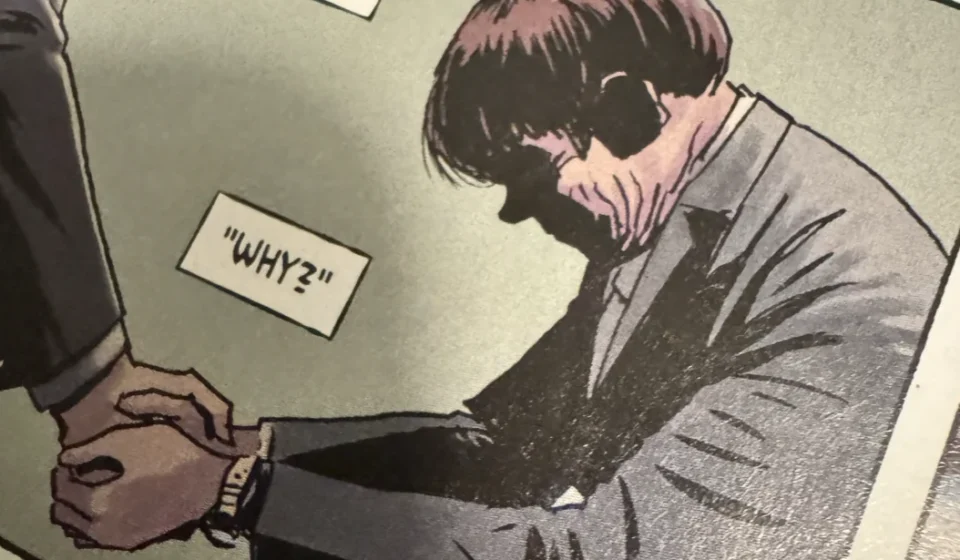
- The Discovery: Within hours of the announcement, social media detectives revisited the inaugural issue of the series. Sure enough, in a background panel featuring the Joker, a figure matching the silhouette and attire of Professor Pyg was spotted, effectively hiding in plain sight for nearly two years.
This retroactive confirmation acts as a testament to the "long-game" strategy employed by the creative team. It validates the suspicions of the most dedicated fans and reinforces the idea that the Absolute Universe is a narrative puzzle waiting to be solved.
The Horror of Perfection: Why Professor Pyg?
For those unfamiliar with the deeper cuts of DC lore, Professor Pyg (Lazlo Valentin) represents a terrifying shift in the Batman mythos. Created by Grant Morrison and Andy Kubert in 2007, Pyg is the antithesis of the "theatrical" criminal. He is a surgeon of the grotesque, a madman obsessed with the concept of "perfection."
His signature calling card is the "Dollotron"—a victim stripped of their personality and autonomy through horrific, surgical body modification, forced to wear a porcelain-like doll mask. In the context of the Absolute series, which already leans into the darker, more visceral elements of Gotham’s decay, Pyg is a perfect fit. If the Absolute Joker is the financier and the architect, Pyg serves as the "technician" of this new, terrifying reality. His presence in Ark M suggests that the facility is not just a prison, but a laboratory for the systematic dehumanization of Gotham’s citizens.

Implications for the Future: The Ark M Connection
The announcement of Pyg’s formal entry into the story is not just a character debut; it is a signal that the series is shifting into a more clinical, terrifying gear. With the upcoming release of Absolute Batman #25, the series concludes its first "arc." This oversized issue is expected to function as a bridge between the origin-focused storytelling of the first two years and the broader, more aggressive phase of the series.
The implications for the wider cast are profound:
- Origin of the Rogues: If Pyg is indeed the surgeon behind the scenes at Ark M, it stands to reason that other classic villains—Bane, Scarecrow, Poison Ivy—might have their origins tethered to his experiments. This would effectively turn Pyg into the "mother" of the Absolute rogues’ gallery.
- Joker’s Master Plan: We now know the Joker is orchestrating a grand design that may have even played a part in the creation of Batman himself. If Pyg is his primary operative, the "Absolute" version of the Clown Prince of Crime is far more dangerous than his traditional counterpart—he is a man who builds monsters, not just chaos.
- The End of the Beginning: Issue #25 serves as the pivot point. Snyder has teased that the next phase of the series will move away from the "introduction" of this world and into a direct, high-stakes conflict with the forces assembled by the Joker.
Official Commentary and Creative Philosophy
During the SDCC panel, Scott Snyder spoke briefly about the philosophy of "Absolute" storytelling. He emphasized that the goal was never to create a "Elseworlds" story in the traditional sense, but to create a "mirror" universe where the same themes of trauma and resilience are played out through a completely different lens.
"When you build a world where you don’t have the safety net of 80 years of history, you have to be responsible for every single inch of the map," Snyder remarked. "If you see a shadow in a panel in issue one, that shadow better mean something by issue twenty. It’s about respect for the reader’s intelligence."

Nick Dragotta added, "The visual language of this book is designed to be dense. We wanted to create a version of Gotham that feels like a machine—cogs, gears, pipes, and secrets. If you look closely, you’ll see the story happening in the background before the characters even speak."
Conclusion: A New Standard for Comic Narrative
The discovery of Professor Pyg’s hidden cameo is more than just a "gotcha" moment for fans; it is a demonstration of the narrative maturity currently defining the Absolute line. By treating their audience as participants in a complex, multi-year mystery, Snyder and Dragotta have elevated the series from a monthly superhero comic to a piece of serialized literature.
As we approach the milestone of Issue #25, the tension is palpable. The "first act" of the Absolute Universe has established a world that is colder, harder, and more dangerous than any version of Gotham we have seen before. With the surgeon now stepping out from the shadows of Ark M, the "perfection" the Joker seeks may finally be within his grasp—and it promises to be a nightmare for the Batman.
For those who have been paying attention, the clues were always there. For those who haven’t, the next few months promise a masterclass in how to build a myth, one hidden detail at a time. The Absolute Universe isn’t just evolving; it’s finally revealing the true depth of its own dark design.