
By Editorial Desk
August 7, 2026
In the landscape of modern independent horror, few filmmakers manage to balance technical precision with the visceral, skin-crawling dread of urban legend as effectively as Mitch Glass. Following his critically lauded entries Box 616 and Canary, Glass has returned to the spotlight with his latest short film, Death Red. Having made its rounds through the prestigious festival circuit—most notably premiering at the 2025 Sitges Film Festival—the film is now available for public viewing, bringing with it a story of artistic obsession, historical atrocities, and the supernatural price of creation.
The Premise: A Macabre Masterpiece
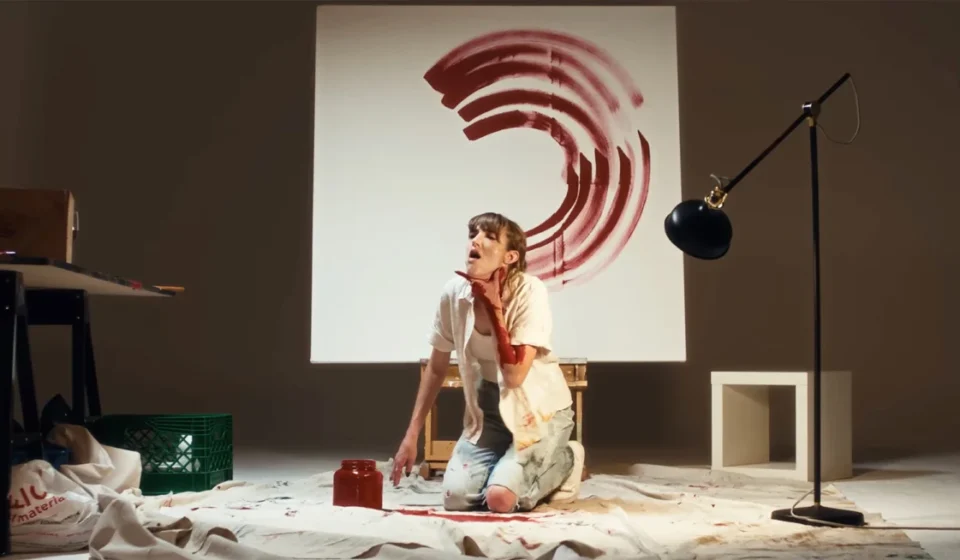
At the center of Death Red is a deceptively simple narrative hook: a young artist, played with haunting intensity by Kelsey Tuma, stumbles upon a relic of a dark past. The "relic" in question is an authentic, vintage can of "Scarlet Secret," a specialized paint manufactured in the 1960s.
The lore surrounding the paint, which forms the narrative spine of the film, is as horrifying as it is creative. According to the film’s mythology, the paint—later colloquially dubbed "Death Red"—was outlawed in 1984. The ban was not due to toxic chemical fumes or lead content, but rather a discovery that defies comprehension: the paint was found to contain the pulverized remains of victims murdered by Richard Barkner, a respected industrialist who used his paint manufacturing facility as a macabre front for his serial killing spree.
The horror escalates when the film’s protagonist, Claire, seeks to use this pigment for what she hopes will be her magnum opus. The film posits that the paint acts as a conduit for the trapped, tortured souls of Barkner’s victims. A sinister incantation—the phrase "open their eyes"—serves as the catalyst for the terror, transforming the canvas from a medium of expression into a vessel for spectral vengeance.
Chronology of Production: From Concept to Screen
The creation of Death Red is a testament to the "guerrilla" filmmaking style that has defined Mitch Glass’s career. Despite the high production value and the polished aesthetic of the final 12-minute short, the project was born from constraints rather than abundance.
The Two-Day Sprint
Perhaps the most staggering fact regarding Death Red is the production timeline. Glass and his team, consisting of a skeleton crew of only six people, managed to capture the entire film in a mere two-day shoot. This breakneck pace required meticulous pre-production planning and a level of coordination rarely seen in independent horror productions.
Development History
The project began as a script that Glass refined over several months, focusing on the historical "Barkner" lore. Once the team was assembled—featuring the familiar creative synergy of producers Brad Rundblade, Ryan Sadler, and Jordan Tortorello—the focus shifted to practical effects. Following the release of Canary in 2023, the team utilized the momentum from that project to secure the necessary resources for Death Red. After its 2025 debut at Sitges, the film underwent a brief period of exclusive festival screenings before its digital premiere via YouTube on August 7, 2026.

Supporting Data and Technical Craft
The success of Death Red is not merely in its script but in its technical execution. The film serves as a masterclass in how to maximize a "shoestring budget."
Cinematography and Score
Ryan Sadler, who served as cinematographer, utilizes a color palette that subtly shifts as the narrative progresses. The early scenes, focused on Claire’s artistic process, are bathed in natural, clean light. As the influence of the "Death Red" paint takes hold, the cinematography leans into high-contrast shadows and deep, claustrophobic framing. This visual descent is anchored by an original score composed by Dan Negovan, which utilizes discordant strings and industrial-sounding percussion to mimic the manufacturing history of Barkner Paints.
Crew Continuity
Glass has built a reliable troupe of collaborators, a strategy that has clearly paid off. By maintaining the same core team that produced Box 616 and Canary, the crew has developed a shorthand that allowed them to navigate the two-day shooting schedule without sacrificing quality. This continuity is a hallmark of successful genre filmmakers, reminiscent of the early partnerships seen in the careers of directors like Sam Raimi or John Carpenter.
Official Responses and Creative Intent
Mitch Glass has been vocal about the "labor of love" aspect of the project. In his correspondence regarding the film’s release, he emphasized the collective effort required to bring the legend of the "Scarlet Secret" to life.
"We shot the film in just two days with a crew of six," Glass noted in a recent interview. "It was a true labor of love, and I speak for everyone when I say we are proud of what we created together. More than anything, we hope this is just the beginning of the Death Red story."
This statement is particularly telling. While Death Red works perfectly as a contained short story, the mention of it being "the beginning" suggests that Glass is eyeing the property for potential expansion—either into a feature-length film or perhaps an anthology-style series exploring other "cursed" products from the fictional Barkner empire.
The film’s tag-line, "This horror is scripted. Your goosebumps are not," has become a rallying cry for the film’s growing online fanbase. It encapsulates the filmmaker’s desire to tap into the "unsettling reality" trope, where the horror stems not from monsters under the bed, but from the everyday objects we bring into our homes.
Implications for the Horror Genre
Death Red arrives at a time when the "cursed object" subgenre is seeing a significant resurgence. However, Glass’s work differentiates itself by grounding the supernatural element in a twisted industrial history.

The Shift Toward Short-Form Excellence
The success of Death Red highlights a broader trend in the film industry: the rise of the high-quality horror short as a viable calling card for emerging directors. Festivals like Sitges have increasingly become the primary testing grounds for new voices, and short films are no longer viewed merely as "student projects," but as legitimate pieces of intellectual property.
The "Barkner" Mythology
By creating a fictional but historically plausible backstory for the paint, Glass has invited the audience to participate in the world-building. Online forums and social media threads are already popping up, with fans debating the "authenticity" of the Richard Barkner mythos. This type of engagement is the gold standard for independent horror, effectively creating an organic marketing loop that sustains the film long after its initial release.
A Path to the Feature Film
The industry at large has been watching Glass closely. His ability to deliver consistent, high-tension horror on a limited budget makes him a prime candidate for a feature-length studio project. The question remains: will his first feature be an expansion of the Death Red universe, or will he pivot to a new concept? Given the depth of the lore established in this 12-minute short, it would be a missed opportunity not to explore the history of Barkner Paints in greater detail.
Final Thoughts: Why It Works
Death Red is more than just a scary story; it is a meditation on the cost of ambition. Claire’s desire for a "magnum opus" is a reflection of the artist’s struggle—the willingness to sacrifice sanity and safety for the sake of the work. When the paint begins to bleed into her reality, the film forces the viewer to ask: What would you give for your masterpiece?
With its masterful pacing, stellar lead performance by Kelsey Tuma, and a concept that lingers in the mind long after the screen goes black, Death Red confirms Mitch Glass as a director to watch. For those looking to experience the film, it is currently streaming via YouTube, and fans of the genre are encouraged to explore Glass’s deeper catalog on his official website and Vimeo page.
In a crowded market of jump-scare-heavy features, Death Red stands out by proving that true horror doesn’t need a massive budget—it only needs a compelling legend, a dedicated crew, and a splash of "Scarlet Secret."