Busan International Film Festival Unveils Bold Vision Slate: A Spotlight on the Future of Asian Cinema

The 31st Busan International Film Festival (BIFF) has officially pulled back the curtain on its highly anticipated Vision section, a program that has become the definitive bellwether for the next generation of Asian cinematic talent. This year’s selection comprises 23 independent films, meticulously divided into two core pillars: 12 titles under "Vision-Korea" and 11 under "Vision-Asia."
As the festival prepares for its October run, the Vision section serves as a vital bridge between established independent auteurs—who continue to push the boundaries of narrative and form—and emerging filmmakers poised to make their mark on the global stage. By blending veteran voices with fresh, daring debuts, BIFF reinforces its role as the premier launchpad for experimental and socially resonant cinema in Asia.
The Evolution of the Vision Section
The Vision program is not merely a screening category; it is the natural successor to the long-standing "Korean Cinema Today — Vision" section. Last year, the festival organizers made the strategic decision to expand the scope of this program into a standalone, continent-wide showcase. This evolution reflects the festival’s broader mission to foster a pan-Asian cinematic ecosystem, where filmmakers from geographically diverse backgrounds can share a platform that prioritizes artistic integrity over commercial spectacle.
The stakes this year are higher than ever, with a total of 19 accolades—10 for Vision-Asia and nine for Vision-Korea—set to recognize excellence across various production, directorial, and narrative categories. These awards serve as more than just industry validation; they provide essential financial and promotional momentum for independent works that often struggle to find distribution in a crowded global market.
Vision-Korea: Where Established Auteurs Meet Emerging Voices
The Korean slate for this year’s Vision section is particularly compelling, characterized by a mix of returning festival favorites and bold newcomers. The inclusion of directors who have previously secured awards at BIFF and international festivals like Rotterdam or Berlin highlights the loyalty and community-building efforts of the Busan institution.
The Return of the Veterans
Several filmmakers are making highly anticipated returns to the Busan Cinema Center. Kim Miyoung, whose 2023 film A Lonely Island in the Distant Sea earned the prestigious DGK Megabox Award, returns with Some Detective. Similarly, Park Songyeol, a two-time BIFF award winner known for Hot in Day, Cold at Night, shifts his lens to the delicate intersections of mortality and family dynamics in Beyond Love’s Horizon.
Sohn Hyun-lok, the talent behind the 2023 Fipresci Prize-winning That Summer’s Lie, is set to premiere The Birds, a film investigating a series of unexplained student accidents, marking a thematic shift toward the psychological thriller. Furthermore, the inclusion of Jang Woojin’s Cosmic Trace and Park Hong-min’s Space confirms that these auteurs remain committed to their distinctive, surrealist, and deeply personal cinematic languages.
The New Wave of Korean Talent
Complementing these established names is a robust roster of directors making their feature debuts. Among the most discussed is Kim Hyomi’s animated feature Earbug, a deeply psychological work exploring the manifestation of trauma in an aspiring novelist. Other notable debuts include Kim Si-jin’s The Flower, an animated exploration of the life of an aging crematorium director, and Shin Dongmin’s Not For You, which dissects the aftermath of a fractured family unit. These films—particularly Not For You and Some Detective—have already received significant industry backing, having been selected for this year’s Asian Cinema Fund, a clear indicator of their high production value and narrative potential.
Vision-Asia: A Continental Mosaic
The Vision-Asia lineup represents an ambitious cross-section of current socio-political and cultural climates across the continent. From the magical realism of Iran to the folk-punk grit of the Philippines, the selections reflect a diverse array of storytelling traditions.
Regional Highlights and Debutants
The Asian selection highlights the vibrancy of emerging film industries. Vietnam’s Nguyễn Hoàng Điệp brings 1982, a personal and haunting search for a lost parent, while Japan’s Kumamoto Ryohei transitions from a successful career in music videos and commercials to feature-length narrative filmmaking with After the Song.
Hong Kong cinema is represented by Isabella Lam Lok-hin, whose debut Dead End tackles the heavy weight of buried family history. The Philippines’ Arvin Belarmino presents Ria, a raw portrait of a folk-punk musician fighting for survival in an increasingly hostile environment. Perhaps most anticipated is the return of Mongolia’s Sakhya Byamba, whose previous work Remote Control garnered global acclaim. He returns to Busan with Zogsool, a satirical take on contemporary society that is expected to provoke both laughter and critical discourse.
Socio-Political Commentary
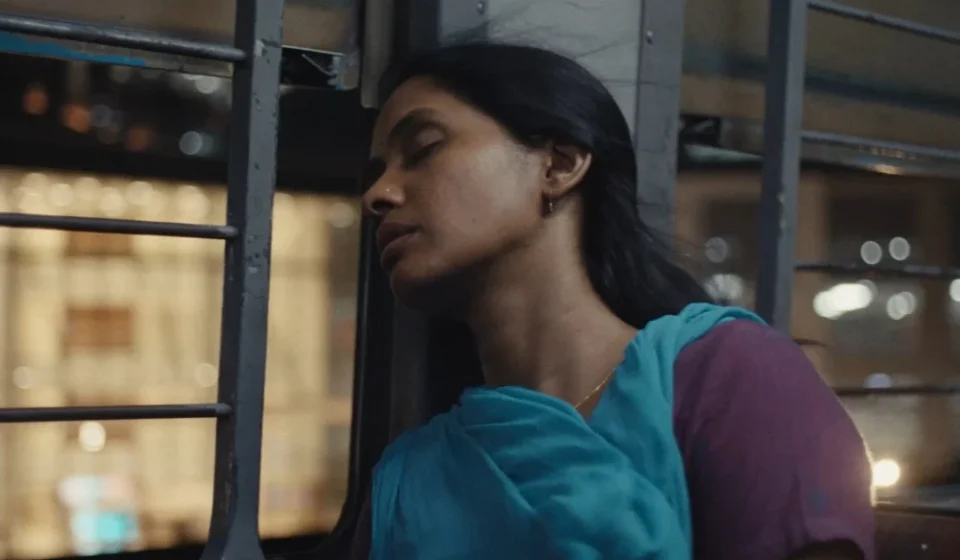
Several films in the Asia-Pacific slate serve as mirrors to the current realities of their respective nations. Iran’s Mani Moghaddam utilizes the lens of magical realism in his feature debut Slumber to navigate the oppressive realities of his homeland. Meanwhile, India contributes two distinct perspectives: Sailesh Rathnakumar’s Selvi, produced by the celebrated Anjali Patil, and Shashank Walia’s Birds in the Dark, a project that benefits from the technical prowess of a director with deep experience in international cinematography.
Supporting Data: The Impact of BIFF
The influence of the Busan International Film Festival cannot be overstated. By acting as the central node for the Asian film market, the festival provides a crucial economic engine for independent films. The Asian Contents & Film Market (ACFM), which runs concurrently with the festival from October 10 to 13, is the primary venue where these Vision selections move from exhibition to international distribution.
The inclusion of the Asian Cinema Fund for projects in post-production, such as those by Shin Dongmin and Kim Miyoung, demonstrates BIFF’s commitment to the entire lifecycle of a film. Statistics from previous years suggest that films screened in the Vision section often see a 40% increase in international sales interest compared to independent films that lack a major festival premiere. This data point underscores why the Vision section remains the most coveted slot for independent filmmakers in the region.
Official Responses and Industry Implications
The organizers of BIFF have emphasized that this year’s Vision section is a response to the "increasingly fragmented nature of independent film production." In official statements, festival representatives noted that by concentrating these works into a unified, high-profile section, they are not only honoring the filmmakers’ visions but also providing a cohesive narrative for audiences and critics to engage with the "state of the continent."
Industry experts suggest that this year’s lineup signals a move away from the traditional, slow-burn dramas that dominated the festival scene a decade ago. Instead, there is a clear trend toward high-concept, genre-bending storytelling—exemplified by the animation projects and the satirical works in the current slate. This suggests that the next generation of Asian directors is prioritizing accessibility and engagement without sacrificing the deep, often painful, exploration of human conditions that the festival is famous for.
Looking Ahead: The 31st Edition
As the festival prepares to open its doors on October 6 at the Busan Cinema Center, the anticipation surrounding the Vision section is palpable. With screenings spread across various venues throughout the city, the 31st edition of BIFF aims to be an immersive experience.
For the filmmakers involved, these ten days in October represent the culmination of years of labor. For the global film industry, the Vision section provides the essential answers to a recurring question: Where is Asian cinema heading next? Based on this year’s slate, the answer is clear—it is heading toward a future that is bolder, more experimental, and increasingly unafraid to challenge the status quo.
The 31st Busan International Film Festival will run from October 6 to 15, and with the eyes of the global film community fixed on its program, the Vision section is poised to once again prove itself as the heartbeat of the Asian cinematic landscape. Whether through the lens of a crematorium director, a struggling musician, or an aspiring novelist, the stories presented here are guaranteed to leave an indelible mark on the international stage.