The Controversial Masterpiece: Inside the First Trailer for Cristian Mungiu’s Palme d’Or Winner Fjord

By Editorial Staff
August 27, 2026
The cinematic landscape of 2026 has been defined by a singular, polarizing event: the release of Fjord, the latest feature from Romanian auteur Cristian Mungiu. Following his critically acclaimed, yet often challenging, filmography—which includes the Palme d’Or-winning 4 Months, 3 Weeks and 2 Days and the stark social commentary of R.M.N.—Mungiu returns with a film that has already ignited fierce debate among critics and audiences alike.
Today, distributor Neon unveiled the official United States trailer for Fjord, providing a haunting, atmospheric glimpse into a story that pits cultural identity against the unforgiving scrutiny of a close-knit society. With its theatrical release set for October 9, 2026, the film is poised to be one of the most discussed—and debated—entries of the fall season.
The Narrative Core: A Collision of Cultures
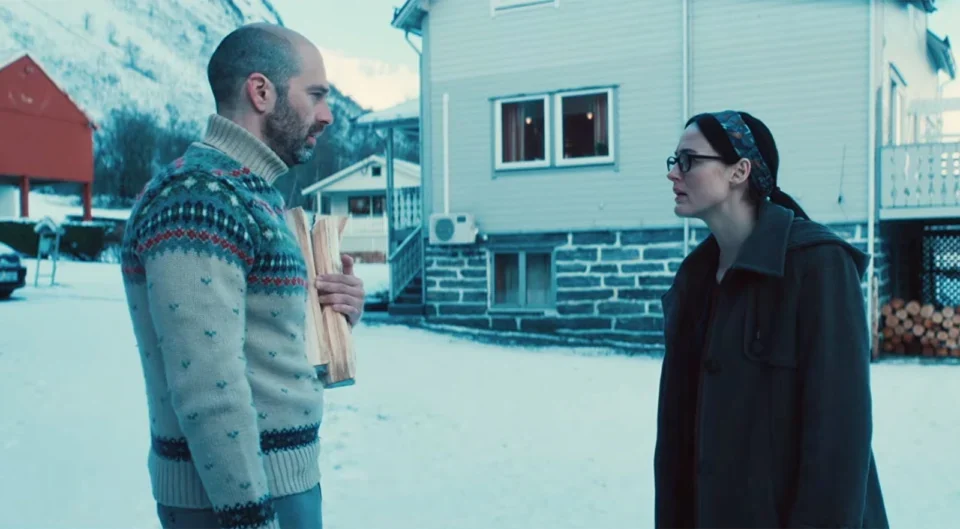
Set against the breathtaking, frigid backdrop of a remote Norwegian village, Fjord explores the fragile integration of the Gheorghiu family. Mihai (Sebastian Stan), a devout Romanian immigrant, and his Norwegian wife, Lisbet (Renate Reinsve), relocate their five children to Lisbet’s ancestral home, hoping for a tranquil life in the shadow of the mountains.
The trailer establishes a tone of simmering dread. The Gheorghius quickly integrate with their neighbors, the Halberg family, but the facade of suburban harmony begins to crack as the town’s residents grow suspicious of the Gheorghius’ parenting style and rigid, faith-based belief system. When vague allegations of abuse emerge, the film pivots into a high-stakes psychological drama, questioning whether the village’s intervention is a protective measure for children or a xenophobic reaction to an outsider’s way of life.

The central conflict—encapsulated in the chilling trailer line, "Don’t they have to prove what they claim?"—sets the stage for a narrative that refuses to offer easy answers. Mungiu’s direction appears to lean into the claustrophobic tension that has become his trademark, utilizing the isolated geography of the Norwegian fjord to mirror the isolation of the protagonists.
A Chronology of the Fjord Phenomenon
The journey of Fjord from script to screen has been anything but conventional.
- Pre-Production and Casting: The project gained significant industry traction when Sebastian Stan, currently at the height of his career, and Renate Reinsve, the breakout star of The Worst Person in the World, were announced as the leads. Their pairing promised a grounded, visceral exploration of a marriage under extreme external pressure.
- The 2026 Cannes Premiere: The film made its world debut at the 2026 Cannes Film Festival. The reception was immediate and remarkably divided. While the technical proficiency and performances were universally lauded, the thematic underpinnings of the script sparked a firestorm of discourse.
- The Palme d’Or Controversy: In a move that surprised many pundits, the jury awarded Fjord the Palme d’Or. The decision was met with a mixture of standing ovations and audible murmurs of dissent, as critics argued over the film’s moral compass and its depiction of the intersection between immigrant experience and local societal control.
- The US Trailer Launch: With the release of the official trailer on August 27, 2026, the film enters the American market. Neon has signaled its intent to position the film as a prestige, "must-see" cultural artifact, even as the conversation surrounding its "misaligned politics" continues to gain momentum.
Supporting Data: Production and Personnel
The weight behind Fjord is anchored by its formidable cast and crew. Cristian Mungiu, a veteran of the festival circuit, has assembled an international ensemble that adds layers of authenticity to the narrative:
- The Leads: Sebastian Stan as Mihai and Renate Reinsve as Lisbet anchor the film. Their performances have been described as "raw" and "unflinching," capturing the desperation of parents under siege.
- The Supporting Cast: The film features an impressive lineup of talent, including Lisa Carlehed, Henrikke Lund-Olsen, Vanessa Ceban, Jonathan Ciprian Breazu, Ellen Dorrit Petersen, Lisa Loven Kongsli, and Markus Tønseth. Each actor contributes to the claustrophobic ecosystem of the village.
- The Creative Vision: Mungiu’s script acts as a sociological laboratory. Known for his "Romanian New Wave" roots, Mungiu maintains his signature long-take style, forcing the audience to endure the mounting pressure alongside the characters.
Official Responses and Critical Reception
The critical response to Fjord has been the subject of intense scrutiny. Reviewers have highlighted a deep divide in how the film is perceived across borders.
In the FirstShowing review published following the Cannes premiere, the film was described as "a well-made film with good performances," yet it was criticized as an "entirely misguided and politically problematic depiction of modern society." This critique centers on how the film portrays the legal and social systems designed to protect children. Critics argue that Mungiu creates a "false equivalency" between the immigrants’ cultural rights and the safety of the minors in question, leading to a film that some find ethically murky.

Proponents of the film, however, argue that Mungiu is not providing a lecture on morality, but rather a mirror to our own prejudices. They contend that the Palme d’Or win was a recognition of Mungiu’s ability to provoke deep discomfort, which is arguably the highest function of art. The "love it or hate it" nature of the film has turned it into a Rorschach test for modern audiences, with viewers’ own political leanings often dictating their interpretation of the film’s "villains" and "victims."
The Implications: Why Fjord Matters
The release of Fjord arrives at a time when discussions regarding migration, cultural assimilation, and the reach of government intervention are at the forefront of global political discourse.
1. The Immigrant Experience
Mungiu explores the "othering" process with terrifying precision. By placing an immigrant family in a location as culturally distinct as a small Norwegian village, he strips away the noise of urban diversity, focusing instead on the friction caused by the clash of "devout" values against secular, progressive standards.
2. The Ethics of Storytelling
The central controversy regarding the film’s politics raises a perennial question: Should a director be responsible for the "correctness" of their characters’ ideologies? Mungiu has historically avoided didacticism, preferring to present the facts of a situation and letting the audience draw conclusions. In Fjord, this neutrality is being pushed to its breaking point, forcing viewers to decide if the film is endorsing the Gheorghiu family’s rigid lifestyle or merely observing the tragic fallout of their refusal to conform.
3. The Future of Prestige Cinema
Neon’s decision to market Fjord as a major fall release indicates confidence that the controversy itself will drive ticket sales. In an era where streaming platforms dominate, the "event" nature of a provocative, award-winning indie film remains a vital component of the theatrical experience. Whether the film ultimately achieves commercial success will depend on whether audiences are willing to engage with a work that is explicitly designed to challenge their personal moral boundaries.

Final Thoughts: A Polarizing Fall
As we look toward the October 9th release date, it is clear that Fjord is not designed for passive consumption. It is a film that demands to be dissected, debated, and perhaps even contested.
For those familiar with Mungiu’s body of work—Occident, 4 Months, 3 Weeks and 2 Days, Beyond the Hills, Graduation, and R.M.N.—Fjord is a natural, if more aggressive, evolution of his preoccupation with power dynamics and the individual vs. the system. For newcomers to his work, it serves as an intense introduction to a filmmaker who is unafraid to leave his audience unsettled.
As the trailer fades out on the image of the vast, indifferent Norwegian waters, one is left with the uncomfortable feeling that the questions posed by Fjord will linger long after the credits roll. Is this a film about the struggle for religious freedom, or a cautionary tale about the dangers of fundamentalism? Is the system a protector or a predator? The answers, as Mungiu likely intends, remain hidden within the depths of the fjord.
Release Details:
- Film: Fjord
- Director: Cristian Mungiu
- Distributor: Neon
- Release Date: October 9, 2026
- Genre: Drama/Thriller