The Art of the "Chill Zone": How The Wrong Girls Defies Hollywood’s Obsession with Perfection

In an era of high-gloss, committee-driven blockbusters, The Wrong Girls has arrived like a haze of blunt smoke in a sterile boardroom. The film, directed by Dylan Meyer and produced by longtime collaborator Maggie McLean, operates on a frequency that is unapologetically niche. It is a stoner comedy that refuses to play by the rules of the genre, opting instead to champion a brand of “woolly” imperfection that has polarized critics while capturing the hearts of its intended audience.
For those who connect with it, The Wrong Girls isn’t just a movie; it’s a manifesto for the under-ambitious, the perpetually relaxed, and the inhabitants of a Los Angeles that the big-budget studio system usually ignores.
The Long Road to the Screen: A 14-Year Manifestation
The journey of The Wrong Girls is as messy and persistent as its protagonists, Frankie and Molly. Conceived over a decade ago, when Meyer and McLean were living the same paycheck-to-paycheck existence they would eventually depict on screen, the film became a test of endurance.
“I remember sitting in our old back house, broke as shit, when we were 24, 25 years old, just talking about this movie for the first time,” McLean recalled during a recent interview. “The amount of times I’ve just been on the phone with Dylan where I’m like, ‘Dylan, dude, we’ve got to keep going. We’re going to manifest The Wrong Girls. The world needs this movie.’”

The project was a rollercoaster of financial instability. “We had the money, we lost the money, we had the money, we lost the money,” Meyer said. There were moments when the filmmaker, known for her sharp scripts in Moxie and An American Pickle, almost walked away. “I was starting to hit a zen acceptance of, ‘Maybe this just isn’t the right thing.’ I did not give up ever, which is very unlike me. I actually love to give up.”
The most gut-wrenching delay occurred when star Alia Shawkat became pregnant, leaving Meyer in a state of creative despair. “I cried through the entire TreePeople park,” Meyer admitted. “I was on a hike with my family weeping because there was no other Molly for me, and there never has been.” However, in a stroke of serendipitous timing, the delays allowed the team to reassemble a dream crew—including cinematographer Todd Banhazl and costume designer Heidi Bivens—who might otherwise have been unavailable.
A Snapshot of Box Office and Reception
Upon its release, The Wrong Girls earned $406,000 across 520 theaters. While the critical reception has been divided—hovering at 56 percent on Rotten Tomatoes and 59 on Metacritic—the film is performing significantly better with audiences. A 3.3-star average on Letterboxd suggests that the film is hitting its mark with the exact demographic Meyer and McLean intended: those who prefer a shaggy, honest character study over a tightly wound narrative.
Distributor Neon took a gamble on this "proudly imperfect" project, banking on the star power of Kristen Stewart and Alia Shawkat. The result is a film that IndieWire has hailed as a potential savior for the American stoner comedy, a genre that many critics argued had lost its soul to the mainstreaming of cannabis culture.

The Geography of "Townie" Los Angeles
Unlike the typical Hollywood fare that treats Los Angeles as a backdrop for starry-eyed transplants seeking fame, The Wrong Girls is a love letter to the "townie" experience. It avoids the glossy mythologies of the industry, presenting instead a city of neighborhoods, local haunts, and people who aren’t looking to conquer the world.
The production of the film itself became a microcosm of this community spirit. Shooting began shortly after the January 2025 wildfires, making the production one of the first to resume in the city. The crew included several local Angelenos who had been displaced by the fires. This reality added a layer of profound, lived-in authenticity to the script.
“Dylan writing a love letter to L.A. is the dream for me as a producer,” said McLean. “We’re so much more than people think we are. We all grew up watching L.A. movies, and to be able to add to that—especially with a movie about two best friends and being an L.A. girl—is the dream.”
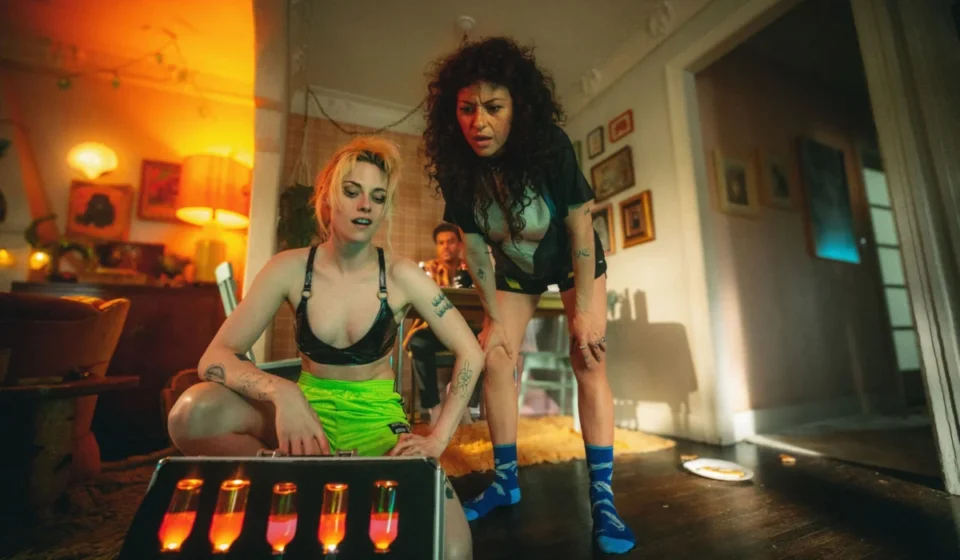
To capture this, production designer Katie Hickman scoured the homes of the filmmakers themselves. The "Casa de Chill Zone" seen in the film is, in many ways, a replica of the filmmakers’ personal history. “There’s a really fucked-up cat pillow next to them the whole time that my mother-in-law gave me,” Meyer noted. “There’s stuff from the house Maggie and I lived in together.”

Challenging the "Stoner" Stigma
One of the most radical aspects of the film is its portrayal of female friendship and drug use in a post-legalization landscape. In a world where weed is mainstream, the act of being a "stoner" has lost some of its counter-cultural edge, but Meyer argues that for women, it remains a transgressive act.
“There’s something about being a girl smoking weed in public that still feels really fun,” Meyer said. “In the fight for the right to be yourself, there are a lot of barriers to being accepted as a female deadbeat. We don’t let women wear clothes that are comfortable. We don’t let them be fuck-ups. We don’t let them be dirty or messy.”
The film’s central conceit—that Frankie and Molly are content to stay in their "Chill Zone" rather than climb the career ladder—is an act of quiet rebellion. It rejects the hyper-competitive, social-media-driven culture of modern L.A.
“The idea that your house is an oasis where you can hide from the darkness and take a break is kind of radical,” Meyer added. “They don’t have high-stakes dreams or great financial ambitions. They barely want to run toward anything. They’re fighting for their right to kick it in a chill way and to have their primary partner be their best friend.”

Implications: The Future of Small-Scale Cinema
The Wrong Girls makes a compelling case for the necessity of "small-scale dreams." In a market dominated by massive franchises, Meyer and McLean are advocating for a model that prioritizes creative freedom over global box-office dominance.
“I’m not trying to make a Marvel movie,” Meyer stated. “That isn’t me. I wouldn’t be good at it, and I wouldn’t have a good time. My dreams are under $15 million so we can achieve creativity and freedom.”
The film serves as a reminder that imperfections in cinema—the "woolly," the "textural," and the "tactile"—are not bugs; they are features. By choosing to eschew the slick, committee-approved polish of contemporary comedies, The Wrong Girls finds a truth that is often lost in the quest for perfection.
As the industry continues to grapple with what audiences want, The Wrong Girls stands as a defiant example of what happens when creators stop asking for permission to be themselves. It is a film that understands that while not everyone will "fuck with it," the people who do will find it to be exactly what they needed. In the end, as Meyer aptly puts it, "Squares are going to square. There’s nothing you can do about that."