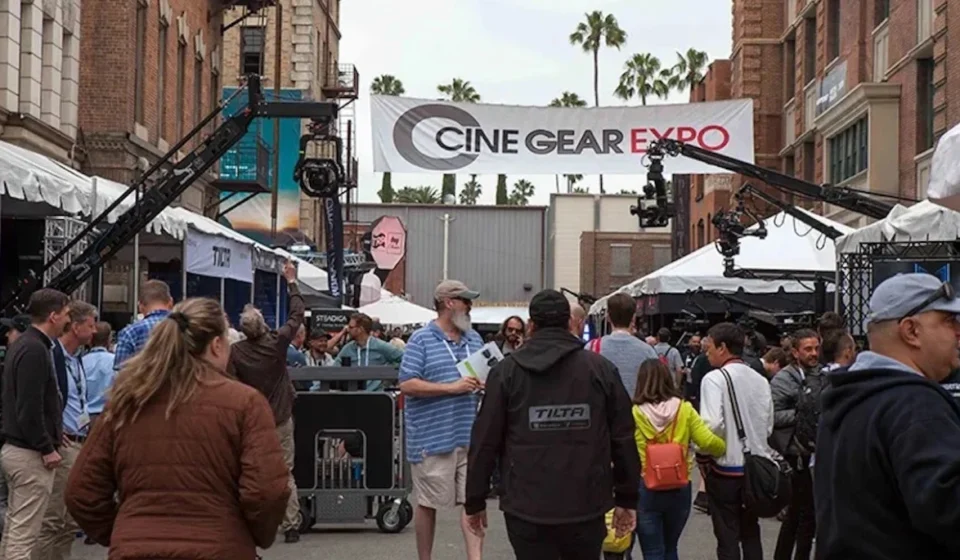

In the landscape of professional media trade shows, the NAB Show often serves as a sobering reminder of an industry in flux, frequently triggering an existential crisis for those concerned with the diminishing cultural footprint of traditional cinema. However, for the cinematographer, the gaffer, and the dedicated lighting technician, Cine Gear Expo provides a necessary, optimistic counter-narrative. Held annually on the storied grounds of the Universal Studios Lot, Cine Gear is less about the cold, iterative cycles of corporate broadcast tech and more about the tangible, tactile craft of image-making.
Cine Gear 2026 served as a two-day pilgrimage for the Los Angeles filmmaking community—a place to scrutinize the latest optical glass, debate the merits of new LED chipsets, and, perhaps most importantly, reconnect over a beer or a plate of ribs at the storied ASC barbecue.
The Ethnography of the Gearhead
For independent filmmakers, the draw of Cine Gear is often less about the "latest and greatest" and more about observing the shifting currents of the industry. Alec Moeller, a filmmaker recognized in the Filmmaker "New Faces" class of 2022, approached the event with a unique perspective.
"As an independent filmmaker who’s mostly disinterested in the latest and greatest lighting, stabilization, or digital cameras—who prefers to continue shooting on film and using naturalistic lighting—I’m here in more of an ethnographic sense," Moeller noted.
What struck Moeller most was the demographic shift on the Friday of the event. The grounds were teeming with a younger generation, many of whom were clearly influenced by the "backrooms" and indie-horror aesthetic zeitgeist. The energy was palpable, reflecting a new wave of creators who are finding success through DIY, low-budget ingenuity. While the Friday crowd skewed toward the film-school-undergrad-adjacent, Saturday brought the workaday, union-card-carrying professionals, providing a balanced cross-section of the Hollywood ecosystem.
Chronology of a Backlot Gathering
The logistics of the 2026 edition were ambitious, if occasionally cumbersome. Transitioning away from the familiar confines of the Warner Bros. lot, the Universal layout forced a certain level of discipline upon attendees. Moving between the seminar areas—where cinematographers like Ed Lachman held court—and the vendor-heavy backlot required navigating shuttles and queues under the unforgiving California sun.
Day One: The Pulse of Innovation
The opening day was defined by the frantic energy of the backlot, where the "festival-like" atmosphere took hold. Free swag, from the comically oversized yellow Insta360 totes to specialized lens cleaners, acted as the currency of the floor. But beneath the commercial veneer, serious business was underway.
Gaffers Drew Moe and Jeffrey Taylor, representing the boutique rental house Canary Yellow, spent the day scouting the next generation of lighting gear. The shift from tungsten and HMIs to LED technology has accelerated significantly, and for professionals, keeping pace with proprietary color engines—such as Aputure’s Blair CG—is no longer a luxury; it is a professional requirement.
Day Two: The ASC and the Art of the Image
The second day shifted the focus toward the philosophical underpinnings of cinematography. The annual American Society of Cinematographers (ASC) panel, featuring a heavy-hitting roster of 15 members including Jeff Cronenweth, Rachel Morrison, and Natasha Braier, served as the event’s intellectual anchor.
The panel provided a rare glimpse into the subconscious of the craft. Steven Fierberg emphasized "body consciousness," noting that the placement of the camera is often a physical intuition rather than a purely intellectual choice. Meanwhile, Natasha Braier discussed how her upbringing in Argentina under a military dictatorship informed her penchant for subtext and shadow—a poignant reminder that the best cinematography is always born from a filmmaker’s lived reality.
Supporting Data: The Return of Film and the Future of Glass
Perhaps the most significant development at Cine Gear 2026 was the emergence of the Cinelux Sixteen. As the first new film camera developed in years, the project represents a bridge between the analog past and the digital present.
The Cinelux Sixteen: A Bridge Across Formats
Caz Voorhees, chief engineer of the Cinelux Sixteen, presented a prototype that is arguably the most talked-about hardware of the year. The camera is designed to shoot film and digital simultaneously, recording 3.2k proxies with an applied film-emulation LUT. For producers, this eliminates the "dailies anxiety" that often prevents directors from choosing celluloid.
"The magazine is really fucking difficult," Voorhees admitted, describing the engineering hurdles of moving film through a tight, friction-less space. Yet, the team is committed to an open-source ethos, hoping to allow users to 3D-print their own magazines in the field. They are targeting a mid-2027 release, provided they can refine the mechanics to their exacting standards.
Optical Renaissance: Zero Optik and Atlas Lens Co.
The lens market remains a hotbed of nostalgia-driven innovation. Zero Optik, known for rehousing vintage glass, has become the go-to for cinematographers looking to capture the "character" of 1930s and 40s Bausch & Lomb lenses. By turning these once-discarded relics into modern cinema tools, they are providing a texture that digital sensors alone cannot produce.
Similarly, Atlas Lens Co. continues to challenge the dominance of standard anamorphic glass. Cofounder Dan Kanes, having sold his previous ventures, has poured his resources into creating anamorphic lenses that don’t suffer from the high field curvature of their vintage ancestors. Their new Kaizen series, designed for the massive sensors of the Arri Alexa 265 and the Blackmagic Ursa Cine 17K, demonstrates that the industry is not just looking back—it is actively engineering for a future of ultra-large-format acquisition.
Implications for the Industry
The success of Cine Gear 2026 carries several implications for the future of professional cinematography:
- The Hybridization of Acquisition: The development of the Cinelux Sixteen suggests that the "digital vs. film" war is effectively over. The industry is moving toward a hybrid model where film is the aesthetic choice, and digital is the workflow convenience.
- Democratization of Sophisticated Control: Software updates like the Blackout Lighting Console V3 are removing the "black box" mystery from lighting control. By moving from numerical interfaces to visual, iPad-based control, the barrier to entry for complex, high-end lighting setups is lowering.
- Community as a Value Proposition: As trade shows face declining attendance in other sectors, Cine Gear’s emphasis on the "ASC barbecue" and face-to-face networking suggests that the human element is the only true defense against the digital commodification of film gear.
Conclusion: A Pedagogic Legacy
The event concluded with a masterclass by M. David Mullen, whose ability to deconstruct a complex tracking shot from The Marvelous Mrs. Maisel provided a masterclass in spatial awareness and lighting continuity. It was a fitting end to a show that balanced the raw, technical requirements of modern production with the eternal, artistic questions of how to tell a story through light and shadow.
As the sun set over the Universal backlot and the crowds migrated toward the ASC Clubhouse, the overarching sentiment was clear: while the technology may change—moving from tungsten to LED, from film to 17K digital—the hunger for the "look," the desire for tactile, reliable tools, and the necessity of the cinematographic community remain as vital as ever. Cine Gear 2026 proved that in a rapidly changing world, the most essential piece of equipment in any filmmaker’s kit is still their connection to their peers.