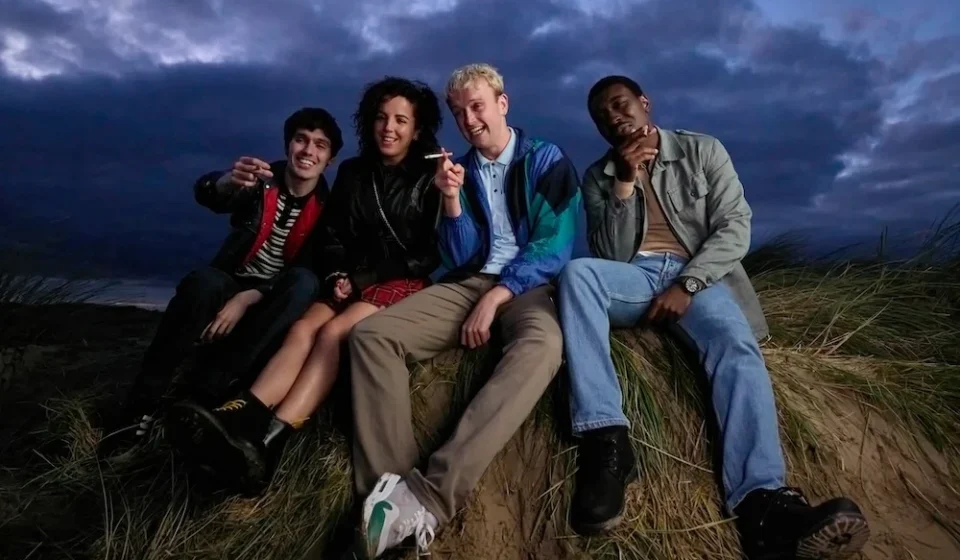

The cinematic landscape of Northern Ireland has long been dominated by the heavy pall of "The Troubles," often characterized by gray skies, somber tones, and the weight of historical tragedy. However, a new wave of filmmaking is beginning to reclaim this era through a lens of vibrant, if bittersweet, nostalgia. Kieron J. Walsh’s latest feature, Skintown, based on the 2018 novel by Ciarán McMenamin, enters this space with the fizzy, chemical energy of a 1990s rave. It is a film that functions like a potent hit of ecstasy—warm-hearted, hot-headed, and buzzing with a retroactive affection for a time and place that was as dangerous as it was exhilarating.
Main Facts: The Genesis of a Rave-Romanticizing Coming-of-Age Tale
Skintown is set in 1994 in Enniskillen, County Fermanagh—a town affectionately and unflatteringly dubbed "Skintown" by those who live there. Directed by Kieron J. Walsh (The Racer) and adapted for the screen by Enniskillen native Ciarán McMenamin, the film serves as a spiritual successor to recent Northern Irish hits. It sits comfortably as a "more polite brother" to the raw, anarchic energy of Kneecap and a "more cautious cousin" to the beloved sitcom Derry Girls.
The film stars Jack Rowan (Poldark, Noughts + Crosses) as Vinny, a 23-year-old whose primary ambition is to escape the claustrophobic confines of his hometown. He is joined by a stellar supporting cast, including Chris Walley (The Young Offenders) as his high-spirited best friend Jonty, and Jamie-Lee O’Donnell (Derry Girls) as Eileen, the object of Vinny’s unrequited affection.
At its core, Skintown is a coming-of-age story wrapped in a crime caper. When Vinny and Jonty find themselves in possession of a significant quantity of ecstasy stolen from the UVF (Ulster Volunteer Force), the film shifts from a character study into a high-stakes race for survival. Through this lens, Walsh explores themes of sectarianism, the universal desire for independence, and the unique brand of humor that sustained the Northern Irish people through decades of conflict.
Chronology: From Small-Town Disillusionment to Paramilitary Peril
The narrative of Skintown unfolds during a pivotal moment in Irish history, specifically the lead-up to the 1994 IRA ceasefire. The chronology of the film mirrors the internal journey of its protagonist, Vinny, as he moves from passive resentment to active (if accidental) rebellion.
The Weight of the Past
The story opens in an Enniskillen defined by its landmarks: a scenic lake, an ancient castle, and the haunting memory of the 1987 IRA "Poppy Day" bombing that claimed 11 civilian lives. For Vinny, the weight of this history is stifling. Although he is 23, his characterization skews younger—capturing that specific, Curdling contempt for one’s hometown that often precedes a final departure into adulthood.
An Unlikely Alliance
The status quo is disrupted when Vinny strikes up an unexpected friendship with Wilson (Hope Ipoku Jr.), a Black British soldier (or "squaddie") from Manchester. In a town where the British military is universally despised by the Catholic community, their bond is forged in a shared realization: for Wilson, the army was an escape from his own "Skintown" in England. This relationship serves as a crucial narrative bridge, humanizing the "enemy" and highlighting the class struggles that transcend sectarian lines.
The Ecstasy Caper
The plot accelerates when Vinny and Jonty—a "shell-suited" raver who views the world through a lens of chemical optimism—are pressganged into a dangerous scheme. They find themselves holding a massive stash of ecstasy pills stolen from a loyalist paramilitary group. The mission is simple yet deadly: sell the drugs, make enough money to leave Fermanagh forever, and avoid being murdered by the UVF.
The Ceasefire and the Aftermath
The film’s climax coincides with the historic announcement of the IRA ceasefire. The streets erupt in a brief, incredulous euphoria, providing a stark backdrop to the personal tragedies and triumphs of the protagonists. It is a moment where the macro-political shifts of a nation collide with the micro-dramas of two boys trying to find their way in the world.
Supporting Data: Production Values and Authenticity
Despite the constraints of what appears to be a modest budget, Skintown succeeds in creating a vivid, immersive atmosphere. This is largely due to the work of Director of Photography Ruairi O’Brien, whose "pleasant images" bring a brightness to the screen that contrasts with the grim reality of the setting.
Visual Aesthetic and 90s Kitsch
The film leans heavily into the aesthetics of the mid-90s. From the "shell suits" worn by Jonty to the specific lighting of the underground rave scenes, the production design captures a moment in time when the youth of Northern Ireland were attempting to trade the "Green and Orange" for the neon hues of the dance floor. While some street scenes feel "rigidly dressed to the camera," the overall effect is one of authentic, lived-in nostalgia.
The "Tony Pepperoni" Factor
The screenplay is enriched by eccentric, localized details that could only come from someone who lived through the era. A standout example is the character of Tony Pepperoni, played with oleaginous charm by Michael Smiley. Tony runs the local pizzeria but insists on serving Peking ribs as a side dish, arguing that the Irish aren’t ready for pizza alone and need to be "weaned off the Chinese." Such flourishes provide the film with a grounded, "authentically eccentric" tone that balances the more dramatic plot points.
Cast Performances
Jack Rowan provides a grounded anchor for the film, portraying Vinny with a mix of weariness and hidden hope. However, it is Chris Walley as Jonty who often steals the show. Walley brings the same manic, lovable energy he displayed in The Young Offenders, treating the distribution of ecstasy pills at a rave with the same reverence a priest might give to communion wafers.
Official Responses: Critical Reception and Comparative Analysis
Initial critical responses to Skintown have highlighted its tonal balance. While it shares DNA with recent Irish exports, it occupies its own niche in the market.
A "Timid" but Necessary Perspective
Some critics have noted that Skintown is a more "timid proposition" than a film like Kneecap. Where Kneecap is unapologetically political and confrontational, Skintown chooses a path of "careful avoidance of alienating perspectives." It directs its rancor not at one side of the sectarian divide, but at the "politician class." This is encapsulated in a line from a barfly (played by Lalor Roddy) regarding the ceasefire: "If there’s any conceivable way to fuck this up, those politicians will find it."
The Power of Sentimentality
The film has been praised for its "streak of sentimentality," which serves as a reminder that most inhabitants of Northern Ireland were ordinary people trying to live humdrum lives amidst the chaos. The "indomitable sense of humor" of the Northern Irish people is cited as the film’s greatest strength, allowing it to navigate tragedy without becoming overwrought.
Implications: The Legacy of the "Peace Baby" Cinema
The release of Skintown signals a continuing shift in how the Troubles are depicted in popular media. We are seeing the rise of "Peace Baby" cinema—stories told by or about the generation that came of age during the transition from conflict to the Good Friday Agreement.
Moving Beyond the Barricades
For decades, Northern Irish cinema was defined by the "Cinema of the Troubles," focusing on the IRA, the British Army, and the grim realities of prison life. Skintown represents a move toward a more holistic view of Irish identity. It suggests that while politics was inescapable, it was not the only thing that defined life. Raves, unrequited love, and the desire to leave home were just as central to the youth experience as the military patrols.
The Universal "Love/Hate" Relationship
Ultimately, Skintown’s implications reach beyond the borders of Fermanagh. It captures the precise "love/hate relationship" that many people have with their hometowns. It is a story for anyone who has ever felt the need to "wise up" and "get out," only to realize that the place they fled is the same place that shaped their soul.
In conclusion, Skintown does not offer trenchant political commentary or a definitive history of the Troubles. Instead, it offers something perhaps more valuable: a warm, slang-filled, and vibrantly human look at a generation that chose to dance in the face of disaster. As the film suggests, in the parlance of its own characters, if you’re looking for a reason to complain about its sentimentality, you should probably just "catch yourself on" and enjoy the ride.