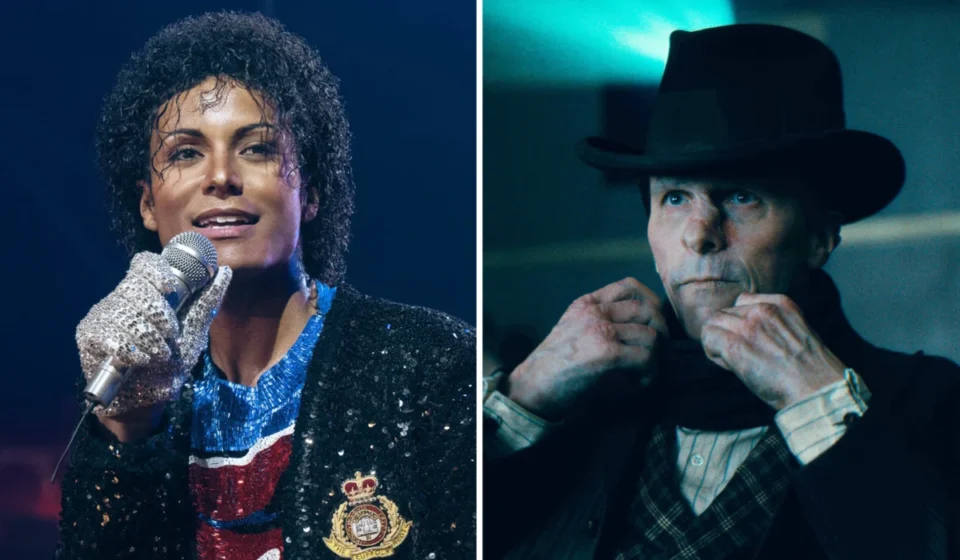

The theatrical experience, long whispered to be on its deathbed in the wake of the pandemic, has officially staged a miraculous recovery. As the summer sun sets on the first half of 2026, the narrative surrounding the film industry has shifted from one of existential dread to one of robust, high-stakes competition. According to data provided by Rentrak, domestic ticket sales have surged 10% compared to 2025, and industry analysts project that total summer revenues will eclipse the $4 billion threshold—a milestone not reached since the cultural phenomenon of “Barbenheimer” back in 2023.
The industry’s revival is built upon a diverse foundation: the continued dominance of established intellectual property like The Super Mario Galaxy Movie and Toy Story 5, the surprising endurance of mid-budget science fiction like Project Hail Mary, and, most notably, the disruptive success of micro-budget horror films crafted by a new generation of digital-native auteurs. While some high-profile bets—most notably the Moana and Masters of the Universe reboots—faltered, the general health of the box office suggests that audiences are not tired of cinema; they are simply more discerning about the stories they choose to support.

Chronology of a Resurgent Half-Year
The first six months of 2026 provided a rollercoaster of triumphs and tribulations. The year kicked off with a mixed bag of prestige dramas and risky genre experiments, setting the stage for a summer defined by massive tentpoles.
- Q1: The Spring Awakening: The early months were dominated by the massive performance of Michael, the controversial yet commercially unstoppable biopic that proved the power of musical legacy, even amidst critical backlash.
- Q2: The Indie Surge: As spring turned to summer, the market was shaken by the rise of YouTube-trained directors. Obsession and Backrooms began their theatrical runs with modest footprints, only to defy industry standards by sustaining—and growing—their audiences week after week.
- Q3: The Summer Sizzle: Entering the peak season, major franchises took center stage. While The Super Mario Galaxy Movie solidified the dominance of gaming-to-film adaptations, other legacy properties like Star Wars: The Mandalorian and Grogu struggled to find a foothold with younger demographics, signaling a potential fatigue with established space operas.
The Good: What Sizzled
The Super Mario Galaxy Movie
With a global haul of $1 billion against a lean $110 million budget, Illumination and Nintendo have cemented the Mushroom Kingdom as a primary pillar of modern box office success. While critics noted a slight dip in quality compared to its predecessor, the film’s financial performance highlights the insatiable demand for high-quality, family-friendly animation. With over 200 titles in the Nintendo library, the franchise is positioned to be a permanent fixture in the theatrical landscape.

Project Hail Mary
Amazon MGM Studios’ gamble on Andy Weir’s sci-fi epic paid dividends, earning $683.3 million. The film’s success serves as a vital case study for the industry: it proves that audiences will flock to high-concept, original sci-fi when it is backed by star power—in this case, Ryan Gosling—and positive word-of-mouth. Released in the relative calm of March, it benefited from a lack of saturation, suggesting that "counter-programming" remains a powerful tool for studios.
Michael
Despite a barrage of negative press and ethical questions regarding the film’s narrative scope, Michael became a commercial juggernaut, grossing $1 billion. It eclipsed Bohemian Rhapsody to become the highest-grossing musical biopic in history. The lesson here is clear: for a large swath of the global audience, the music of a legend outweighs the controversies of their personal life. Lionsgate is already looking toward a sequel, though the narrative challenges of the singer’s later years will test the studio’s ability to maintain this momentum.

Obsession
Perhaps the most significant story of the year is the rise of the "YouTuber-Auteur." Directed by 26-year-old Curry Barker, Obsession cost a mere $750,000 but brought in $426 million globally. It shattered the rulebook by recording four consecutive weeks of growth—a near-impossible feat in the modern era. Alongside the success of Backrooms, it is clear that the youth demographic is eager for "native" digital talent to lead their horror experiences.
The Bad: What Fizzled
Supergirl
The failure of Supergirl ($115 million gross against a $170 million budget) highlights a growing trend of "superhero fatigue" regarding secondary characters. While the film faced a chorus of online trolling, the cold reality is that audiences are no longer willing to pay for "origin stories" of characters who lack the household-name recognition of Batman or Spider-Man.

Melania
Amazon MGM Studios’ $40 million investment into Melania was a rare misstep. Earning only $16.7 million, the film functioned more as a prestige project for internal consumption than a viable commercial product. It serves as a stark reminder that when studios prioritize political or vanity projects over broad-market appeal, the box office is often the first to issue a verdict.
Star Wars: The Mandalorian and Grogu
Disney’s attempt to transition its hit streaming series to the big screen resulted in a disappointing $340 million, making it the lowest-earning Star Wars film to date. The data suggests a disconnect: older fans were present, but the younger generation, which usually sustains these franchises, found the transition from "bingeable TV" to "theatrical event" underwhelming.

The Bride!
Warner Bros. suffered a massive write-down on Maggie Gyllenhaal’s $90 million punk-rock reimagining of the Frankenstein myth. Releasing it in the shadow of Guillermo del Toro’s own Frankenstein project created an unhelpful comparison that the film could not overcome. It remains a cautionary tale about spending blockbuster-level budgets on "arthouse-adjacent" genre experiments.
The Meh: Lingering Questions
Hoppers
Pixar’s Hoppers ($372 million) was a "middle-of-the-road" success. While it outperformed recent failures like Lightyear, it lacked the legs of Elemental. It proves that Pixar is still searching for its footing in the post-pandemic era. The family audience is clearly present, but they are increasingly selective, choosing specific animated spectacles over generic "creature features."

The Breadwinner
Nate Bargatze’s attempt to bring his clean, stadium-filling comedy to the big screen failed to translate ($20 million against a $25 million budget). The comedy genre has struggled in theaters for years, and The Breadwinner confirms that the intimate, observational style of stand-up comedy often struggles to scale up to the size of a movie theater.
28 Years Later: Bone Temple
The horror genre usually thrives on low-budget efficiency, but the $63 million price tag for Bone Temple proved too high for a franchise that was already beginning to feel repetitive. Releasing it just seven months after its predecessor was a tactical error that likely cannibalized its own audience.

Disclosure Day
Steven Spielberg’s latest effort, Disclosure Day, grossed $228 million—a figure that would be a triumph for most, but a disappointment for a legendary director. The film’s struggle to capture the youth demographic highlights a generational shift in what constitutes a "must-see" event. Younger viewers are increasingly looking to digital creators rather than the established masters of the 20th century.
Implications for the Future
As we look toward the remainder of 2026, with heavy hitters like The Odyssey, Dune: Part Three, and Avengers: Doomsday on the horizon, the industry remains in a state of cautious optimism. The clear takeaway from the first half of the year is that the "middle" is disappearing. Movies are either massive, culture-shifting successes or niche, low-budget risks that pay off through high profit margins. The bloated mid-budget tentpole, particularly those based on secondary intellectual properties, is increasingly a liability.

Hollywood is learning that in an era of infinite content, the theater must offer something more than just a brand name. Whether it’s the massive scale of a Mario adventure or the sheer viral, grassroots excitement of an Obsession, the movies that succeed are those that feel like a "necessary" experience. The cinema is not dead; it has simply evolved into a marketplace where only the most compelling, the most viral, and the most spectacle-driven survive. As studios prepare their slate for the end of the year, the mandate is clear: innovate or fade away.