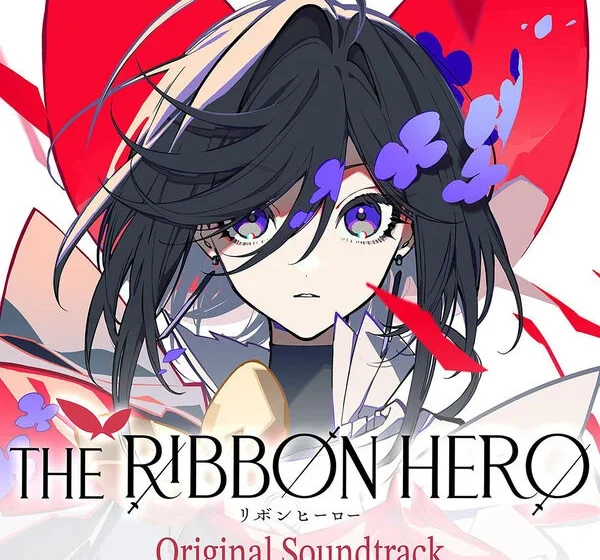
The Sound of Resilience: Milan Records Releases Global Soundtrack for Netflix’s ‘The Ribbon Hero’

The global anime community has reason to celebrate as Milan Records officially brings the evocative, sweeping orchestral score of the Netflix original film The Ribbon Hero to digital storefronts worldwide. Previously tethered to a Japan-exclusive release, the soundtrack—composed by the formidable duo of Satoru Kosaki and Ryuichi Takada—is now available for international streaming and purchase, marking a significant milestone in the film’s distribution strategy.
The Ribbon Hero, a Twin Engine production that serves as a modern homage to Osamu Tezuka’s seminal manga Princess Knight, has been lauded for its visual flair and emotional depth. With the score now accessible globally, fans can finally immerse themselves in the musical tapestry that underscores this epic tale of sacrifice, rebirth, and heroism.
The Narrative Foundation: From Tezuka’s Legacy to Modern Anime
To understand the weight of the soundtrack, one must first look at the source material. The Ribbon Hero is not merely a standalone project; it is a spiritual successor to Osamu Tezuka’s Princess Knight, a foundational work in the history of manga. Directed by Yuki Igarashi and featuring the vocal talents of Saya, Seiran Kobayashi, and Koki Uchiyama, the film breathes new life into the high-fantasy genre.
The plot centers on a princess whose kingdom is decimated by the monstrous entity known as Nergal. Forced into a cycle of destruction, she reawakens as the titular "Ribbon Hero." The narrative follows her arduous journey to defend her new home from suffering the same catastrophic fate as her fallen realm. It is a story of transition—from royalty to warrior, and from despair to hope—a transformation that Kosaki and Takada were tasked with translating into melody.
The Composers: A Synergy of Talent
The choice of Satoru Kosaki and Ryuichi Takada as co-composers was a strategic masterstroke by the production team.
Satoru Kosaki, renowned for his work on Fireworks and the critically acclaimed The Apothecary Diaries, brings a delicate, character-driven sensibility to the project. His compositions often serve as the emotional anchor, emphasizing the personal stakes of the protagonist.
Ryuichi Takada, best known for his pulse-pounding, high-energy contributions to the Tekken 6 soundtrack, provides the necessary scale for the film’s grander action sequences. Together, they create a binary soundscape: one of intimacy and one of epic, sprawling conflict. This duality mirrors the internal and external battles faced by the Ribbon Hero herself.
Chronology of Release
The release of this soundtrack follows a carefully managed rollout, reflecting the evolving trends in international anime distribution:
- Production and Initial Score Development: Throughout the film’s development at Twin Engine, Kosaki and Takada worked to ensure the score felt both nostalgic—paying respect to the Tezuka legacy—and modern enough to resonate with contemporary Netflix audiences.
- Japan-Exclusive Debut: Last month, the soundtrack was released exclusively within the Japanese market. This strategy allowed the production team to capitalize on the local theatrical release and the immediate buzz following the film’s premiere.
- Netflix Global Premiere: The film premiered on Netflix to a worldwide audience, further cementing its place in the current anime zeitgeist.
- International Soundtrack Expansion: As of this week, Milan Records has lifted the geographic restrictions, making the 36-track album available on platforms like Amazon, Spotify, and Apple Music.
Supporting Data: An In-Depth Look at the Tracklist
The 36-track collection provides a comprehensive audio documentary of the film’s progression. The album is structured to mirror the emotional arc of the narrative:
Act I: The Fall and The Wanderer
The album opens with "Once Upon a Time" (Ryuichi Takada), a track that establishes a sense of classical fantasy before the sudden, jarring tension of "Escape from Heaven!" and "The Fall of Silverland" (Satoru Kosaki). These tracks establish the inciting incident of the film, using minor keys and dissonant strings to convey the collapse of the princess’s world.
Act II: Discovery and Transformation
As the film progresses, the soundtrack shifts toward discovery. Tracks like "Enter Velvet" and "Transformation!" signal a shift in the protagonist’s identity. The inclusion of "The Ribbon Hero Appears" acts as the musical centerpiece, a triumphant motif that fans have already identified as the film’s defining theme.
Act III: The Confrontation and Resolution
The latter half of the album leans heavily into Takada’s action-oriented expertise. Tracks such as "Sword Clash," "The Pillar of Creation," and "Nergal’s Law" utilize aggressive percussion and brass to represent the threat of the antagonist. The album concludes with "Peace for Goldland" and the hauntingly beautiful "The Ribbon Hero" (the final track), providing a sense of closure that brings the listener back to the core themes of the story.
Key Musical Personnel:
- Chorogi’s Courage: A standout track highlighting Takada’s ability to weave character-specific themes into the broader score.
- Aa ? yo: A collaborative effort featuring the Suginami Junior Chorus, Shotaro Seo, and Junya Hirayama, representing the film’s choral ambition.
- Fuyugare no Tabibito: A vocal track featuring Seiran Kobayashi, adding a personal, human layer to the instrumental landscape.
Official Perspectives and Industry Reception
While the film has been met with critical praise for its animation, the music has been cited as a primary reason for its emotional resonance. In recent statements, representatives from Twin Engine noted that the goal was to create a score that felt "timeless."
"We wanted the music to sound like it could have existed in the era of Tezuka, yet utilize the recording techniques and mixing standards of a modern blockbuster," said a spokesperson for the production.
The decision to pair Kosaki and Takada was intended to bridge the gap between traditional anime storytelling and the high-production values now expected by global streaming audiences. The awards-qualifying theatrical run of The Ribbon Hero further underscores the studio’s commitment to quality, positioning the film as a serious contender in the animated features category.
Implications for the Anime Industry
The global release of the The Ribbon Hero soundtrack is emblematic of a broader trend: the "democratization" of anime music. Historically, many soundtracks remained locked in Japanese domestic markets, creating a secondary market for expensive imports. By releasing the album worldwide through Milan Records, Netflix and Twin Engine are acknowledging that the audience for high-quality anime scores is no longer regional—it is global.
Furthermore, the success of this soundtrack highlights the increasing importance of original scores in maintaining the longevity of a Netflix original. When an audience can stream the music long after they have finished watching the film, it deepens their connection to the intellectual property. This "after-life" engagement is vital for building franchises.
Looking Ahead
As The Ribbon Hero continues to find its audience on Netflix, the soundtrack serves as a reminder of the power of orchestral music in storytelling. Whether it is the subtle, melodic nuances of Kosaki’s character themes or the thunderous, cinematic energy of Takada’s battle music, the album is a testament to the collaborative spirit of modern anime production.
Fans interested in exploring the score can find it across all major digital music platforms. The release of this album is not just a treat for listeners; it is a bold statement that the Ribbon Hero—and the music that defines her—is here to stay.