The Architecture of Memory: How Christopher Nolan and Jennifer Lame Redefined the Cinematic Epic

In the landscape of modern blockbuster filmmaking, few partnerships have proven as transformative as the creative synergy between director Christopher Nolan and editor Jennifer Lame. Their latest collaboration, the 2026 epic The Odyssey, represents not merely a technical milestone in adaptation but a fundamental shift in how the "epic" genre is constructed for a contemporary audience. By moving away from the traditional, languid pacing of historical dramas, Nolan and Lame have utilized an impressionistic, high-velocity editing style to mirror the fractured, unreliable nature of human memory—a hallmark of Nolan’s filmography that has reached its zenith in this retelling of Homer’s ancient tale.
The Evolution of a Creative Partnership
When Christopher Nolan first approached Jennifer Lame to edit his 2020 sci-fi thriller Tenet, the collaboration seemed an unlikely marriage of sensibilities. Lame had built her reputation on the intimate, character-driven landscapes of independent cinema, having cut Noah Baumbach’s Frances Ha (2012) and Marriage Story (2019), as well as Kenneth Lonergan’s Manchester by the Sea (2016).
Transitioning to the high-stakes, backwards-moving physics of Tenet was, by Lame’s own admission, an intimidating leap. "I started having to just imagine the cars in these big action sequences as people, giving each car a personality, and having them talk to each other," Lame recalled in a 2020 interview. "Basically, treating them like dialogue scenes, because I think dialogue scenes are that exciting."
This philosophy—treating mechanical action with the emotional stakes of conversation—became the foundation of their working relationship. While Nolan had spent two decades honing a specific rhythmic intensity, starting with his low-budget debut Following (1998), the introduction of Lame’s sensibilities pushed his work into a new, more visceral territory. The result is a style that prioritizes "cinematic propulsion," where scenes are cut to the bone, sacrificing traditional continuity for a relentless, beat-driven momentum.
Chronology: A Structural Breakdown of the Nolan-Lame Method
The journey from Tenet to Oppenheimer (2023) and now The Odyssey (2026) demonstrates a clear trajectory in how the pair handles time.
- 2020: Tenet (The Proving Ground) – Lame cut her teeth on Nolan’s structural complexity, learning to balance high-concept physics with character personality.
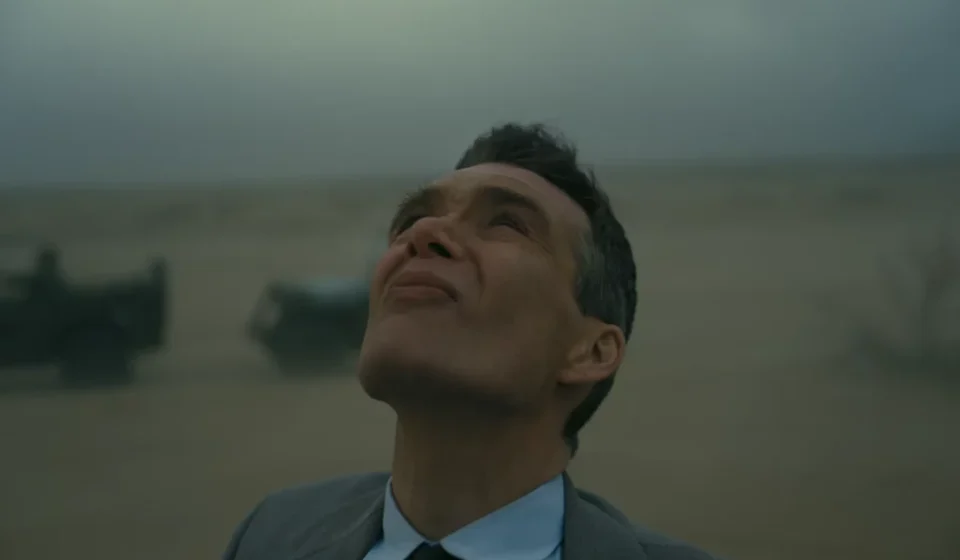
- 2023: Oppenheimer (The Emotional Pivot) – Drawing on her experience with the flashback-heavy structure of Manchester by the Sea, Lame helped Nolan navigate a dual-timeline biopic. Here, the editing served as a tool for subjective perspective, ensuring that every shift in time was grounded in the protagonist’s emotional state.
- 2026: The Odyssey (The Impressionistic Apex) – In this adaptation, the duo abandoned linear storytelling entirely. The film operates as a series of synaptically linked memories, where the narrative flows based on emotional association rather than the ticking of a clock.
"With Oppenheimer, Chris and I wanted to treat the audience with the utmost respect," Lame noted in 2024. "You don’t want them to feel like you’re using something frivolously. I learned that with Manchester very quickly: every time we switch timelines, it has to be incredibly emotional."

Supporting Data: The Science of the Cut
The "Nolan-Lame" style is defined by an aggressive approach to character exposition. In Oppenheimer, this was particularly evident in the rapid-fire introduction of historical figures. Lame noted, "We would do passes of the film tailored to each character. No one needs to know their names, we just need to make sure that they remember their faces."
This strategy has been expanded for The Odyssey. By utilizing quick, sharp cuts—often lasting no longer than a few seconds—the film bypasses the need for heavy-handed "world-building" exposition. Instead, the audience is thrust into the narrative mid-stream.
The film begins in a state of chronological chaos. Travis Scott, portraying a bard, recounts the tale of the Trojan Horse while three distinct timelines play out simultaneously. We see Odysseus (Matt Damon) in his current state, Sinon (Elliot Page) at the gates of Troy, and Penelope (Anne Hathaway) reacting to the bard’s performance. By refusing to establish a traditional "master shot" and instead relying on a fragmented, impressionistic approach, Nolan and Lame force the audience to synthesize the information just as a human mind would while processing a traumatic or vivid memory.
Official Responses and Creative Intent
The critical and industry response to The Odyssey has centered on how it diverges from traditional antiquity epics. Films like The Robe (1953) or Kingdom of Heaven (2005) famously luxuriated in widescreen, sweeping shots that emphasized the scale of the landscape. The Odyssey, conversely, uses its scale to create a sense of immediate, claustrophobic threat.
Nolan’s intent, supported by Lame’s editing, was to move the "epic" from the exterior world to the interior. The rare moments of stillness—such as the long take of Penelope viewed through a loom—serve as emotional anchors in a sea of frantic movement. These moments allow the audience to breathe before being thrust back into the "fits" of memory that define Odysseus’s drug-induced, years-long struggle.
By treating the ancient text not as a historical event but as a collection of disjointed psychological fragments, the team has avoided the "museum-piece" feeling that often plagues classical adaptations. Instead, the film feels like an active, breathing entity, constantly recalibrating itself to match the hero’s unraveling psyche.

Implications: The Future of the Cinematic Epic
The implications of The Odyssey for the film industry are profound. First, it suggests that the "blockbuster" is moving away from the era of long-form, linear world-building toward a more abstract, impressionistic mode of storytelling. As audiences become more accustomed to non-linear narrative structures—thanks in part to the influence of prestige television and gaming—directors like Nolan are empowered to take greater risks with pacing and structure.
Furthermore, the film highlights the editor’s role as the primary architect of meaning. In the Nolan-Lame methodology, the script provides the puzzle pieces, but the edit provides the logic. This is an evolution of Sergei Eisenstein’s theory of montage, where the collision of two images creates a new, third meaning in the mind of the viewer.
By prioritizing emotional logic over narrative chronology, The Odyssey establishes a new blueprint for the epic. It is a film that recognizes the audience’s capacity to navigate complex structures, provided those structures are rooted in a clear emotional core. As we look toward the future of filmmaking, the success of this project confirms that the most compelling epics of the 21st century will not be those that merely show us the world on a grand scale, but those that successfully map the vast, terrifying, and often beautiful territory of the human mind.
In the hands of Nolan and Lame, the ancient myth of The Odyssey has been stripped of its academic stiffness and re-rendered as a visceral, contemporary experience—an epic of both the individual consciousness and the collective unconscious.